

AI CERTS
4 hours ago
OpenAI Faces Startup Strategy Crisis Amid Product Distractions
Apptopia records illustrate a drop from 57 % to 42 % US DAU within six months. In contrast, Gemini closed the visitor gap on the web before January 2026. Sam Altman responded with a December “code red,” urging teams to refocus on core model performance. Nevertheless, reports depict lingering distraction across video, browser, and hardware ventures. Observers cite the Sora shutdown saga as additional evidence of scattered ambition.
Therefore, industry professionals must examine whether diversified bets still serve long-term goals. This article dissects facts, numbers, and perspectives surrounding the Startup Strategy Crisis now confronting OpenAI.
Market Share Pressure Mounts
Competitive momentum shifted sharply during late 2025. Furthermore, Apptopia’s February 2026 brief captured substantial erosion in ChatGPT engagement.
Data showed US mobile daily active users sliding from 57 % to 42 % between August 2025 and February 2026. Moreover, a longer window reveals a decline from 69.1 % to 45.3 % over twelve months. Analysts tie the ongoing Startup Strategy Crisis to this downward curve.
Meanwhile, consumer pivots toward Gemini and Claude reduced OpenAI's dominance in both enterprise trials and casual queries. Consequently, Similarweb recorded Gemini surpassing key traffic thresholds by January 2026.
Such metrics underpin fears of a looming Startup Strategy Crisis within the firm. Additionally, investors worry that slipping market share inflates customer acquisition costs.
Sam Altman acknowledged the threat in internal notes, yet he framed competition as healthy discipline. Nevertheless, repeated losses risk snowballing as developers follow user momentum.
Consumer Pivots Data Points
Apptopia researcher Tom Grant stated that users now juggle multiple chatbots. Moreover, 46 % of polled respondents use two or more services weekly.
Such multihoming behavior accelerates churn, intensifying the Startup Strategy Crisis for platform leaders.
These numbers confirm tangible share loss for OpenAI. However, understanding the drivers behind those moves requires deeper product analysis. Transitioning to the company’s overloaded project slate clarifies that dynamic.
Product Bet Overload Debate
OpenAI shipped an array of ambitious features during 2025. Moreover, teams juggled browser experiments, video generation pilots, and the headline Instant Checkout launch.
Instant Checkout premiered on September 29, 2025 with Etsy and Shopify merchants onboard. However, the workflow demanded catalog ingestion, fraud screening, and tax compliance that stretched engineering capacity.
Consequently, OpenAI rerouted transactions to merchant apps by March 4, 2026 and quietly shelved the feature. Critics declared the reversal the clearest proof of a widening Startup Strategy Crisis.
Another cautionary tale emerged with the Sora shutdown that paused broader video ambitions. In contrast, Anthropic concentrated on enterprise tooling and avoided similar public U-turns.
Sam Altman defended exploration culture in press events, yet shareholder letters urged prioritization. Meanwhile, consumer pivots continued, amplifying concern that resource dilution undermined core model reliability.
- Instant Checkout – launched Sept 2025, paused Mar 2026
- Sora video model – internal shutdown announced Q1 2026
- AI browser – limited beta, no full release date
- Hardware device – concept phase with Jony Ive, timeline uncertain
Instant Checkout Saga Lessons
The checkout reversal illustrates how unfinished operational plumbing can delay ambitious commerce vision. Furthermore, merchant trust erodes when pilots vanish suddenly.
Therefore, launch gating and staged metrics reviews become essential safeguards. Consequently, disciplined cadence averts a cascading Startup Strategy Crisis.
Observers argue that pursuing too many horizons simultaneously breeds strategic fragmentation.
Taken together, these product reversals spotlight overstretched execution. Nevertheless, leadership dynamics and safety debates also shape outcomes. The following section explores those human factors.
Leadership Tension And Safety
Inside the halls, safety advocates argued that rapid launches compromised oversight. Additionally, Ilya Sutskever proclaimed his new venture would never be distracted by product sprints.
Jan Leike echoed that stance, stating safety had taken a backseat to shiny products. Consequently, insiders labelled OpenAI "the most distracted company in technology" during off-record chats.
Sam Altman countered during a February 2026 town hall, asserting that diverse experiments inform better models. Nevertheless, he initiated the December 'code red' to placate critics.
Professionals can sharpen governance acumen through the Chief AI Officer™ certification. Moreover, specialized training helps organizations prevent escalation into a full Startup Strategy Crisis.
Tension also affects hiring, funding, and partnership negotiations. Meanwhile, Amazon and Microsoft expect clear roadmaps before expanding cloud incentives.
These leadership frictions amplify operational distraction, sustaining the narrative of strategic drift. However, concrete strategic resets are now underway. The next section reviews those corrections.
Strategic Reset Moving Forward
Accordingly, management pivoted resources back to core model alignment and enterprise APIs.
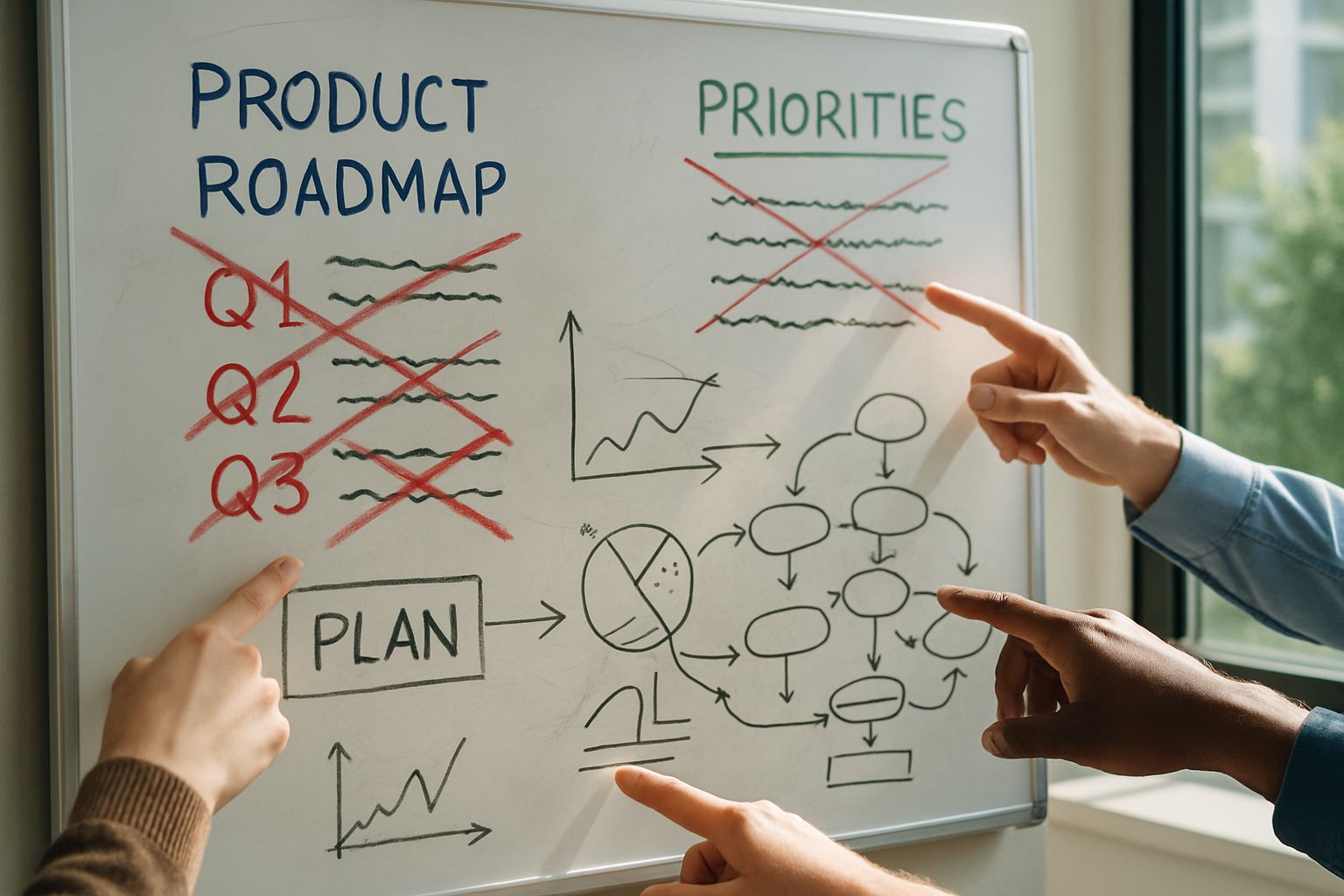
Furthermore, product roadmaps now feature clearer milestones, fewer parallel explorations, and explicit kill criteria.
Instant Checkout may re-emerge after robust merchant tooling matures. Meanwhile, lessons from the Sora shutdown inform stricter go-to-market guidelines.
Investors also applaud heightened partnership discipline with Microsoft and Nvidia. Consequently, compute cost guarantees now hinge on measurable adoption goals.
Mitigating Startup Strategy Crisis
Focused governance, disciplined release processes, and continuous safety reviews collectively mitigate the Startup Strategy Crisis.
Moreover, cross-functional steering committees track performance metrics, consumer pivots, and competitive moves weekly.
Early signs show stabilization in user retention curves. Nevertheless, sustained vigilance remains vital as the competitive field evolves.
Ultimately, the Startup Strategy Crisis enveloping OpenAI reflects classic execution strain faced by hyper-growth innovators. Furthermore, shrinking user share, Instant Checkout fallout, and the Sora shutdown underline the stakes. However, leadership acknowledgments, safety recommitments, and roadmap pruning demonstrate corrective momentum.
Professionals monitoring these shifts should prioritize governance skills and data literacy. Consequently, earning the Chief AI Officer™ credential positions leaders to steer AI portfolios through volatility. Act now, deepen expertise, and guide your organization beyond distraction toward durable advantage.


