

AI CERTS
4 hours ago
Dominique Adams’ Jesus Returns AI Trailer Crowdfunding Reality
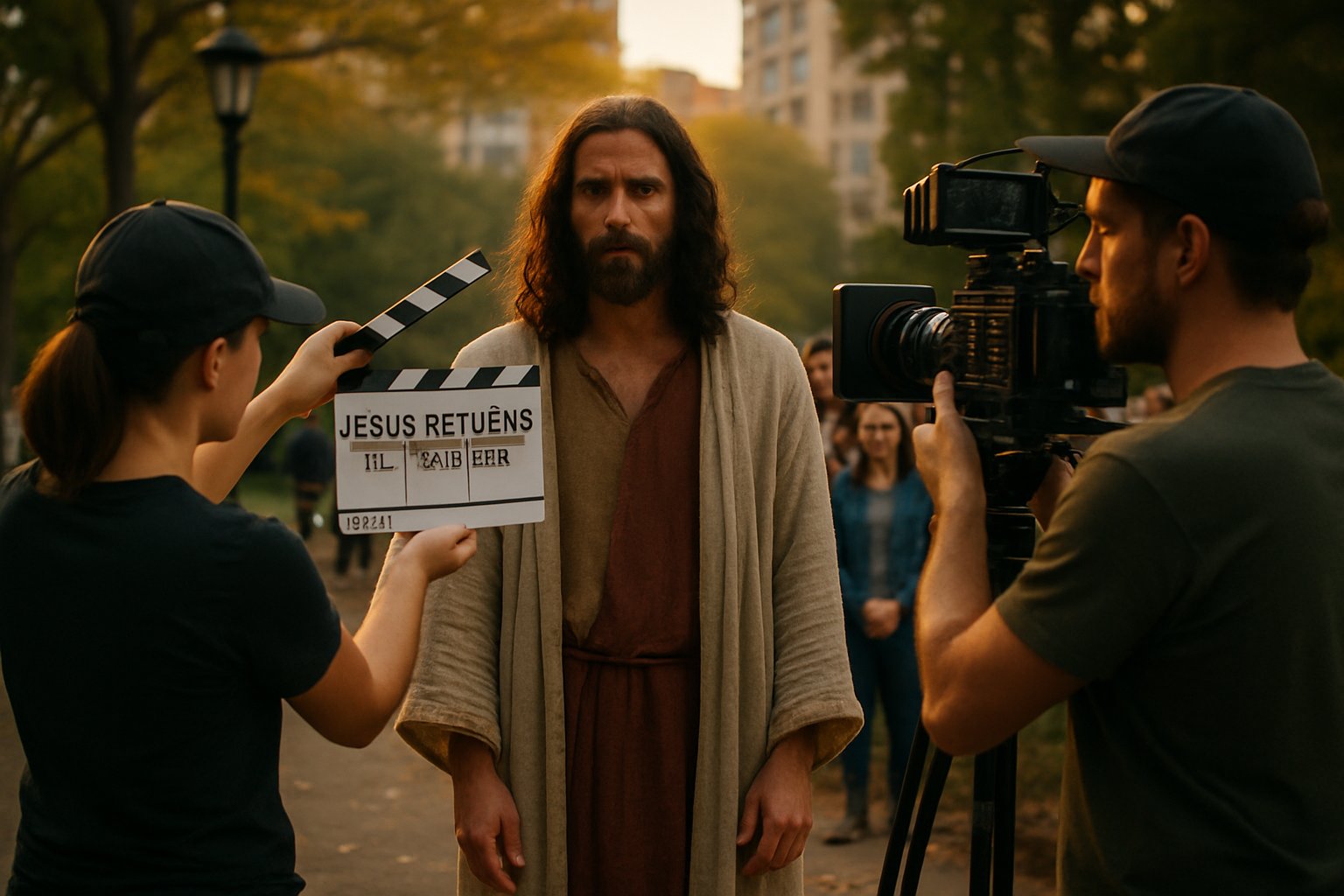
Jesus Returns AI Trailer
Adams dropped the Jesus Returns AI Trailer on social media this spring. The spot blends archival footage with synthetic production techniques. Moreover, it teases an ambitious feature narrative. Observers speculated about a potential $5M goal to expand the teaser. However, no formal Kickstarter or Seed&Spark page exists. Adams instead linked viewers to a PayPal donation button. Therefore, the Jesus Returns AI Trailer remains a self-financed proof of concept rather than a crowdfunded product.
These observations confirm the filmmaker’s established pattern. Nevertheless, curiosity persists among backers who remember high-profile film drives hitting multi-million marks. The contrast invites a deeper dive into indie financing realities. Consequently, the next section examines the current crowdfunding climate.
Indie Film Funding Landscape
Crowdfunding matured into a vital pillar of indie finance. Kickstarter reports nearly $617 million pledged to Film & Video projects. Yet the category success rate lingers near 38 percent. Furthermore, most winners raise under $20,000. Seed&Spark statistics echo similar ceilings. In contrast, celebrity vehicles like Veronica Mars soared past a $5M goal.
Key advantages lure filmmakers: audience building, retention of creative control, and grassroots marketing. However, creators also face sizable hurdles. They must craft an enticing proof of concept, design reliable reward tiers, and plan transparent fulfillment. Transitioning from trailer to feature demands even tighter logistics.
Indie teams should weigh alternate routes. Equity platforms add regulatory complexity. Donation links lack structured rewards but remain fast and flexible. These trade-offs underpin many strategic decisions. Consequently, understanding the landscape frames Adams’ current tactics. The following profile section illustrates his personal choices.
These market numbers set realistic boundaries. Nevertheless, individual strategy determines success. The next part profiles Adams’ resourceful approach.
Adams' Self Funding Path
Dominique Adams built his filmography on thrift and hustle. Twisted Seduction reportedly cost $30,000 sourced from savings. Papa est devenu un lutin matched that budget without platform help. Meanwhile, Adams earned a regional screenplay award for the Christmas comedy’s script. The accolade boosted credibility yet did not sway him toward crowdfunding.
The Jesus Returns AI Trailer repeats the pattern. Adams relies on personal funds, volunteer crews, and small sponsorships. Additionally, he invites direct donations for finishing costs. No staged reward tiers appear. Consequently, supporters contribute altruistically rather than chasing perks.
This approach reduces administrative overhead. Nevertheless, it concentrates risk on the creator. Furthermore, the method sacrifices the marketing momentum that structured campaigns generate. These trade-offs influence each production cycle.
Adams’ lean model demonstrates courage and autonomy. However, measurable limitations surface when budgets climb near a $5M goal. The next section outlines factors shaping successful large-scale drives.
Self-funding offers speed but limits scale. Therefore, analyzing best practices becomes essential.
Crowdfunding Success Key Factors
Data from thousands of campaigns reveal common threads. Firstly, teams need an engaging proof of concept. The Jesus Returns AI Trailer exemplifies this requirement. Secondly, pre-launch audience building doubles success likelihood. Moreover, campaigns tied to festivals or a recognized screenplay award often convert curious viewers into backers.
Budget transparency also matters. Seed&Spark’s registry model lists every microphone and meal. Consequently, backers trust the process. Transition words in updates maintain narrative flow and reduce confusion. Meanwhile, realistic stretch targets anchor bigger ambitions, such as a $5M goal.
Execution pitfalls persist. Overpromised rewards trigger backlash, and shipping costs erode margins. Furthermore, campaigns that ignore ongoing communication lose momentum. A certified manager can mitigate these risks. Professionals can enhance their expertise with the AI Product Manager™ certification.
These factors transform numbers into narratives. Consequently, understanding them helps filmmakers decide whether to adopt public funding or continue self-financing. The following section explores macro trends that will influence that choice.
Best practices raise success odds. However, shifting market currents also affect outcomes.
Market Trends Through 2025
Analysts forecast the global crowdfunding industry to reach $5.53 billion by 2030. Moreover, they predict a 17.6 percent CAGR from 2024 onward. Nevertheless, “crowdfunding fatigue” challenges creative categories. Competition intensifies while platform discovery algorithms remain crowded.
Meanwhile, artificial intelligence reshapes content pipelines. Synthetic production tools cut costs for tasks like background generation. Consequently, filmmakers stretch limited resources further. The Jesus Returns AI Trailer leverages synthetic production to simulate costly set pieces. Additionally, AI voice cloning shortens post-production.
In contrast, rising privacy regulations tighten data collection. Therefore, audience targeting can become harder. Platforms will likely introduce new marketing features, yet fees may climb. These macro shifts inform strategy for anyone pursuing a $5M goal.
Market forces reward adaptability. Subsequently, the next section maps concrete actions for filmmakers eyeing their own campaigns.
Trends create both tailwinds and turbulence. Strategic planning remains indispensable.
Future Funding Action Plan
Filmmakers considering a Jesus Returns AI Trailer scale project should follow a structured path:
- Design a polished proof of concept under three minutes.
- Secure at least one notable screenplay award to boost credibility.
- Build mailing lists six months before launch.
- Set incremental targets culminating in a $5M goal.
- Incorporate synthetic production to stretch funds.
Additionally, creators should choose platforms aligned with film needs. Seed&Spark offers curated promotion and distribution pipelines. Kickstarter provides broad visibility but lower success rates. Meanwhile, private investors can complement public pledges.
Governance also matters. Draft transparent budgets and use frequent updates. Moreover, integrate certification-backed managers to oversee operations. Such roles reinforce accountability and professionalism.
Actionable steps convert vision into execution. Consequently, the final section distills core insights for busy professionals.
Adopting this roadmap reduces risk. Nevertheless, flexibility remains vital in dynamic markets.
Key Takeaways Moving
Dominique Adams showcases resourcefulness through self-financing. His Jesus Returns AI Trailer illustrates how synthetic production and grit deliver a compelling proof of concept without external capital. However, scaling to a feature likely requires broader backing.
Industry data shows modest average raises despite spotlight success stories. Therefore, filmmakers must prepare diligently. Securing a screenplay award, nurturing communities, and outlining clear budgets boost trust. Furthermore, combining AI workflows and professional certification enhances efficiency.
Understanding platform dynamics, audience psychology, and macroeconomic trends positions creators to meet a $5M goal realistically. These lessons apply whether a team mirrors Adams’ autonomy or builds a public campaign.
These insights summarize best practices. Consequently, a well-planned approach empowers the next Jesus Returns AI Trailer scale project.
In conclusion, independent filmmakers navigate complex choices. Adams opted for donations to retain control. Nevertheless, structured crowdfunding, when executed with rigor, can unlock larger dreams. Furthermore, evolving synthetic production lowers entry barriers. Consequently, professionals who study trends, secure accolades, and pursue certifications like the AI Product Manager™ elevate their odds of success. Explore the certification today and position yourself for the next breakthrough production.


