

AI CERTS
3 hours ago
AI Driven Optimization Redefines App Discovery
Meanwhile, 59 percent of Apple downloads still arrive through search, according to Sensor Tower’s baseline study. Therefore, teams must rewire metadata, creatives, and measurement tools before intent-aware ranking becomes the default. In contrast, those clinging to legacy keyword tactics already report visibility losses after Apple’s June 2025 algorithm update. Additionally, Google’s recommender research highlights how LLMs learn personalized semantics for subjective attributes like "funny" or "cozy". These converging forces create both opportunity and risk, explored below.
App Discovery Landscape Shifts
Historically, store ranking models matched query strings against developer supplied text. However, Apple’s new App Tags mark a visible pivot toward intent-centric filtering. Moreover, AppTweak observed on 5 June 2025 that results now present variant intents within a single search.
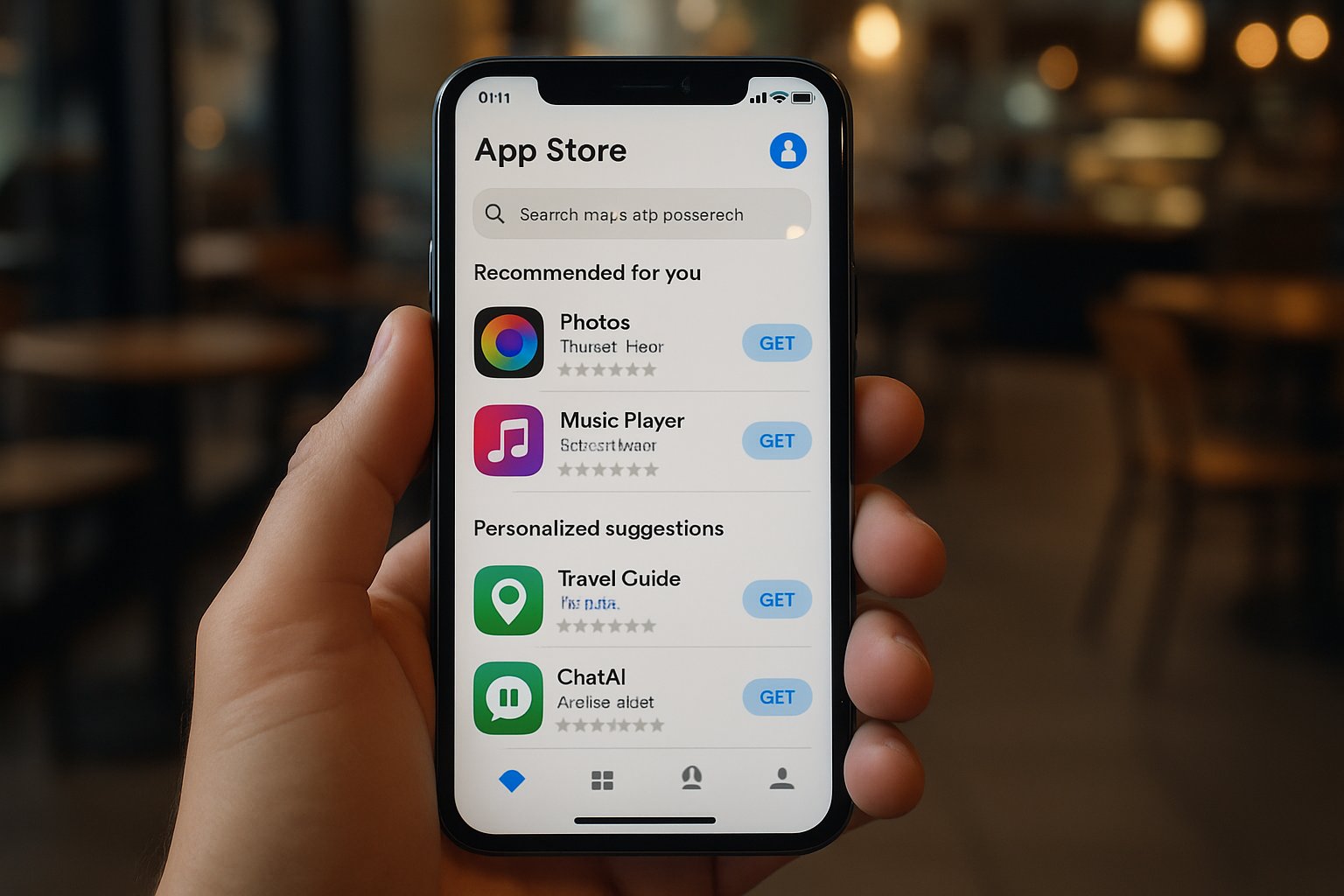
- 59 percent of App Store downloads came from search in 2020, Sensor Tower reports.
- US rollout of App Tags started Q1 2026, touching millions of pages.
- AppTweak logged 18 percent more unique tags inside top search clusters.
Consequently, discovery now reflects outcomes users seek, such as "budget tracking" or "sleep improvement", instead of isolated nouns. Intent-aware ranking diversifies visibility across categories. These shifts demand refreshed optimization mindsets. Next, we examine how semantics replace raw tokens.
Semantic Signals Over Keywords
Semantic models convert text into vector embeddings that capture meaning beyond surface form. Therefore, AI Driven Optimization now treats "calorie tracker" and "diet log" as equivalent intents. In contrast, earlier ranking systems would split traffic between those phrases, reducing recall. Google Research proved Concept Activation Vectors can map subjective descriptors to collaborative filtering space. Furthermore, platforms enrich these embeddings with app store metadata pulled from descriptions, ratings, and usage signals.
Consequently, developers must articulate functional outcomes inside copy, screenshots, and subtitles, not just sprinkle keywords. Semantic signals reward clarity about delivered value. Models promote apps echoing user goals, not mere phrases. The next section explores the machinery powering these models.
Role Of LLMs Today
Large language models increasingly serve as zero-shot annotators within ranking and recommendation stacks. Moreover, their generation abilities label screenshots, reviews, and release notes with rich intent features. These labels feed downstream AI Driven Optimization loops that continually retrain embeddings. Additionally, researchers noted higher click-through when LLMs created user specific CAVs for soft attributes. LLMs pipelines accelerate intent extraction and personalization. Quality data in, richer semantics out. Conversational agents push this progression even further.
Conversational Agents Influence Discovery
ChatGPT, Gemini, and Siri are evolving into intent routers that decide which app completes a task. Consequently, discovery often begins in conversational environments rather than inside the storefront grid. Users now ask an assistant to "split dinner bill" and skip manual search entirely. For developers, surviving this jump requires AI Driven Optimization across agent endpoints and store listings alike.
Additionally, assistants rely on structured app store metadata, deep links, and capability declarations to fulfill requests. Agent-mediated installs compress competitive fields to a handful of winners. Only intent aligned apps appear in results. Fine-tuned metadata is that alignment lever, discussed next.
Metadata Strategies For Developers
Effective metadata now starts with Apple’s App Tags, which default to system suggestions. However, teams should audit each tag, removing misaligned labels that confuse intent clusters. Moreover, align every piece of app store metadata with the primary outcome your product delivers.
- Map core intents to screenshots, captions, and app store metadata.
- Embed soft attributes like "cozy" or "fast" within first two sentences.
- Track intent cluster performance using blended search and tag click metrics.
Professionals can enhance trust with the AI Security Compliance™ certification, demonstrating responsible data handling. Consequently, certified privacy practices accelerate AI Driven Optimization feedback loops by ensuring reliable telemetry. Aligned metadata and compliance build trustworthy intent signals. These foundations underpin resilient rankings. Measurement and policy now enter the discussion.
Metrics And Governance Challenges
Intent-aware systems complicate attribution because discovery spans stores, agents, and web embeds. Therefore, legacy keyword rankings offer limited insight into why visibility fluctuates. In contrast, telemetry must join conversion logs with app store metadata, tag clicks, and agent referrals. Additionally, LLMs powering these pipelines introduce transparency and bias concerns that regulators now examine. Moreover, conversational environments may mask ranking logic, complicating audit obligations under new EU rules.
Nevertheless, rigorous experimentation can align AI Driven Optimization goals with fairness metrics and compliance norms. Governance disciplines reinforce user trust and platform legitimacy. Early investment reduces future rework. Action focused guidance follows.
Actionable Takeaways For Teams
Below are concise recommendations drawn from research and industry data.
- Adopt AI Driven Optimization mindsets early to avoid reactive fixes.
- Invest in LLMs or vendor tools that annotate intent at scale.
- Create feedback dashboards blending tag clicks with conversational referral installs.
- Secure a compliance certification to strengthen user trust and platform favorability.
Proactive adaptation preserves visibility amid ongoing semantic evolution. Consequently, teams that delay risk algorithmic obscurity.
The era of intent-centric discovery is here, propelled by semantic embeddings, LLMs, and conversational environments. Platforms now extract meaning from every public signal, routing users toward outcomes rather than keywords. Therefore, successful publishers will blend experimental rigor, security compliance, and AI Driven Optimization to remain discoverable.
Furthermore, professionals can showcase trustworthy practices through the earlier linked certification. Moreover, AI Driven Optimization will soon influence recommendation feeds beyond mobile, touching wearables and automotive dashboards. Consequently, embedding AI Driven Optimization principles into roadmaps today safeguards future reach.


