

AI CERTS
3 hours ago
CGI Spurs Default Management Automation With Embedded AI
However, the announcement also surfaces wider questions about governance, performance, and competitive differentiation. This article unpacks the launch for technology executives, risk officers, and product owners.
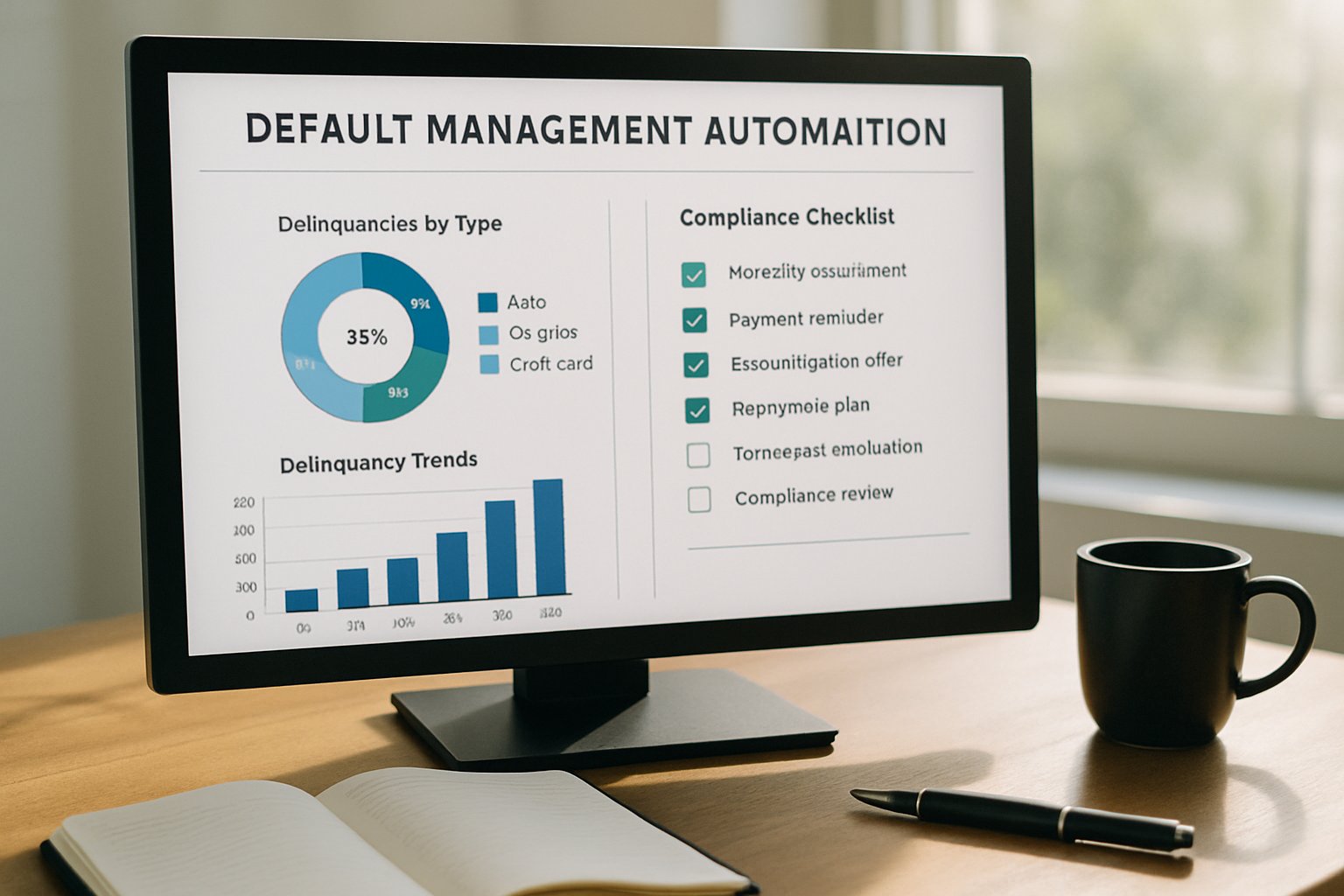
Additionally, readers will gain market context, compliance insights, and practical next steps toward sustainable Default Management Automation. Moreover, we highlight relevant certifications to support responsible AI adoption. The journey starts with market forces reshaping collections.
Meanwhile, industry conferences from London to San Diego echo the same theme. Firms that embed AI deeply into workflows realize measurable gains faster than piecemeal pilots. Therefore, strategic integration matters more than flashy demos.
Market Forces Accelerating Automation
Debt volumes continue to climb as consumer credit normalizes after pandemic peaks. In contrast, staffing budgets remain flat, forcing lenders to rethink operating models. Consequently, market analysts forecast low double-digit growth for collections software through 2028.
Furthermore, regulators demand transparent processes that can be audited quickly. These pressures elevate Default Management Automation from optional initiative to board priority. Vendors that combine AI with controls are winning procurement cycles.
Analyst reports also highlight rising adoption of embedded agents in contact centers. Moreover, executives link embedded agents to faster resolutions and better recovery performance. The next section explores how CGI positions itself within this dynamic backdrop.
Market momentum and oversight together drive systematic change. Subsequently, stakeholders examine CGI Credit Studio for practical answers.
CGI Credit Studio Overview
CGI Credit Studio is a cloud-native platform covering pre-collections through final recoveries. It orchestrates decisioning, analytics, self-service, and embedded agents under one event-driven architecture. Consequently, lenders process billions in balances daily without disrupting legacy systems.
Strata Enterprise powers strategy design while PulseAI provides machine-learning services. Arum Global recently certified Strata, adding independent assurance for regulatory compliance needs. Moreover, CGI cites 45 years of domain expertise and 94,000 employees worldwide.
These elements combine into a foundation for scalable Default Management Automation across regions. Secondly, the architecture supports multi-tenant deployments, including clients located near San Diego data centers. The platform overview sets the stage for understanding new AI extensions.
CGI positions Credit Studio as an end-to-end control tower. Therefore, feature updates warrant deeper inspection.
New AI Capabilities Explained
March's release introduced three AI features designed for live collector workflows. Firstly, Call Summarization converts audio into structured notes and suggested actions. Secondly, the Ask Cleo assistant answers policy queries inside the same screen.
Thirdly, an upcoming Agent Assist module will surface real-time negotiation prompts.
- Call Summarization: up to 30% less after-call work
- Ask Cleo: up to 20% higher agent productivity
- Agent Assist: 10–20% promise-to-pay uplift, 20% lower attrition
Moreover, CGI stresses that all models operate as embedded agents within the native interface. Consequently, users avoid screen toggling and duplicate data entry. Internal benchmarks report a 30% reduction in after-call tasks and 20% productivity gains.
These gains translate directly into improved recovery performance across delinquent portfolios. Furthermore, CGI forecasts 10–20% higher promise-to-pay conversions once Agent Assist reaches production. Default Management Automation stands to benefit as repetitive tasks shrink and coaching insights expand.
Early evidence suggests tangible operational savings. Nevertheless, governance considerations require equal attention.
Compliance And Governance Focus
Collections activities sit under intense scrutiny from bodies like the CFPB and state regulators. Therefore, CGI designed its AI outputs to be audit-ready and human-confirmed. Each action recommendation is stored with contextual data for examiner review.
Moreover, the platform offers explainability dashboards and role-based access controls. These features strengthen regulatory compliance posture for banks, fintechs, and credit unions. Arum certification adds external validation, complementing internal SOC assessments.
Meanwhile, data residency options, including facilities near San Diego, help satisfy regional privacy requirements. Consequently, Default Management Automation can scale globally without ignoring local statutes. Still, practitioners must monitor model drift and bias continuously.
Strong controls reduce headline risk. In contrast, competitors sometimes treat governance as an afterthought.
Competitive Landscape And Differentiators
Vendors including Cognizant, FIS, and HighRadius race to add conversational AI modules. Nevertheless, many solutions rely on bolt-on integrations rather than embedded agents. CGI emphasises its native design as a core differentiator.
Furthermore, only Credit Studio pairs decisioning, voice analytics, and governance within the same Default Management Automation stack. Competitors often require third-party dashboards to achieve comparable recovery performance. Independent analysts view that integration as a cost and risk advantage.
Additionally, CGI invests one billion dollars into AI research, supporting future feature velocity. Clients attending the recent San Diego fintech summit cited that commitment favorably. Consequently, pipeline momentum appears strong heading into fiscal 2027.
Feature depth and governance differentiate CGI today. Next, leaders must consider implementation tactics.
Implementation Steps For Leaders
Successful rollouts begin with clear objectives and stakeholder alignment. Initially, teams should baseline handle times, promise-to-pay rates, and recovery performance. Moreover, governance leads must map regulatory compliance artifacts to internal policy libraries.
Secondly, integration architects evaluate API readiness and data residency zones. Near San Diego facilities often support US-based latency requirements. Consequently, connectivity testing should include failover scenarios.
Thirdly, supervisors pilot Default Management Automation with a controlled agent cohort. Results must feed back into training materials and incentive structures. Subsequently, leaders expand usage incrementally, monitoring bias and model drift dashboards.
Structured pilots limit operational surprises. Finally, attention turns toward future roadmap planning.
Outlook And Next Moves
Market watchers expect rapid AI maturation inside collections platforms over the next two years. Consequently, budget allocation toward Default Management Automation will likely outpace traditional dialer upgrades. CGI plans quarterly feature drops, including expanded multilingual summarization and deeper sentiment models.
Additionally, analysts predict rising demand for unbiased performance evidence. Vendors that prove superior recovery performance and robust regulatory compliance will dominate renewals. Professionals can enhance expertise with the AI+ Government™ certification.
Nevertheless, human judgment remains vital even within advanced Default Management Automation ecosystems. Therefore, companies should invest equally in skills, data quality, and cultural change. Continuous monitoring will separate leaders from laggards.
Predictive investment signals a competitive decade ahead. The final section summarizes core insights.
CGI's launch underscores how quickly AI is moving from experiments to operational muscle in collections. Moreover, embedded design, third-party certification, and measurable impacts grant the offering credible momentum. However, governance diligence and transparent evidence remain essential for sustained trust.
Lenders evaluating AI roadmaps should demand audited metrics, bias controls, and clear agent workflows. Professionals ready to guide such programs can credential themselves through the linked certification. Consequently, early movers may secure outsized efficiency gains and customer goodwill.
The collections future belongs to firms that blend smart tooling with accountable human oversight.


