

AI CERTS
3 hours ago
ThinkLabs Advances Physical Infrastructure Modeling for Grids
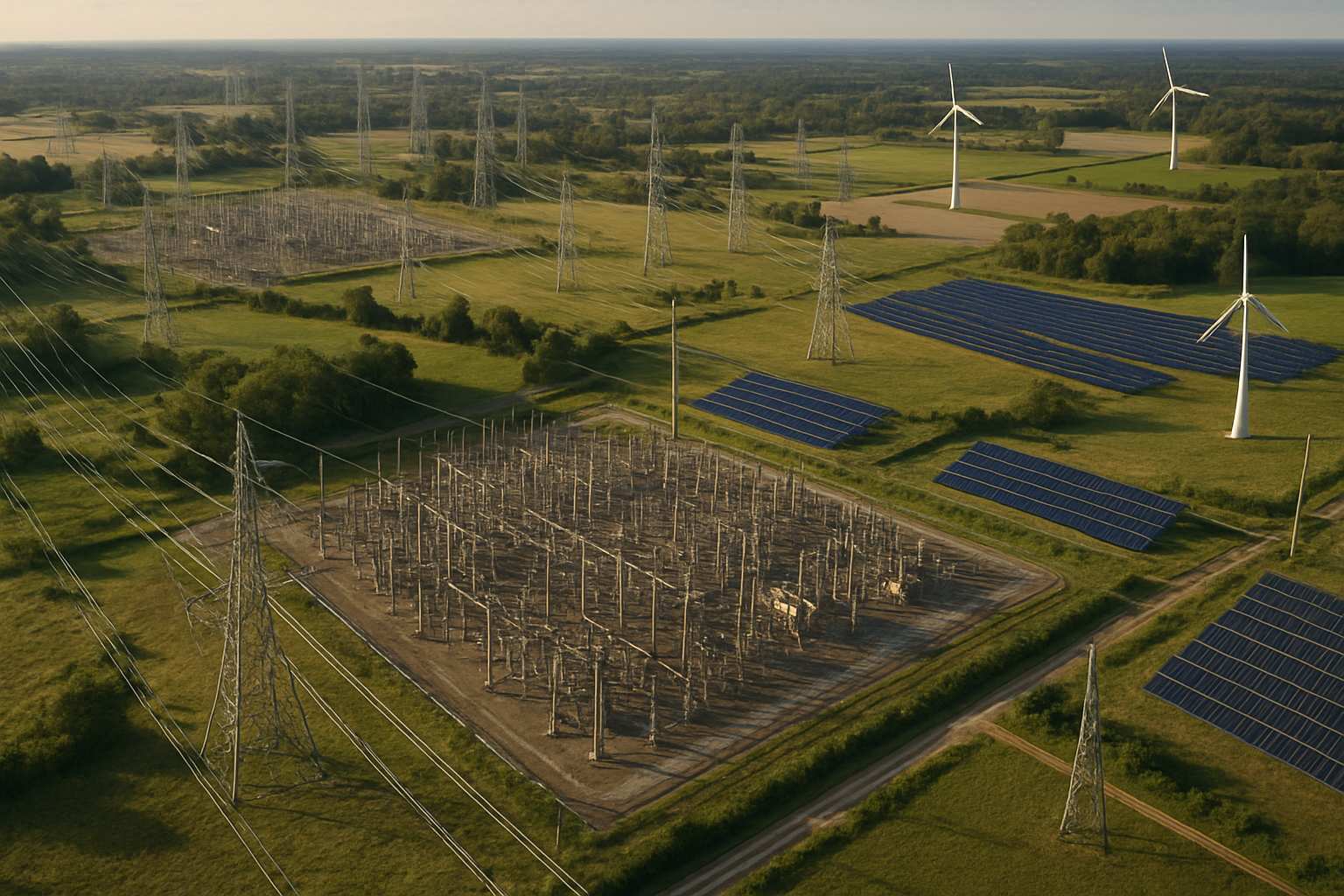
The GE Vernova spin-out raised CAD 6.8 million to build a grid Copilot.
Furthermore, its pilot with Southern California Edison delivered blistering simulation speeds.
Industry observers now watch whether fast analytics can unblock project backlogs.
However, independent validation and fresh capital remain open questions.
This article unpacks the funding, technology, and market context driving ThinkLabs.
Moreover, professionals will learn where certifications like the AI+ UX Designer™ certification fit.
The journey begins with the forces shaking today’s infrastructure planning.
Mounting Grid Modernization Pressure
Aging networks confront rising variable generation and electrified loads.
Therefore, planners need thousands of rapid studies instead of hundreds.
The Department of Energy warns that delays threaten the energy transition timeline.
- DOE projects 20% more consumption by 2030.
- ResearchAndMarkets estimates grid-modernization spending above USD 50 billion by 2030.
- NERC emphasizes stricter reliability enforcement for distribution automation.
- Cloud adoption in critical systems grows at 13% CAGR.
These figures underscore urgency for faster studies.
Therefore, Physical Infrastructure Modeling could bridge resource gaps.
With the pressure defined, attention turns to ThinkLabs' funding path.
ThinkLabs Funding Trajectory Overview
ThinkLabs closed its CAD 6.8 million seed round in April 2024.
Powerhouse Ventures and Active Impact Investments co-led the deal.
Consequently, investors like Blackhorn Ventures and Mercuria Energy joined.
GE Vernova retained equity, ensuring strategic alignment on grid software.
Rumors of larger raises persist; however, no filings confirm expansion yet.
Physical Infrastructure Modeling sits at the center of the company’s pitch.
Moreover, physics-informed AI expertise strengthens the growth narrative.
Emily Kirsch of Powerhouse called autonomous orchestration “critical for modern utilities.”
These remarks suggest confidence yet highlight expectations for follow-on capital.
Therefore, the next milestone may involve a Series A tied to commercial contracts.
Funding details illustrate momentum.
Next, the core technology warrants closer inspection.
Advanced Physics-Informed Twin Technology
ThinkLabs builds digital twins that embed electrical engineering laws inside neural networks.
Consequently, the models respect Kirchhoff constraints while delivering millisecond approximations.
The approach marries physics-informed AI with cloud elasticity on Microsoft Azure.
Nvidia GPUs accelerate both training and real-time inference.
Physical Infrastructure Modeling benefits because line ratings, protection, and topology remain consistent.
Additionally, the Copilot layer converts planning questions into actionable simulations.
Users type plain language; the engine returns power-flow outputs and mitigation options.
- Hourly load flow across 100 circuits finishes under three minutes.
- Full engineering reports generate in ninety seconds.
- Machine-learning retraining drops from days to minutes on Nvidia hardware.
The stack promises speed and transparency.
However, validation against industry solvers remains essential.
With capabilities outlined, pilot evidence offers tangible proof.
Utility Pilot Performance Results
Southern California Edison tested ThinkLabs across diverse feeder topologies.
Furthermore, the utility simulated a full year of hourly scenarios in minutes.
Engineers gained quick mitigation suggestions for voltage violations.
Consequently, interconnection studies once taking weeks compressed dramatically.
Physical Infrastructure Modeling appeared five times faster than legacy methods.
Nevertheless, these results rely on vendor-reported benchmarks.
SCE leaders praised agility yet requested broader stress testing during wildfire seasons.
Independent auditors have not released comparative variance data.
These caveats urge caution.
Still, early numbers hint at transformative potential.
Broader deployment depends on addressing risk factors now under review.
The discussion therefore shifts toward regulation and security.
Market Risks And Regulation
Regulators stress cybersecurity for any cloud-hosted electrical grid software.
FERC mandates supply chain assessments under the latest CIP update.
Moreover, NERC guidelines require auditable model outputs for operator trust.
Utilities adopting physics-informed AI must document explainability provisions.
Physical Infrastructure Modeling also faces data quality threats from incomplete feeder records.
In contrast, synthetic training examples may generalize poorly to rare outages.
Cloud costs on Nvidia GPUs could balloon during extreme event modeling.
Consequently, utilities demand clear cost controls and on-premise fallback options.
Professionals can enhance their expertise with the AI+ UX Designer™ certification.
Design thinking improves user trust in AI dashboards meeting strict compliance.
Risk awareness anchors procurement.
Next, strategic roadmaps reveal how vendors plan to scale responsibly.
Strategic Outlook And Roadmap
ThinkLabs signals expansion into North American deregulated markets first.
Subsequently, European pilots may follow once GDPR reviews finish.
Partnerships with Microsoft and Nvidia deepen hardware and marketing reach.
Moreover, the firm pursues modular licensing that aligns fees with feeder counts.
Physical Infrastructure Modeling roadmaps include contingency analytics and DER optimization.
Additionally, roadmap slides preview outage restoration copilots for control rooms.
Competitive pressure from incumbents like Siemens Energy remains intense.
Nevertheless, early-stage focus allows agile iteration on customer feedback.
Success hinges on proving ROI beyond pilot hype.
These strategic moves set context for final reflections and next steps.
Key Takeaways And Action
ThinkLabs illustrates how Physical Infrastructure Modeling, backed by physics-informed AI and Nvidia acceleration, can compress grid planning timelines.
Funding momentum, though modest today, primes the company for a potential Series A once independent validation arrives.
Utilities confronting the energy transition need trustworthy, rapid analytics, yet they must navigate regulation and cybersecurity.
Therefore, professionals should monitor upcoming verification studies and assess integration costs carefully.
Moreover, enhancing user-centric design skills through the AI+ UX Designer™ certification will strengthen deployment success.
Stay informed, evaluate evidence, and champion data-driven modernization now.


