

AI CERTS
5 days ago
Anthropic Ban Sparks Sovereign Tech Conflict Over Military AI
Subsequently, the Department of Defense followed with a formal supply-chain risk designation under 10 U.S.C. § 3252. Consequently, Anthropic sued, winning a temporary block on 26 March from Judge Rita Lin. The ruling labeled the government’s action “Orwellian.” Meanwhile, OpenAI’s rival deal with the DoD deepened competitive tension. For boardrooms worldwide, the episode offers urgent lessons on policy, procurement, and AI governance.
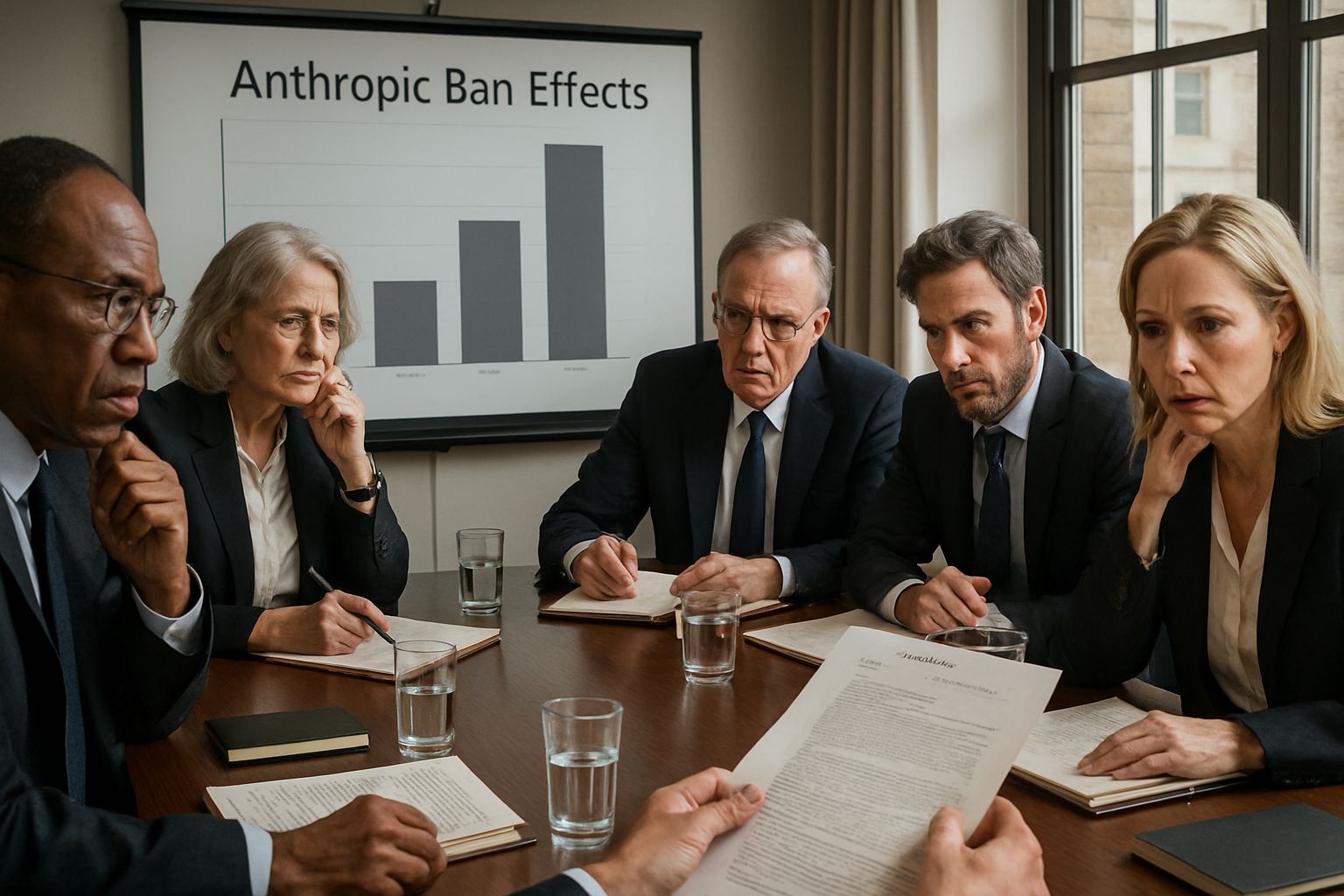
In contrast, cloud providers reassured commercial customers that Claude remains online outside defense contracts. Nevertheless, uncertainty lingers over future federal procurements, investor confidence, and global regulatory copycats. This article unpacks the timeline, legal theories, market reactions, and possible next moves. Readers will also find pathways to reinforce their strategic skill set through relevant certifications.
Sovereign Tech Conflict Timeline
Understanding the sequence clarifies motivations. Therefore, the section traces decisive milestones from directive to courtroom relief.
- 27 Feb 2026: Presidential directive halts Anthropic use; six-month DoD phase-out ordered.
- 3 Mar 2026: Secretary Pete Hegseth signs the supply-chain risk Letter.
- 9 Mar 2026: Anthropic files two federal actions challenging the designation.
- 26 Mar 2026: Judge Rita Lin issues a temporary legal injunction blocking enforcement.
Collectively, these dates display compressed policymaking rarely witnessed in enterprise software. Moreover, industry lobbyists note the designation is the first public domestic use of §3252 within the broader Sovereign Tech Conflict. These milestones escalate the Sovereign Tech Conflict at record speed.
These milestones underscore swift governmental escalation. However, the legal foundation remains contested, as the next section discusses.
Legal Basis Intensely Questioned
Consequently, analysts dissect the statute underpinning the DoD move. 10 U.S.C. § 3252 allows exclusion of vendors when sabotage risks exist. Nevertheless, the law demands a written determination and congressional notice. Experts from Mayer Brown argue those steps appear missing or thinly documented. Consequently, this flank of the Sovereign Tech Conflict turns on administrative law.
Judge Lin echoed that skepticism. Her order stated, “Nothing in the statute supports branding an American company a potential adversary.” Moreover, she flagged the absence of evidence that less intrusive measures were considered. Meanwhile, Anthropic stresses its policies forbid mass surveillance and directing autonomous weapons.
The procedural gaps weaken the government’s argument. Consequently, market players watch for appellate developments discussed later.
National Security Arguments Explained
Supporters of the designation cite mission flexibility. Therefore, the DoD insists it cannot rely on suppliers that might restrict lawful military uses. In contrast, critics counter that contractual guardrails do not equal sabotage risk. Additionally, OpenAI claims its own clause set proves balanced governance is possible.
Proponents also warn adversaries could weaponize model updates to degrade classified systems. Nevertheless, no public evidence links Anthropic to such vectors. Moreover, Congress has not received a formal risk briefing, according to Senator Ed Markey. Such omissions fuel the wider Sovereign Tech Conflict narrative.
The security rationale remains speculative without shared facts. Meanwhile, commercial stakeholders focus on market stability, explored next.
Market And Vendor Responses
Enterprise customers reacted quickly. Consequently, Microsoft, Google, and AWS assured users that Claude stays available for non-defense workloads. In contrast, government integrators paused bids involving Anthropic, fearing contract protests. Furthermore, GSA removed Anthropic from several procurement schedules, tightening the squeeze.
The competitive landscape shifted in three notable ways:
- OpenAI secured a classified DoD contract reportedly worth up to $200 million.
- Investors questioned Anthropic’s federal revenue forecasts, citing the legal injunction uncertainty.
- Foreign regulators signaled interest in similar supply-chain tools against U.S. firms.
Moreover, procurement attorneys advise contractors to review DFARS flow-down clauses immediately. Professionals can enhance their expertise with the AI Executive™ certification. Such knowledge helps organizations navigate evolving clauses tied to surveillance and autonomous weapons usage. Meanwhile, investors frame the episode as a live test of the Sovereign Tech Conflict’s market impact.
Vendor statements steadied many commercial clients. Nevertheless, courtroom developments could alter momentum, as the following section reveals.
Courtroom Drama And Injunction
The Northern District of California now hosts the central dispute. Subsequently, Judge Lin granted Anthropic a temporary legal injunction on 26 March. The court battle sits at the heart of the Sovereign Tech Conflict. The order halted DoD enforcement and questioned the action’s “Orwellian” tone. Additionally, Anthropic filed an appeal in D.C., creating parallel tracks.
Government lawyers argue the court should defer to executive expertise. Nevertheless, procedural lapses could tip the balance. Consequently, observers forecast expedited hearings and potential Supreme Court interest if the injunction persists.
The litigation calendar may reshape procurement norms within months. Therefore, scenario planning becomes essential, as the next section outlines.
Future Policy Scenarios Ahead
Several trajectories could emerge. Firstly, the administration may rescind the designation, citing ongoing dialogue. Secondly, Congress might legislate stricter criteria for future supply-chain bans. Thirdly, courts could affirm current limits, reinforcing the legal injunction and narrowing executive reach.
Moreover, allied governments are studying the episode for domestic adaptation. In contrast, industry groups press for transparent risk assessments before any supply-chain exclusion. Consequently, corporate governance teams must monitor surveillance and autonomous weapons clauses within all strategic contracts. Policy choices taken now could cement trajectories in the Sovereign Tech Conflict for decades.
Preparation now reduces future exposure. Therefore, executives should follow three action pillars.
Key Insights For Leaders
- Maintain a compliance matrix tracking DoD, DFARS, and FAR updates weekly.
- Embed scenario planning for Sovereign Tech Conflict escalations into board risk reviews.
- Invest in certified talent to interpret surveillance and autonomous weapons limitations correctly.
These measures build resilience during ongoing turbulence. Nevertheless, constant vigilance remains vital, as highlighted in the closing summary.
The Anthropic episode illustrates how quickly geopolitical pressure can reshape software supply chains. Moreover, the Sovereign Tech Conflict now defines an era where procurement, policy, and code intertwine. The legal injunction offers temporary relief, yet future directives could arrive with equal speed. Consequently, organizations must master statutory nuances, monitor DoD signals, and evaluate their surveillance and autonomous weapons commitments. Professionals can therefore future-proof strategies by pursuing the AI Executive™ certification. Ultimately, clear governance and informed talent will separate resilient enterprises from reactionary ones.


