

AI CERTS
5 days ago
Silicon Photonics Drives Nvidia-Marvell Debate
Moreover, we examine rising compute demand, exploding bandwidth expectations, and the evolution of interconnects. Each factor shapes future data infrastructure. Finally, we outline skill pathways and a trusted certification that helps engineers keep pace.
Investment Rumor Origins Explained
Several aggregator sites claimed Nvidia injected $2 billion into Marvell. Nevertheless, no SEC filing or official statement corroborates the number. Reuters, Bloomberg, and AP also show no matching copy. Therefore, the claim remains unverified.
Nvidia does hold documented stakes in other partners, such as CoreWeave. Consequently, investors considered a Marvell deal plausible. In contrast, both companies only confirmed technical collaboration around NVLink Fusion, not equity transfer.
The absence of mandatory 8-K or Schedule 13D documents strengthens the doubt. These findings close the rumor loop. However, they open questions about strategic intent.
Partnership Facts And Confirmation
Nvidia announced NVLink Fusion at Computex 2025. Marvell joined as a launch partner one day later. Moreover, executives highlighted combined expertise in high-speed interconnects and rack-scale systems.
NVLink Fusion promises up to 1.8 TB/s bidirectional bandwidth. Meanwhile, Marvell supplies SerDes, custom XPUs, and co-packaged optics. Consequently, the firms address hyperscalers’ soaring compute demand.
Official quotes stress technical synergies, not capital movement. Therefore, the partnership centers on design wins, production roadmaps, and joint customer engagements. These realities anchor the collaboration. Subsequently, focus shifts to component innovation.
Silicon Photonics Strategic Significance
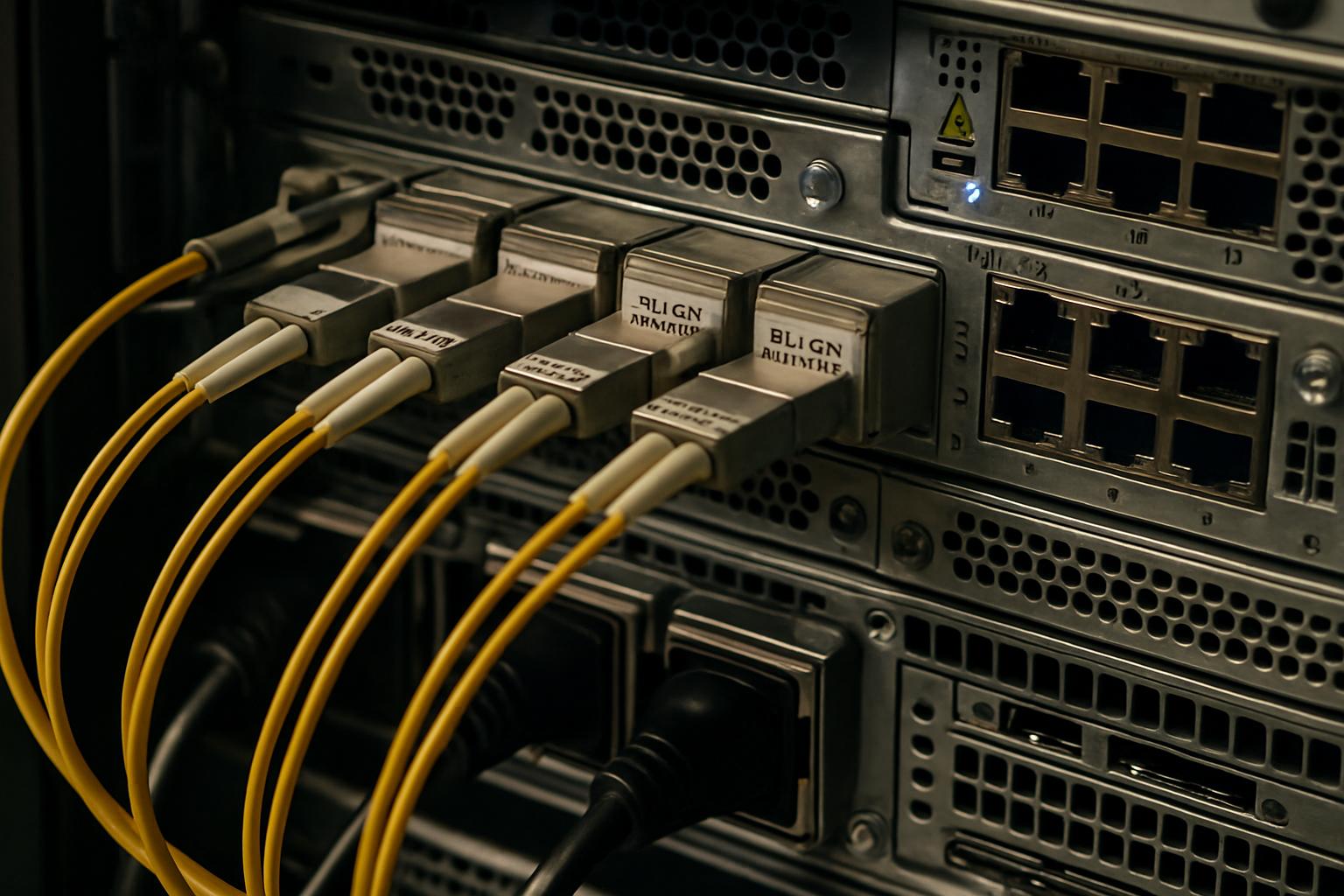
Electrical traces hit physical limits inside dense AI racks. Silicon Photonics replaces copper with light, cutting power and latency. Furthermore, the technology sustains exponential traffic growth without thermal penalties.
Marvell already ships optical DSPs and co-packaged transceivers. Nvidia, meanwhile, integrates optical modules in Spectrum-X switches. Consequently, shared roadmaps converge on Silicon Photonics modules bonded directly to GPUs and XPUs.
Key advantages include:
- Up to 40 % lower energy per bit transferred
- Rack-scale reach beyond traditional backplanes
- Linear scaling of effective bandwidth across thousands of nodes
These benefits unlock larger AI fabrics. However, packaging complexity rises, driving joint R&D costs. The section underscores why Silicon Photonics commands boardroom attention. Consequently, market analysts track every development.
Rising Compute Demand Drivers
Generative models balloon from billions to trillions of parameters. Additionally, inference traffic surges as enterprises embed AI into workflows. Those trends multiply compute demand across data centers.
Hyperscalers therefore pursue heterogeneous accelerators. NVLink Fusion lets custom XPUs sit alongside Nvidia GPUs. Consequently, workloads can run on optimal silicon while sharing memory pools.
Marvell’s record FY2026 revenue, up 42 %, reflects this wave. In contrast, legacy networking vendors struggle to match agility. These numbers justify rapid innovation funding. Subsequently, attention turns to connectivity.
High Bandwidth Interconnects Evolution
AI clusters collapse if fabrics throttle data flow. Therefore, developers demand predictable, low-latency interconnects. NVLink Fusion delivers chiplet-level coherence with extreme bandwidth.
However, rack limits shift the choke point outward. Co-packaged optics and Silicon Photonics ports push transmissions beyond 1.6 Tbit/s. Moreover, SerDes advances from 112 G to 224 G enable finer lane granularity.
Standard bodies coordinate signaling, yet proprietary link layers still matter. Consequently, Nvidia keeps NVLink closed, while PCIe 7.0 evolves publicly. Engineers must master both worlds. The landscape feeds demand for targeted learning resources.
AI Data Infrastructure Outlook
Regulators watch dominant vendors that invest in customers or suppliers. Nevertheless, strategic capital remains a lever for platform expansion. Future Nvidia moves toward Marvell could still arise.
Meanwhile, hyperscalers evaluate disaggregated fabrics, composable memory, and optical backplanes. Each initiative depends on robust infrastructure planning. Moreover, total cost of ownership favors solutions that combine bandwidth efficiency with thermal headroom.
Market share will tilt toward players that commercialize Silicon Photonics at scale. Consequently, engineering teams require cross-domain fluency from device physics to network architecture. The next section details skill pathways.
Skills Pathway And Certification
Technical leaders must digest rapid changes yet deliver stable platforms. Furthermore, hiring managers prioritize credentials that validate adaptable knowledge.
Professionals can strengthen fundamentals through the AI Foundation Essentials™ certification. The program covers data pipelines, AI math, and emerging hardware including Silicon Photonics. Consequently, learners bridge theory and production requirements.
Graduates gain:
- Frameworks for sizing compute demand and scaling models
- Methods to benchmark optical interconnects under real traffic
- Blueprints for energy-aware data infrastructure designs
These competencies translate directly into architecture roadmaps. Moreover, certified professionals communicate credibly with finance and compliance teams. Preparation today positions teams for tomorrow’s investment decisions.
These sections traced rumor validation, partnership details, and technology stakes. However, decisions still hinge on verifiable filings and measurable performance data.
Conclusion
Nvidia has not confirmed a billion-dollar stake in Marvell. Nevertheless, their NVLink Fusion partnership advances optical interconnects and rack-scale infrastructure. Furthermore, Silicon Photonics emerges as the enabling force behind sustainable bandwidth and soaring compute demand.
Professionals who master these domains gain strategic leverage. Therefore, explore the linked certification to stay ahead and guide your organization through the next data revolution.


