

AI CERTS
5 days ago
India’s Three-Hour Mandate Reshapes Deepfake Governance
Industry giants, civil libertarians, and engineers immediately assessed what shifts lie ahead. Meanwhile, global observers framed India’s move as one of the world’s toughest. This article unpacks what changed, who is affected, and why urgency dominates. Additionally, we examine operational hurdles and likely spillover to foreign policy landscapes. Professionals will also find guidance on preparing tooling, staffing, and governance frameworks. Finally, we point toward certifications that strengthen responsible AI practice within organizations.
The stakes are high, yet pragmatic planning can mitigate disruption and legal exposure. Therefore, continue reading for a structured, timely analysis tailored to technical leaders. Insights below adhere to journalistic rigor and concise, accessible language requirements. Let us begin with the forces that demanded faster intervention against synthetic media.
Why Deepfake Rules Tightened
Deepfake volumes surged during recent state elections, spreading scams and misinformation within hours. Consequently, public pressure mounted for decisive government action. Civil society documented dozens of non-consensual intimate videos that stayed online too long. In contrast, law enforcement argued they lacked rapid levers to compel takedown.
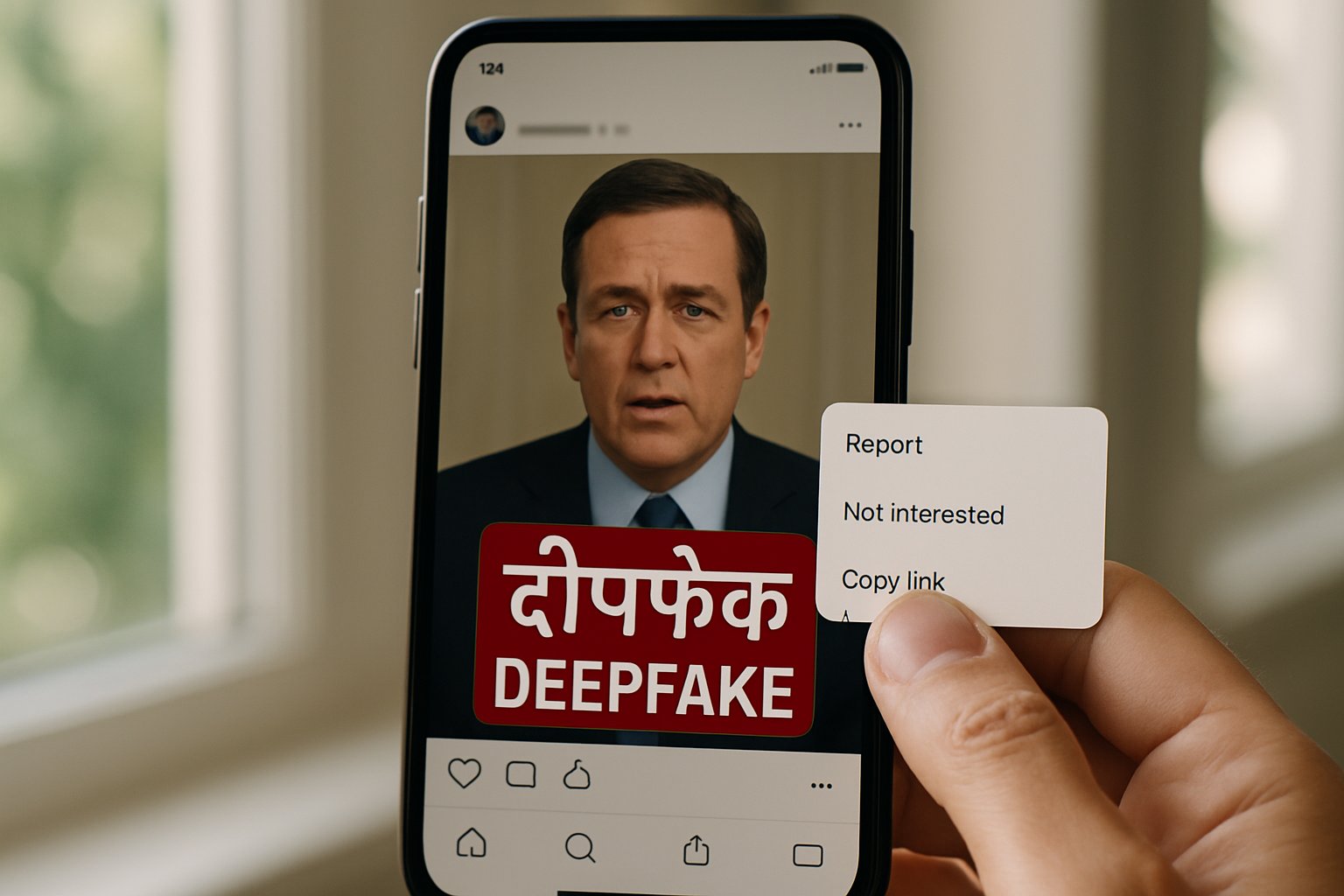
MeitY responded by amending the IT Rules after months of closed-door consultation. Officials said fast viral spread outpaced the prior thirty-six hour deadline. Therefore, the new Three-Hour Mandate was positioned as proportionate to modern threat velocity. Moreover, provenance requirements seek to increase user transparency and investigative traceability.
Government spokespeople highlighted several policy goals driving urgency. First, shield citizens from impersonation fraud and revenge pornography. Second, protect electoral discourse ahead of the 2027 general election. Third, position India as a leader shaping global tech governance. These motives reveal a defensive yet ambitious posture. Nevertheless, details of the new timelines deserve closer inspection.
Key Three-Hour Window Details
The amended text replaces a single phrase within Rule 3(1)(d). Consequently, court or government orders covering serious unlawful categories trigger mandatory action within three hours. Platforms must acknowledge reception promptly and confirm action completion once done. Failure risks loss of statutory safe-harbour and potential criminal liability.
Additionally, user complaints about explicit deepfake impersonations demand Removal in only two hours. Other urgent categories now enjoy a seven-day grievance deadline, halved from fifteen. These tighter service levels compel constant monitoring and localized escalation teams. Moreover, provenance and labeling obligations apply at upload, not after discovery.
- Three-hour Removal after court or government orders.
- Two-hour deadline for explicit deepfake complaints.
- Seven-day grievance resolution for other urgent categories.
These timelines constitute the operational core of the Three-Hour Mandate. Consequently, platforms need new alerting pipelines and legal coordination protocols. Expanded duties beyond speed now enter focus.
Expanded Platform SGI Obligations
Labeling rules extend beyond rapid Removal. Each uploader must declare whether content is synthetically generated. Moreover, intermediaries must technically verify declarations using hash matches or detection models. Platforms must also embed permanent metadata indicating origin and any edits.
Intermediaries cannot allow users to strip labels or provenance identifiers. Consequently, encryption layers and transcoding workflows require retrofits. Meanwhile, Significant Social Media Intermediaries face additional staffing requirements. They need a resident grievance officer, chief Compliance officer, and 24x7 nodal contact.
Monthly transparency reports documenting takedowns, user complaints, and proactive detection must remain public. Therefore, data engineering teams should automate dashboard generation against consistent schemas. Professionals can boost readiness through the AI Prompt Engineer™ certification. This credential deepens understanding of detection models and provenance tooling. Expanded duties elevate both tooling complexity and governance expectations. However, feasibility remains contested by many stakeholders. The Three-Hour Mandate overlays these duties with unforgiving clocks. Implementation hurdles now warrant dedicated examination.
Implementation Hurdles And Risks
Operationalizing a three-hour SLA across billions of uploads is daunting. The Three-Hour Mandate leaves negligible buffer for human escalation chains. Furthermore, smaller services lack mature moderation infrastructure and regional staff. In contrast, larger platforms must retrofit global workflows for Indian specificity. Automated detection still produces false positives, risking overzealous Removal of lawful satire.
Legal teams warn that compressed windows incentivize defensive takedown decisions. Consequently, freedom-of-expression groups foresee chilled speech and reduced legitimate parody. Meanwhile, unclear technical standards around provenance may fragment ecosystem interoperability. Regulation demands permanence, yet implementation depends on evolving C2PA or watermark schemes.
Cost pressures also loom. Around-the-clock reviewers and engineering sprints inflate operational budgets. Moreover, capital expenses rise for GPU detection clusters and storage of immutable metadata. Therefore, business leaders must balance Compliance spending with product roadmaps. These constraints illustrate significant strategic risk. Nevertheless, varied constituencies express divergent reactions. Their perspectives provide additional context.
Industry And Civil Response
Meta, Google, and X publicly stated intent to honor the Three-Hour Mandate while assessing feasibility. Additionally, IAMAI sought phased enforcement to accommodate engineering upgrades. NASSCOM echoed those concerns during closed consultations with MeitY. Conversely, Minister Ashwini Vaishnaw insisted that platforms already possess adequate resources.
Internet Freedom Foundation criticized vague language empowering executive takedown directives. They argued the Regulation could silence dissent and investigative journalism. Civil lawyers signaled forthcoming petitions challenging proportionality. Nevertheless, victims’ advocates welcomed faster Removal of abusive deepfakes. Observers noted that the revised IT Rules now dominate boardroom agendas.
Policy analysts noted India now enforces the fastest deepfake takedown timeline globally. Moreover, they predict international emulation once toolchains mature and costs fall. Diverse reactions underline both promise and peril. Consequently, attention shifts to broader policy contagion. We next assess ripple effects beyond India.
Global Policy Ripple Effects
India hosts nearly one fifth of global internet users, amplifying extraterritorial influence. Therefore, designers may ship provenance labels worldwide rather than segment markets. Meanwhile, Brussels regulators studying AI Act enforcement monitor India’s implementation closely. Several think tanks argue that consistent Regulation across democracies would streamline platform engineering burdens.
United States lawmakers have already cited the Three-Hour Mandate during hearings on election security. In contrast, Australian agencies evaluate whether similar deadlines suit their smaller market. Moreover, multilateral standards groups weigh C2PA integration as a baseline provenance layer. Consequently, technical convergence could accelerate despite differing legal traditions.
Companies fear that one missed alert could break Three-Hour Mandate metrics and invite penalties. India’s decision adds momentum to global harmonization debates. Subsequently, organizations must prepare proactive strategies. Next we outline actionable steps.
Preparing For Next Steps
Begin with a gap assessment mapping current moderation tooling against new obligations. Additionally, establish a dedicated three-hour incident channel staffed around the clock. Every readiness drill should time performance against the Three-Hour Mandate benchmark. Embed provenance metadata at creation, not post-processing, to avoid re-encoding overhead. Implement continuous monitoring dashboards feeding real-time Compliance alerts to legal teams.
Second, update community guidelines to reflect SGI definitions and labeling expectations. Train reviewers using contextual examples that illustrate lawful satire versus malicious impersonation. Furthermore, document every takedown decision to prove good-faith Regulation adherence. Such records support audits and defend safe-harbour status. Cross-functional Compliance reviews must occur weekly during initial rollout.
- Deploy automated detection tuned for Hindi, Tamil, and Telugu audio.
- Localize user declaration prompts across key regional languages.
- Integrate provenance watermarks compatible with C2PA 1.2 specifications.
Finally, invest in staff education to sustain evolving governance needs. Leaders can formalize skills through the earlier linked certification, strengthening operational resilience. Proactive preparation converts disruptive Regulation into strategic advantage. Consequently, organizations reduce crisis costs and bolster public trust.
Conclusion
India has set a new bar for synthetic media governance. The Three-Hour Mandate forces unmatched speed, robust labeling, and transparent reporting. Consequently, engineering, legal, and policy teams must collaborate more closely than ever. Platforms should benchmark performance weekly and share lessons to refine sector playbooks. Furthermore, stakeholders must monitor early enforcement data and pending judicial reviews.
Swift adaptation will preserve safe-harbour and public trust. Professionals eager to strengthen detection strategies can revisit the earlier certification link. Act now, build resilient workflows, and turn regulatory pressure into competitive advantage.


