

AI CERTs
4 hours ago
Inclusive Design Failure draws regulatory heat
A high-profile accessibility audit recently uncovered a costly Inclusive Design Failure at a global e-commerce brand. Consequently, board members learned that their AI-generated interface hid core navigation from screen readers. Meanwhile, regulators and disability advocates condemned the lapse, calling it avoidable and reckless.
Furthermore, the case is not isolated. WebAIM’s 2024 scan found 95 % of leading sites still ship with detectable WCAG errors. Moreover, automated overlays marketed as quick fixes often mask problems rather than resolve them. Therefore, executives now face rising legal exposure under ADA and international rules.
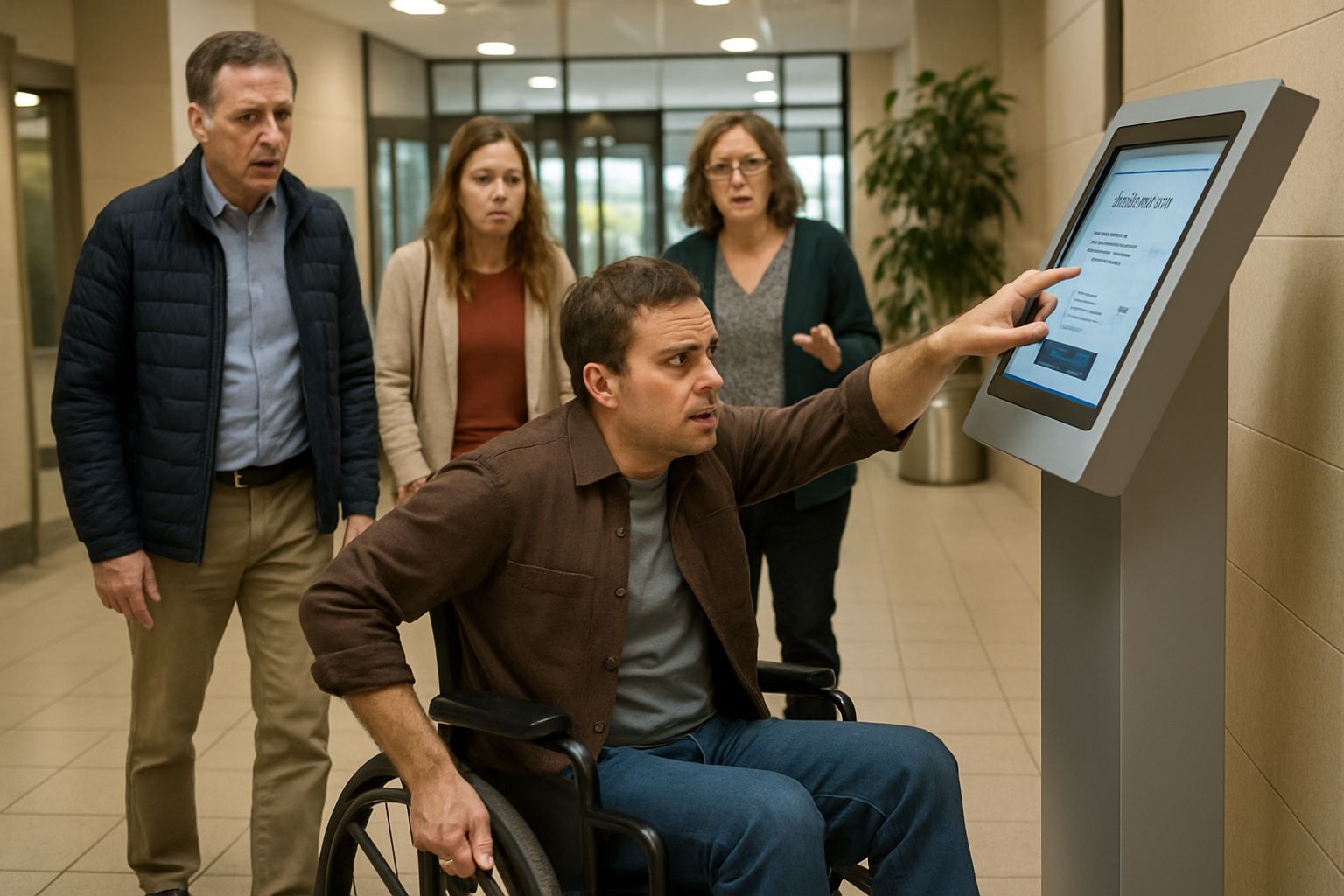
This article unpacks why AI tools keep missing the mark, how regulators react, and what ethical product teams must do next. Readers will also learn where certifications such as the AI+ UX Designer™ credential can elevate internal skills.
Audit Exposes Ongoing Risks
January 2025 brought fresh headlines when the FTC fined accessiBe one million dollars for misleading marketing. The agency stated the company falsely promised automatic WCAG Compliance. In contrast, manual testing revealed unlabeled buttons, keyboard traps, and inconsistent ARIA usage.
Overlay Fact Sheet signatories, including veteran UX consultant Karl Groves, echoed the findings. Nevertheless, many site owners still deploy similar widgets hoping to dodge lawsuits. Data contradicts that hope. UsableNet’s litigation tracker shows overlay-using domains over-represented in ADA cases.
• 67 % of practitioners rate overlays “not effective” (WebAIM 2021) • Class-action filings citing overlays rose 31 % between 2023 and 2025 • Average remediation cost triples once lawsuits commence
These numbers confirm persistent risk. However, deeper regulatory shifts intensify pressure.
Oversight now targets deceptive claims and poor results. Subsequently, companies must rethink procurement strategies.
Regulators Signal Tougher Stance
Regulators increasingly connect Inclusive Design Failure with consumer harm. The FTC order against accessiBe bars future “fully compliant” statements without proof. Moreover, European bodies preparing the 2025 European Accessibility Act guidance warn against relying on overlays.
Lainey Feingold, an ADA lawyer, notes that compliance claims invite discovery requests for audit logs. Consequently, missing evidence can worsen penalties. Meanwhile, corporate counsel urge teams to validate AI outputs before public rollout.
Regulatory attention expands beyond widgets. The IEEE ProComm 2024 paper documented generative builders missing vital WCAG 2.1 AA success criteria. Therefore, watchdogs may scrutinize builder vendors next.
Strong enforcement messages are clear. Nevertheless, uncertainty remains about global coordination.
Organizations must anticipate multi-jurisdiction requirements. In contrast, reactive fixes will likely fail future audits.
Data Highlights Systemic Gaps
Quantitative evidence underscores the breadth of issues. WebAIM’s Million report counted 56.8 automated errors per homepage on average. Low contrast text affected 81 % of pages, while missing alt text hurt 54.5 %.
Additionally, unlabeled forms and empty links disrupt keyboard navigation for blind users. Although automated scanners catch these patterns quickly, AI generators still reproduce them at scale.
- 81 % have contrast failures
- 54.5 % miss alternative text
- 48.6 % omit form labels
- 44.6 % contain empty links
- 28.2 % include empty buttons
These recurring failures demonstrate Inclusive Design Failure across sectors. Consequently, relying solely on AI validation remains risky.
Numbers alone cannot solve problems. Therefore, practitioner insight becomes indispensable for sustainable improvement.
Practitioners Reject Quick Fixes
Seasoned engineers argue that real UX quality demands semantic HTML, robust ARIA, and thoughtful interaction design. Moreover, they emphasize Ethics when discussing AI suggestions that hallucinate alt text.
Adrian Roselli stresses manual screen-reader walkthroughs for every release. Meanwhile, teams experiment with AI as an assistant, not an arbiter. However, leadership sometimes prioritizes speed over user dignity, creating yet another Inclusive Design Failure.
Professionals can enhance their expertise with the AI+ UX Designer™ certification. Graduates learn to combine automation with human judgment, ensuring Compliance without sacrificing creativity.
Expert consensus favors blended testing approaches. Subsequently, companies should budget for iterative human reviews.
Ignoring practitioner advice fuels reputational damage. In contrast, collaborative methods close accessibility gaps faster.
AI Builders Under Scrutiny
Generative builders such as Wix ADI, Relume, and Dorik promise instant layouts. Nevertheless, the ProComm study showed none achieved full Compliance. Unlabeled controls blocked NVDA users, while heading order bewildered VoiceOver.
Furthermore, some builders inject heavy JavaScript that traps keyboard focus. Consequently, ADA plaintiffs cite these traps as clear violations. Vendors now pivot marketing toward “acceleration” rather than “guaranteed compliance.”
Academic researchers call this marketing shift reactive, not proactive. Meanwhile, Inclusive Design Failure persists because training data ignores assistive-technology nuances.
Empirical scrutiny will intensify. Therefore, builder platforms must publish transparent audit logs or face regulator queries.
Study results highlight design blind spots. Subsequently, procurement teams should request third-party attestations before purchase.
Balancing Speed And Responsibility
Pressure to ship features quickly tempts leaders to accept AI shortcuts. However, rushing invites Ethics breaches when marginalized users cannot transact. Moreover, lawsuits consume resources that velocity was supposed to save.
Balanced roadmaps pair machine scanning with human checks during sprints. Additionally, design systems embed accessible patterns by default, reducing firefights later. Teams track key metrics such as keyboard coverage and color contrast ratios.
Importantly, post-release monitoring continues. Consequently, regression alerts catch new Inclusive Design Failure instances before public complaints. Automated pipelines generate reports, but human testers verify experiential quality.
Practical governance aligns speed with user trust. In contrast, ad-hoc fixes erode credibility.
Continuous improvement supports long-term Compliance goals. Subsequently, leadership can report progress confidently to boards and regulators.
Actionable Steps For Teams
Executing an effective accessibility program requires clear actions:
- Audit existing experiences using axe, Lighthouse, and manual screen-reader walkthroughs.
- Prioritize high-impact WCAG failures affecting revenue paths.
- Train staff through recognized courses and AI+ UX Designer™ certification.
- Demand vendor proof of Compliance, including independent audits and changelogs.
- Establish regression testing in CI pipelines with human validation gates.
These steps mitigate Inclusive Design Failure risks and demonstrate good faith under ADA. Moreover, transparent processes build stakeholder confidence.
Structured workflows reduce fire drills. Consequently, teams can focus on innovative UX features rather than crisis management.
Conclusion And Next Moves
Inclusive Design Failure remains costly, yet preventable. Regulators, data, and practitioners converge on one message: automation alone cannot guarantee Compliance. Therefore, balanced strategies blending AI, manual testing, and Ethics frameworks deliver sustainable results.
Moreover, investing in staff education, such as the AI+ UX Designer™ certification, strengthens organizational capability. Consequently, forward-thinking leaders will integrate accessibility metrics into every product checkpoint.
Adopt these practices today and transform accessibility from liability into competitive advantage.


