

AI CERTs
4 hours ago
Balancing Student Surveillance Ethics in Focus-Tracking Schools
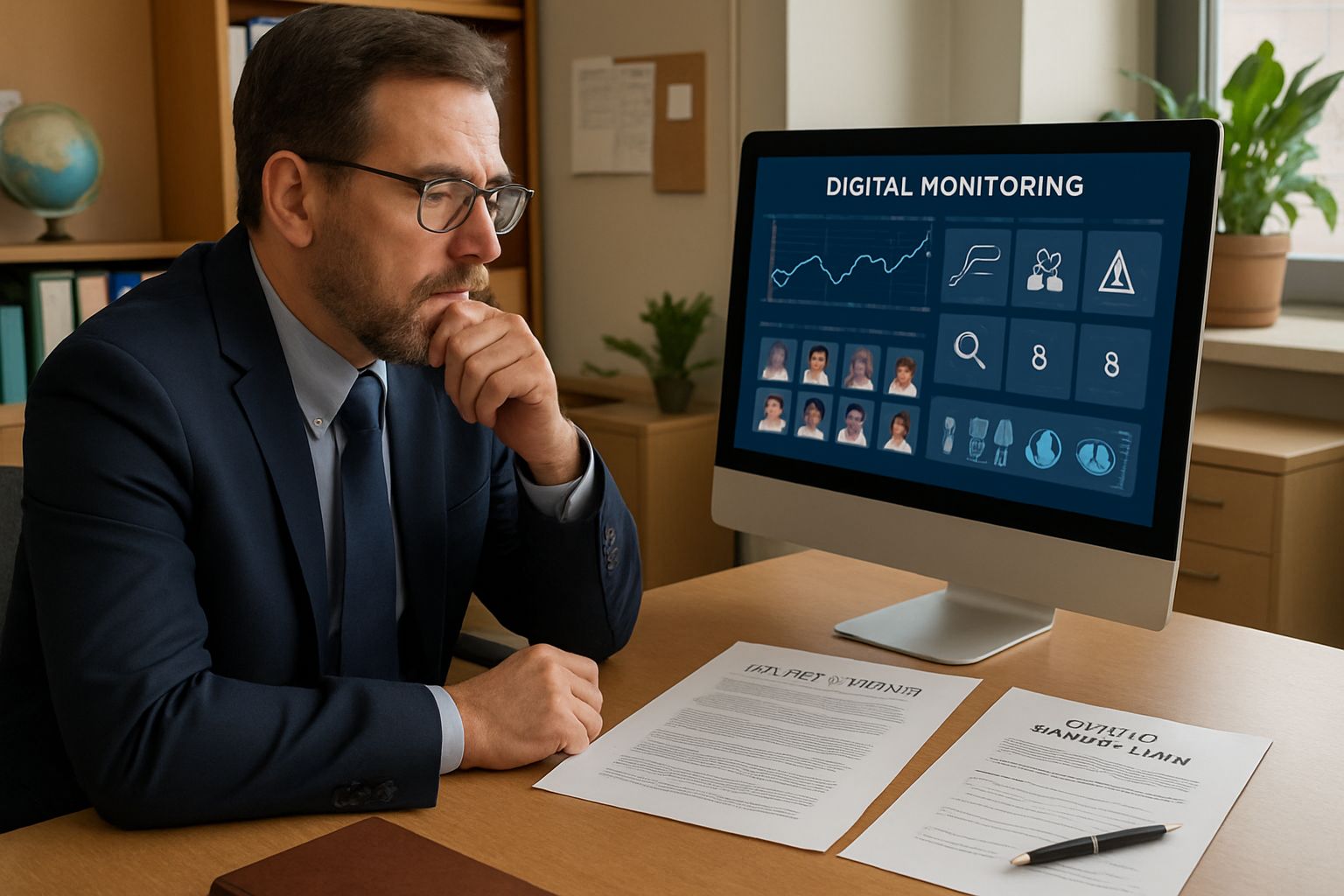
High school classrooms increasingly resemble research labs. Webcam gaze detectors, Chromebook dashboards, and EEG headbands promise real-time engagement scores. Consequently, district leaders hail data-driven teaching. However, many stakeholders question the Student Surveillance Ethics behind these tools. Vendors cite improved outcomes, yet evidence remains mixed. Moreover, advocacy groups warn that constant digital observation chills creativity. Educators now face a dilemma: embrace analytics or defend traditional trust. This article unpacks the market, technology, benefits, and risks. It also offers concrete safeguards. Throughout, Student Surveillance Ethics stays central to every dimension.
Rising Market Momentum Today
Grand View Research projects AI in Education spending to reach USD 32.3 billion by 2030. Device-Monitoring subscriptions already blanket millions of Chromebooks. Furthermore, eye-tracking startups pitch heat-map dashboards to remote teachers. In contrast, EEG pilots remain smaller yet attract venture funds. Student Surveillance Ethics debates intensify because market hype often outruns pedagogy. Researchers still lack large randomized trials linking attention scores to grades.
The sector’s growth stems from three forces:
- Hybrid learning demands richer engagement metrics.
- Affordable webcams and cloud GPUs cut deployment costs.
- Districts chase measurable accountability indicators.
These adoption drivers illustrate why spending accelerates. Nevertheless, unresolved ethical questions could slow momentum. Therefore, understanding both pressures is essential before procurement.
Momentum offers opportunity yet magnifies risk. However, next we examine the underlying technology.
Technology Behind Focus Tools
Focus systems span several modalities. Webcam gaze algorithms infer screen attention using facial landmarks. Moreover, emotion classifiers attempt to read frustration or confusion from micro-expressions. Physiological wearables capture heart rate and Biometrics like EEG rhythms. Additionally, device-Monitoring software logs open tabs, keystrokes, and idle time. Machine-learning pipelines then translate raw signals into color-coded dashboards.
Accuracy varies sharply by context. Lab studies report over 90% EEG classification success. Nevertheless, real classrooms introduce noise, occlusion, and neurodiversity. Consequently, false positives remain common. Privacy engineers note that even anonymized gaze heat maps can re-identify students when combined with schedules.
Technical complexity hides value judgments. Models equate looking at the screen with learning, although deep thought may involve glancing away. Therefore, design choices embed contested pedagogical assumptions.
These limitations underscore why ethics must guide design. Subsequently, we explore how vendors frame their offerings.
Benefits Vendors Emphasize Often
Marketing materials spotlight tangible teacher gains. Vendors argue that instant alerts let instructors redirect off-task learners. Moreover, remote lessons gain visibility once limited to physical classrooms. Wearable suppliers add that neurofeedback can train self-regulation.
Promoters list headline advantages:
- Earlier disengagement detection supports timely intervention.
- Classroom analytics simplify differentiated instruction.
- Aggregate statistics assist district resource planning.
- Data dashboards impress grant reviewers and parents.
Educators under performance pressure find such claims persuasive. However, Student Surveillance Ethics critics counter that promised gains lack longitudinal proof. Consequently, some districts now pause pilots pending stronger evidence.
Vendor narratives highlight potential yet downplay harm. Mounting societal concerns therefore deserve dedicated scrutiny.
Mounting Ethical Pressure Worldwide
Frontiers researchers warn that constant gaze scoring may normalize surveillance. Additionally, EFF stresses disproportionate impacts on marginalized students. Anxiety grows when attention meters sit beside grades, because learners fear disciplinary action. Senators Warren and Markey consequently demand tighter federal safeguards.
Privacy advocates raise four recurring issues. First, inferred mental states receive weaker legal protection than explicit data. Second, biometric inference can embed racial bias. Third, perpetual Monitoring erodes autonomy, a core Education value. Fourth, data retention policies often lack transparency.
Internationally, the EU AI Act classifies emotion recognition in Education as high risk. Schools deploying such models therefore face heightened compliance duties. Student Surveillance Ethics thus shifts from abstract debate to regulatory imperative.
Ethical pressure exposes legal uncertainties. Next, we map those gaps.
Policy And Legal Gaps
United States frameworks such as FERPA predate AI gaze engines. Consequently, definitions of Biometrics remain narrow, excluding many inferred signals. Moreover, COPPA covers children under 13, leaving most high schoolers outside scope. State laws differ, creating patchwork obligations.
District contracts often grant vendors broad license to repurpose data. In contrast, few agreements mandate independent audits. Parliamentarians therefore push for mental-privacy legislation mirroring health-data standards. Meanwhile, European regulators require risk assessments and human oversight.
Practical compliance demands clearer consent workflows. Parents must understand what engagement scores capture and how long systems store them. Student Surveillance Ethics remains the lens through which legitimacy will be judged.
Legal ambiguity fuels operational headaches. However, schools can adopt mitigation practices immediately.
Mitigation Steps For Schools
District leaders can act even before lawmakers move. Firstly, conduct rigorous pilot studies with opt-in consent. Secondly, form multidisciplinary review boards including students. Moreover, implement data minimization and delete raw Biometrics quickly. Privacy impact assessments should precede any procurement.
Transparent messaging also matters. Teachers need training to interpret dashboards without overreacting. Additionally, vendors should publish accuracy for neurodivergent populations. Professionals can enhance their expertise with the AI+ UX Designer™ certification, which covers human-centered AI design.
These safeguards align daily practice with Student Surveillance Ethics. Consequently, districts can harness analytics while respecting learner dignity.
Mitigation offers actionable guidance. Finally, we consolidate insights and propose next steps.
Conclusion And Next Steps
Focus-tracking adoption accelerates because market forces reward measurable engagement. However, unresolved Student Surveillance Ethics issues threaten trust. Technologies deliver intriguing signals yet struggle with context, bias, and real-world noise. Moreover, Privacy, Monitoring scope, and Biometrics governance remain unsettled. Educators must weigh unproven benefits against potential harm.
Therefore, districts should pilot transparently, audit continuously, and teach data literacy. Policymakers likewise need updated protections aligned with mental-state inference. Industry standards, independent validation, and human-centered design will decide whether focus tracking uplifts Education or undermines it. Stakeholders ready to navigate this frontier should explore certifications, share evidence, and keep students’ rights paramount.


