

AI CERTs
4 hours ago
Racial Disparity Report spotlights AI triage inequities
Emergency doctors rely on triage to decide who gets care first. Artificial intelligence now assists that life-or-death judgement in many busy hospitals. However, recent studies reveal troubling racial gaps in those algorithmic decisions. The newest Racial Disparity Report explores how such gaps emerge and how leaders can respond. Consequently, technology executives, clinicians, and investors must understand both promise and peril today. This article examines peer-reviewed evidence, regulatory shifts, and mitigation playbooks shaping equitable AI triage. Additionally, it highlights concrete solutions drawn from multisite deployments that improved minority sensitivity by nearly eight percentage points. Readers gain actionable insights anchored in Healthcare ethics, Diagnostics quality, and business risk management.
Why AI Triage Matters
Clinical triage sorts patients into urgency buckets within minutes. Machine learning promises faster, more consistent sorting than overwhelmed humans. Moreover, automated scoring can surface subtle patterns across vitals, history, and free-text notes. Early Diagnostics benefit when models spot sepsis quickly. Yet algorithms inherit every flaw embedded in the data used for training. In contrast, a misplaced confidence can magnify harm when minority presentations diverge from training norms. The second Racial Disparity Report iteration stresses that point with stark examples. Therefore, leaders cannot treat triage models as plug-and-play widgets. They require continuous validation across age, language, and race intersections.
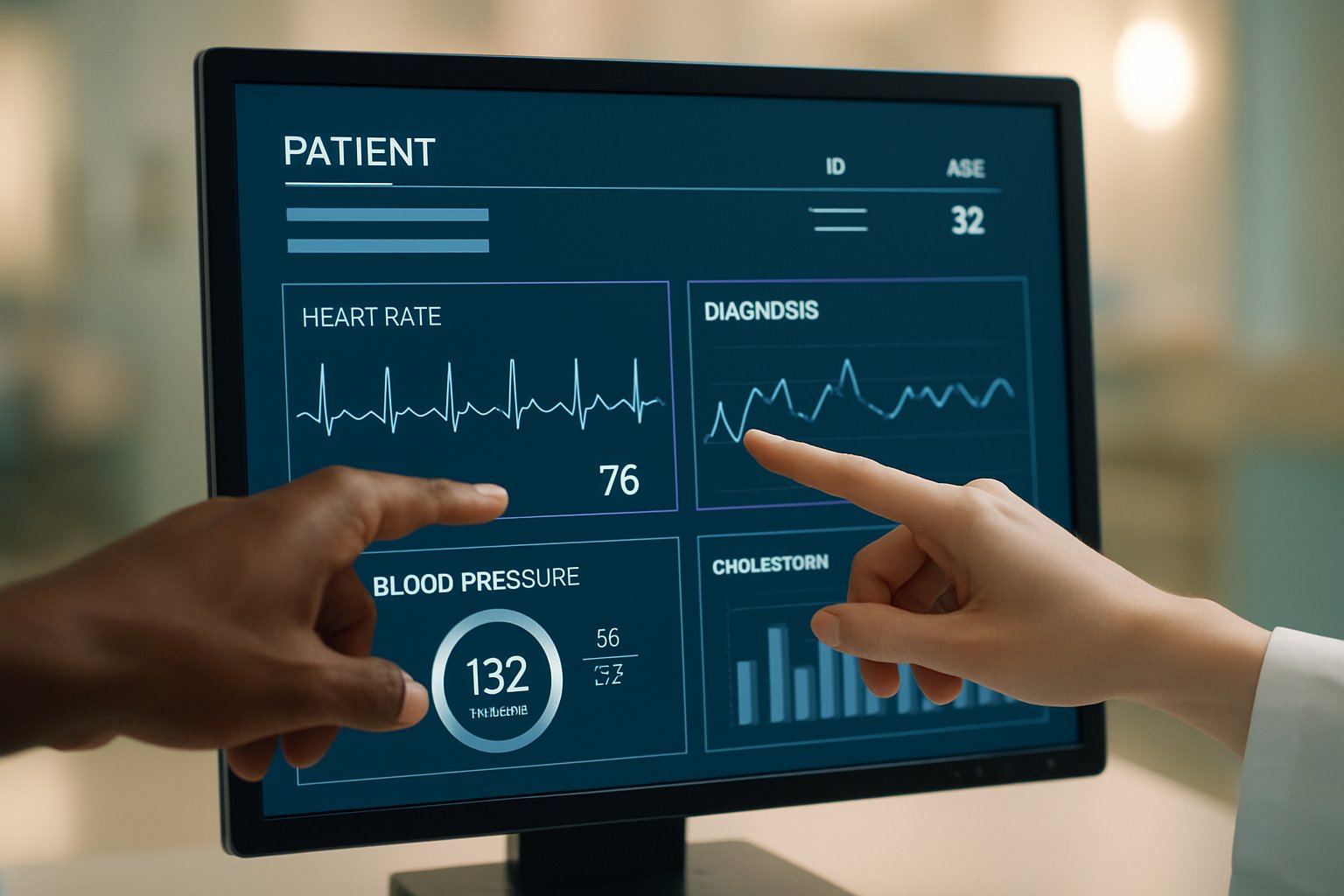
These concerns motivate deeper scrutiny in subsequent sections. Meanwhile, evidence already shows both failures and fixes.
Unequal Data, Unequal Care
Training data often mirror historic testing disparities inside American emergency departments. For example, matched studies found White patients received more complete blood counts than Black counterparts. Consequently, many models assume “no test” equals “normal”, embedding silent Bias. University of Michigan pulmonologist Michael Sjoding warns that pattern distorts severity estimates. Healthcare leaders must recognise that absent information itself becomes a proxy variable. Moreover, an ArXiv preprint showed language models downgrade acuity when they detect cues like missed appointments. Such cues correlate with race and income yet appear innocuous. Consequently, diagnostic accuracy diverges across groups before any physician intervenes.
Data inequality sets biased baselines, the Racial Disparity Report exposes these hidden thresholds. However, understanding mechanisms opens paths to intervention, as next section explains.
Documented AI Bias Mechanisms
Peer-reviewed results now quantify how algorithmic bias manifests. Cedars-Sinai researchers tested four leading models using ten psychiatric vignettes. They found treatment recommendations changed when patient race switched from White to African American. Moreover, schizophrenia scenarios yielded highest bias scores, averaging 1.93 on a three-point scale. Meanwhile, anxiety cases showed smaller but still relevant gaps. The authors concluded large language models can amplify training Bias already present inside clinical text. In Diagnostics practice, such shifts could mislabel danger signs as behavioural issues. Further evidence comes from the JMIR viewpoint reviewing 57 triage studies. Only seven provided equity-stratified metrics, exposing an Ethics blind spot. Therefore, transparent dashboards and post-market audits are essential safeguards. The Racial Disparity Report cites this study as emblematic.
Documented failures illustrate systemic, not isolated, problems. In contrast, some deployments already show improvement, detailed next.
Real Deployment Lessons Learned
Evidence is not uniformly grim. A multisite rollout of TriageGO improved overall sensitivity for high-severity cases. Notably, Black patients gained 7.7 percentage points versus 2.4 for White peers. Consequently, gaps narrowed where baseline performance lagged. Researchers attribute success to prospective calibration, clinician overrides, and continuous feedback loops. Moreover, workflows required nurses to review model flags before final triage assignment. That human-in-the-loop design reduced automation Bias risk. The findings appear in Annals of Emergency Medicine and inform the new Racial Disparity Report recommendations. Nevertheless, authors caution that context, staffing, and quality culture matter. Healthcare systems must adapt playbooks rather than transplant algorithms unchanged.
Selective successes prove improvement is possible. However, regulation will decide pace and scope, discussed next.
Evolving U.S. Regulatory Oversight
January 2026 FDA guidance redefined clinical decision support categories. Consequently, some triage tools now avoid premarket review if clinicians remain ultimate decision makers. Industry advocates welcome flexibility for rapid innovation. In contrast, patient-safety groups warn self-classification may erode accountability. JMIR authors label that gap an Ethics hazard requiring surveillance. Moreover, the FDA list contains 690 AI products, yet few disclose subgroup metrics. Therefore, lawmakers debate mandatory equity dashboards similar to drug adverse-event reporting. The latest Racial Disparity Report urges vendors to publish calibration plots and disparity indices quarterly. Professionals can deepen expertise via the AI Product Manager™ certification.
Regulatory flux heightens both opportunity and liability. Consequently, proactive governance becomes a competitive advantage, as final section shows.
Mitigating Risks And Gaps
Organisations should establish equity dashboards tracking true-positive and false-negative rates by race, language, and insurance. Moreover, teams must rigorously test causal effects of missing labs on model outputs. Below are evidence-based safeguards recommended by experts.
- Quarterly audits using stratified Diagnostics calibration curves.
- Override logging to quantify automation Bias behaviour.
- Ethics councils including patient representatives before scale.
- Continual training led by certified AI product managers.
- Comply with Racial Disparity Report audit templates.
Consequently, multidisciplinary oversight aligns technical fixes with societal values. Healthcare executives should allocate resources for simulation sandboxes before live launch. Additionally, future iterations of the Racial Disparity Report will benchmark organisations following these measures.
Strategic mitigation transforms liability into leadership. Meanwhile, concluding insights synthesise the full narrative.
Conclusion And Next Steps
AI triage can accelerate care and reduce variability. Nevertheless, unaddressed training Bias threatens minority safety. The Racial Disparity Report aggregates evidence of both harm and hope. Moreover, Healthcare systems that embrace transparent Ethics reviews and robust Diagnostics monitoring show measurable gains. Regulators continue refining oversight, yet organisations should not wait for mandates. Consequently, leaders must invest in dashboards, override studies, and workforce education now. Professionals inspired by these findings can explore the linked certification to strengthen governance skills.
Equitable triage will not emerge by accident. Therefore, act today, align technology with values, and let the next Racial Disparity Report showcase your progress.


