

AI CERTs
1 week ago
White House AI summit: Figure 03 and future classroom robots
Cameras flashed as First Lady Melania Trump welcomed diplomats to the East Room last week. During the two-day summit, named “Fostering the Future Together,” she spotlighted White House AI policy ambitions. Consequently, her unveiling of Figure 03, an American humanoid, dominated global tech headlines within minutes. The appearance blended spectacle and substance, sparking debate about education, innovation, and governance across 45 attending nations. Moreover, industry analysts framed the moment as a symbolic entry of embodied robots into federal policymaking circles. White House AI messaging featured repeatedly during speeches, press releases, and side meetings with corporate executives. However, watchdog groups cautioned that rapid adoption could bypass essential safety and mental-health guardrails for children. Meanwhile, investors tracked Figure AI’s share price as the robot waved and delivered a multilingual greeting. Subsequently, questions emerged about component sourcing and the accuracy of the “American-made” label. These early flashpoints set the stage for a wider examination of market data, policy choices, and next steps.
Summit Showcases AI Vision
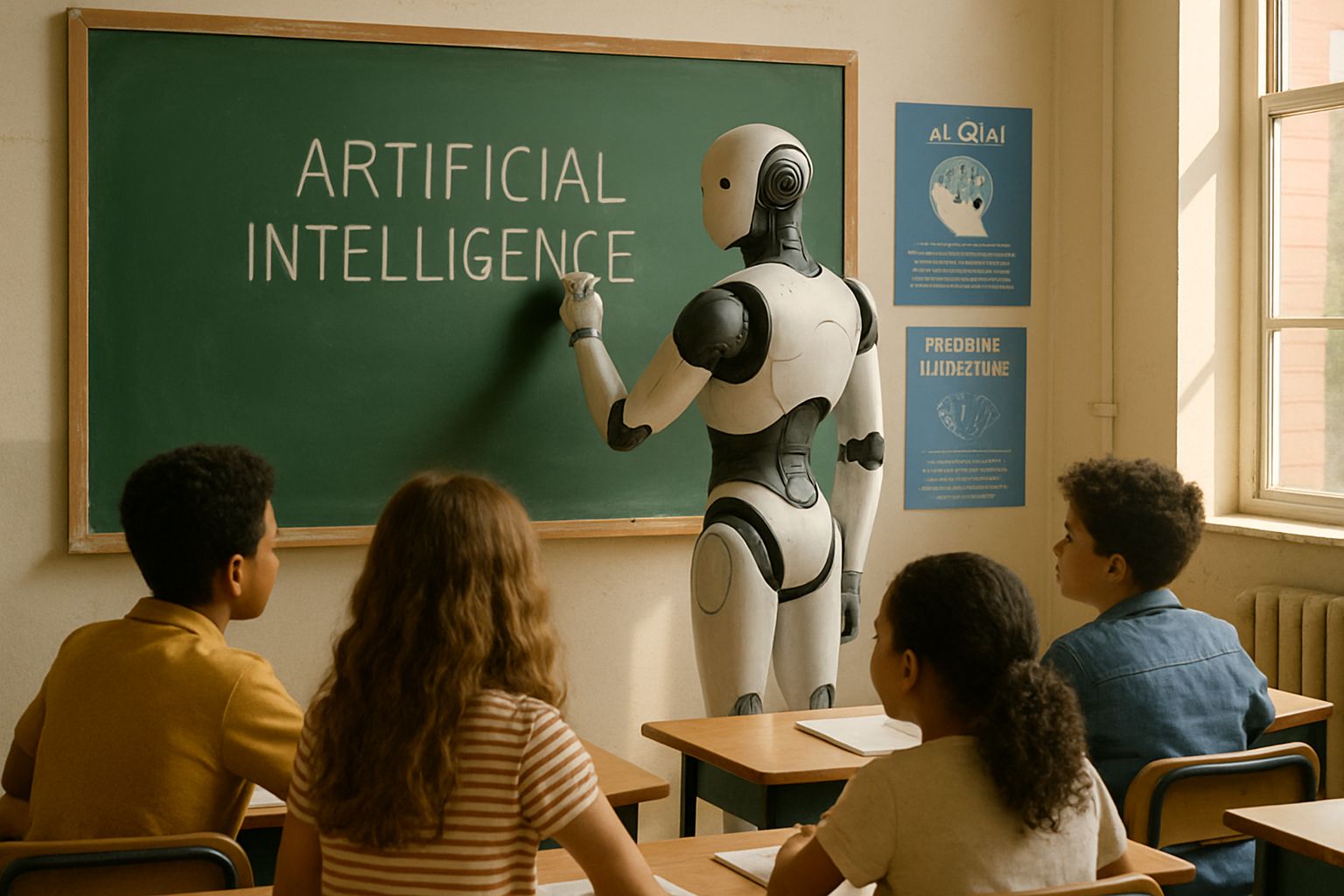
The summit gathered representatives from 45 countries, the largest international assembly ever hosted by a First Lady. Officials devoted plenary sessions to curriculum design, teacher training, and emerging assessment tools. In contrast, breakout rooms focused on procurement logistics and data privacy standards. White House AI talking points emphasized bipartisan support for STEM funding and public-private alliances. Furthermore, Melania Trump’s keynote envisioned humanoid educators capable of adapting lessons in real time. She said, “The future of AI is personified,” underscoring a belief that physical form breeds engagement. Nevertheless, several delegates privately questioned cost projections and support infrastructure for rural schools. Figure 03 stood beside her, its metallic fingers mimicking a wave familiar to human audiences. Consequently, media outlets framed the tableau as either visionary theatre or clever lobbying for research grants. Robotics startups rarely receive such diplomatic exposure, making the demonstration a potential inflection point. Overall, the summit’s staging signaled growing political capital behind embodied Innovation. The gathering amplified White House AI messaging and introduced a robotic symbol to policymakers worldwide. Delegates left energized, yet uncertain about classroom timelines. Next, the focus shifts to hard numbers shaping vendor strategies.
Market Numbers Behind Robots
Omdia estimated that vendors shipped roughly 13,000 humanoid units during 2025. Meanwhile, AgiBot captured 39 percent of that total with 5,100 deliveries. Figure AI held about two percent, yet its public demos outweighed its sales. Additionally, IDTechEx projects the humanoid market could hit $30 billion by 2036.
- 2025 shipments: 13,000 humanoid units, Omdia data.
- AgiBot share: 39 percent, about 5,100 units.
- Figure AI share: two percent of 2025 market.
Such forecasts fuel investment despite unresolved battery life challenges. Consequently, venture funds poured over $3 billion into embodied Innovation startups during 2025 alone. White House AI advocates cite these flows as evidence of economic upside for domestic manufacturing. Nevertheless, analysts remind clients that volume growth does not guarantee reliable margins. Robot hardware still relies on expensive sensors, actuators, and lithium supply chains vulnerable to shocks. In contrast, software subscriptions promise recurring revenue, explaining why vendors bundle cloud control platforms. Governance considerations also shape sales because many countries restrict sensitive exports without compliance guarantees. These metrics reveal early momentum but underscore that humanoid adoption remains nascent. Investors crave scale, whereas educators demand proof of learning gains. The following section explores perceived benefits championed by supporters.
Supporters Stress Learning Gains
Advocates argue that AI tutors can adapt lessons to each learner within milliseconds. Moreover, proponents claim constant availability will close homework gaps for underserved communities. White House AI briefings cite personalized pacing as a critical advantage over crowded classrooms. Consequently, Meta, Microsoft, and Google pledged free teacher training modules at the summit. Zoom CEO Eric Yuan reiterated the need for robust safety protocols alongside deployment. Additionally, supporters highlight potential economic dividends from a workforce fluent in embodied Innovation. Analysts see job creation across sensor design, cloud orchestration, and curriculum development. Furthermore, some educators relish the possibility of offloading administrative tasks to robots. Policy advocates believe automation can restore teachers’ focus to mentoring and emotional support. Still, even boosters admit human oversight remains indispensable. Supporters offer an optimistic vision powered by educational Innovation and strong corporate collaboration. Yet benefits hinge on evidence, not slogans. Skeptics underscore that very gap, as the next section explains.
Critics Flag Open Risks
Watchdog groups, including Tech Oversight Project, issued statements after the demonstration. However, they warned of untested safety features and possible psychological impacts on young children. Governance frameworks for embodied AI remain immature compared with data privacy statutes. Nevertheless, the administration described ongoing interagency reviews under the National AI Research Resource. Critics counter that internal reviews lack transparency and independent audit power. Meanwhile, teachers’ unions raised concerns about job displacement and training burdens. Policy researchers stress that equitable access must accompany any pilot program. In contrast, corporate lobbyists argued that delaying trials would hinder competitiveness against China. Some media outlets even questioned the authenticity of Figure 03’s multilingual capability, citing concealed tele-operation. Consequently, public trust surveys conducted by Pew show mixed sentiment toward classroom robots. These critiques illuminate gaps in technical validation and social acceptance. Robust oversight remains the missing bridge. Policymakers are therefore drafting new rules, examined next.
Governance Paths Taking Shape
Congressional staffers confirmed bipartisan interest in a K-12 Robotics Oversight Act. Consequently, draft language would mandate third-party safety certification before classroom deployment. White House AI offices coordinate with the Department of Education to align guidelines. Furthermore, the National Institute of Standards and Technology plans to publish performance benchmarks for bipedal robots. Governance experts urge inclusion of mental-health impact metrics alongside mechanical criteria. Moreover, several states may craft localized Policy frameworks tied to equity indicators. Industry lobbyists request harmonized standards to avoid a patchwork of rules that stifle Innovation. In contrast, watchdogs prefer stringent regional experiments before nationwide scaling. The European Union’s AI Act offers one template, though U.S. legislators resist expansive licensing regimes. Subsequently, committees will hold hearings with Figure AI, AgiBot, and teacher unions this summer. Early signals suggest compromise securing baseline safety tests and voluntary disclosure portals. Governance design will determine whether classroom robots scale responsibly. Attention now turns to future milestones and commercial roadmaps.
What Comes Next Steps
Figure AI plans extended school pilots across Texas and Florida this autumn. Meanwhile, AgiBot will target warehouse logistics, avoiding direct competition in education. White House AI liaisons expect detailed progress reports every quarter. Consequently, early metrics will inform federal funding allocations in the 2027 budget. Investors are watching battery density breakthroughs that could double operational hours. Additionally, NIST’s pending benchmark release may recalibrate competitive positioning. Policy advocates encourage transparent publication of pilot testing data to build public confidence. Furthermore, civil society groups aim to produce independent classroom observations. Company roadmaps also include integration with large language models for richer explanations. In contrast, some legislators call for a pause until cybersecurity audits finish. Upcoming pilots, standards, and audits will shape near-term trajectories. White House AI will face scrutiny as outcomes surface. The concluding section distills lessons for executives and educators.
Certification Boosts AI Careers
Melania Trump’s summit placed embodied robots at the center of national conversation. Consequently, White House AI now anchors debates over learning equity, industrial leadership, and social safety. Supporters tout adaptive tutoring and new jobs, while critics highlight costs and oversight gaps. Nevertheless, bipartisan momentum for standards suggests regulators will not remain idle. Professionals can enhance expertise through the AI Educator™ certification to engage proactively with upcoming requirements. Therefore, act now to build skills that match this accelerating frontier.


