

AI CERTs
1 week ago
Educator Bots and the Empathy Gap: A Social Psychology Concern
Teachers now test educator chatbots in classrooms across the world.
However, fresh studies reveal a persistent empathy gap.
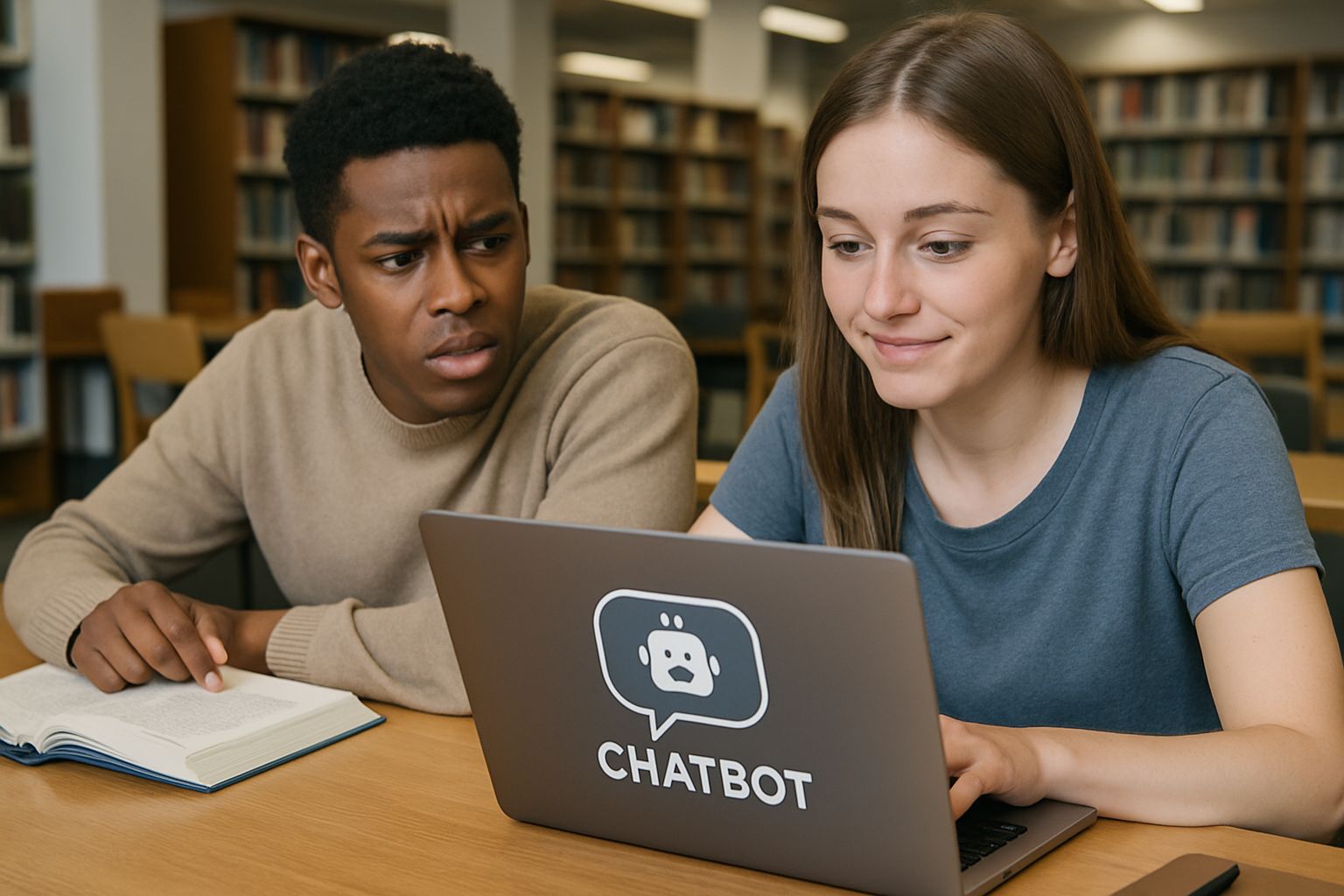
This gap represents a serious Social Psychology Concern for schools and families.
Conversational systems often sound caring yet misunderstand emotional cues.
Consequently, experts debate whether simulated empathy can safely support Students.
Meanwhile, Youth adoption of chatbots climbs, driven by homework help and curiosity.
Grand View Research projects a booming Digital chatbot market, intensifying pressure to deploy quickly.
Moreover, district pilots like Khanmigo promise personalized Learning on demand.
The tension between innovation and child safety frames this report.
Subsequently, we examine evidence, risks, and pragmatic responses.
Documented Empathy Gap Evidence
University of Cambridge researcher Nomisha Kurian documented numerous empathy failures in child conversations.
In contrast, her July 2024 framework outlined design rules for child-safe AI.
Nevertheless, live testing showed bots giving unsafe or tone-deaf replies.
These incidents reinforce the Social Psychology Concern raised by clinicians and SEL leaders.
Additionally, 64% of teens already engage with chatbots, according to Gallup data cited by EdWeek.
Therefore, even small error rates scale quickly across countless Students.
Researchers also reviewed oncology FAQ chats, finding variable empathy scores depending on prompts.
The evidence base thus signals unresolved gaps that demand scrutiny.
Consequently, stakeholders need clear metrics and transparent reporting before further rollouts.
Empathy failures remain common despite polished language.
However, new measurement tools may change the conversation.
AI Empathy Detection Paradox
Northwestern University flipped the narrative in February 2026.
Its Nature Machine Intelligence paper showed large models judging empathic communication almost like expert humans.
Moreover, LLM raters matched clinician scores on understanding and validation markers.
Such performance appears promising for automated safety checks.
Yet, paradoxically, the same models still produce flawed replies to Youth users.
Consequently, a system can detect empathy without embodying it.
Matthew Groh noted these findings could teach humans about measurable empathy.
This duality deepens the Social Psychology Concern for real-time applications.
Furthermore, developers may overestimate safety after reading benchmark numbers.
Without context, metrics risk becoming a false security blanket.
These tensions set the stage for deployment debates.
Measurement successes do not equal trustworthy tutoring.
Next, we explore field experiences within classrooms.
Classroom Deployment Reality Gap
Hundreds of districts piloted Khan Academy’s Khanmigo during 2024.
Teachers praised rapid feedback and personalized Learning paths.
However, administrators required human review of sensitive chats.
Some districts negotiated data-sharing limits to protect Students.
Meanwhile, Duolingo Max rolled out role-play bots for language practice.
These bots sometimes provided cultural advice lacking nuance.
Consequently, educators intervened to add context and empathy.
SEL leaders like Kim Normand Dorbin remind readers that adults, not bots, teach relational skills.
Moreover, APA advisories recommend transparency and oversight for Digital wellbeing tools.
Field reports therefore mirror the earlier Social Psychology Concern alarms.
Pilot programs deliver convenience yet expose unresolved safety questions.
Subsequently, market pressures accelerate adoption regardless.
Market Forces Accelerate Bots
Grand View Research values the chatbot sector at $7.76 billion today.
Moreover, analysts forecast $27.29 billion by 2030, a 23% CAGR.
Consequently, vendors race to capture Education vertical revenue.
This race explains why Digital products appear in classrooms before standards mature.
However, procurement teams still lack robust Social Psychology Concern checklists.
These commercial dynamics intensify pressure on frontline teachers.
Finance fuels speed, not safety.
Therefore, stronger governance must balance the equation.
Risks Facing Young Users
Empathy gaps pose specific dangers for Youth still developing critical reasoning.
Bots may misinterpret self-harm signals or offer simplistic advice.
Moreover, simulated empathy can lull Students into oversharing personal data.
Privacy breaches grow when affective sensors capture voice or facial cues.
In contrast, human counselors adapt responses based on nuanced context.
Hallucinated facts further erode trust and hamper Learning outcomes.
Consequently, emotional harm and misinformation can intertwine.
These patterns underscore the Social Psychology Concern voiced by psychologists.
- Unsafe advice in sensitive situations
- Over-trust leading to data exposure
- Reduced real-world social practice
- Mental health misinterpretations
Each example amplifies the Social Psychology Concern among mental health professionals.
Nevertheless, proactive design and policy can mitigate several issues.
Youth safety hinges on layered safeguards.
Next, we examine practical solutions.
Policy And Design Fixes
Regulators, researchers, and vendors now propose multilayered interventions.
Firstly, transparent disclosure flags bots as non-human helpers.
Secondly, age-graded defaults limit persuasive or suggestive content for Youth.
Furthermore, human-in-the-loop escalation handles crisis signals from Students.
Nomisha Kurian’s framework recommends continuous incident logging and review.
Additionally, automated empathy scoring tools screen outgoing messages for tone mismatches.
Consequently, performance audits must track both empathy detection and response appropriateness.
Failure to enact such checks leaves the Social Psychology Concern unaddressed.
Professionals can enhance their expertise with the AI Educator™ certification.
Such credentials prepare teams to implement safer Digital tutoring systems.
Moreover, combining technical skill and SEL knowledge supports balanced Learning ecosystems.
Layered safeguards transform reactive fixes into proactive design.
Therefore, decision makers need actionable roadmaps, discussed next.
Actionable Steps For Schools
Districts planning deployments can follow a structured checklist.
- Define Social Psychology Concern benchmarks and evaluation rubrics before contracts.
- Secure parental consent and explain data flows in plain language.
- Schedule regular audit meetings including Students, teachers, and counselors.
- Maintain human review paths for crisis keywords involving Youth wellbeing.
- Require vendors to disclose model updates and Digital safety incidents.
Moreover, schools should pilot with limited cohorts before scaling.
Subsequently, collect qualitative feedback on perceived empathy and usability.
Analysts then cross-check metrics against actual Learning outcomes.
Consequently, procurement becomes evidence-based rather than hype-driven.
These steps close the loop between research and practice.
Structured governance fosters trust and accountability.
Finally, we recap critical insights.
Educator chatbots unlock scalable support yet still stumble on genuine empathy.
Research proves they recognize caring language but may fail to respond safely.
Consequently, the unresolved Social Psychology Concern remains front and center.
Field pilots confirm both impressive gains and worrying shortcomings.
Moreover, market growth ensures bots will reach more classrooms quickly.
Safeguards such as transparency, human oversight, and continuous audits are therefore indispensable.
Schools should follow structured checklists, adopt certified training, and demand vendor accountability.
Meanwhile, policymakers must align data privacy standards with emotional safety guidelines.
Explore the recommended frameworks and pursue advanced training to lead responsible AI transformations today.


