

AI CERTs
4 hours ago
Educational Future Risk: AI Professors Redefine Courses
Universities are racing to test artificial professors powered by large language models. However, campus leaders worry about Educational Future Risk as regulation lags. Harvard’s CS50 bot and UCLA’s Kudu system headline early experiments. Consequently, investors eye a market already valued near $5.9 billion. Students embrace the tools, with survey adoption hovering above 80 percent. Meanwhile, faculty unions push back, arguing that human mentorship defines Teaching quality. Legislators in California even passed AB 2370 to guarantee a human instructor of record. Moreover, data privacy, bias, and Ethics questions remain unresolved. This article unpacks drivers, benefits, risks, and next steps for Digital higher education. Readers will gain actionable insights and certification pathways to navigate emerging AI classrooms.
AI Professors Rapid Arrival
Historically, scaling introductory courses required armies of graduate TAs. In contrast, the CS50 bot now offers round-the-clock debugging and feedback to 1,000 students. David Malan said the aim is a near 1:1 ratio through automation. Furthermore, UCLA’s Winter 2025 literature class used Kudu to draft its textbook and quizzes. The instructor and a student reviewer vetted every generated page before release. Consequently, class materials reached screen readers and mobile devices within days.
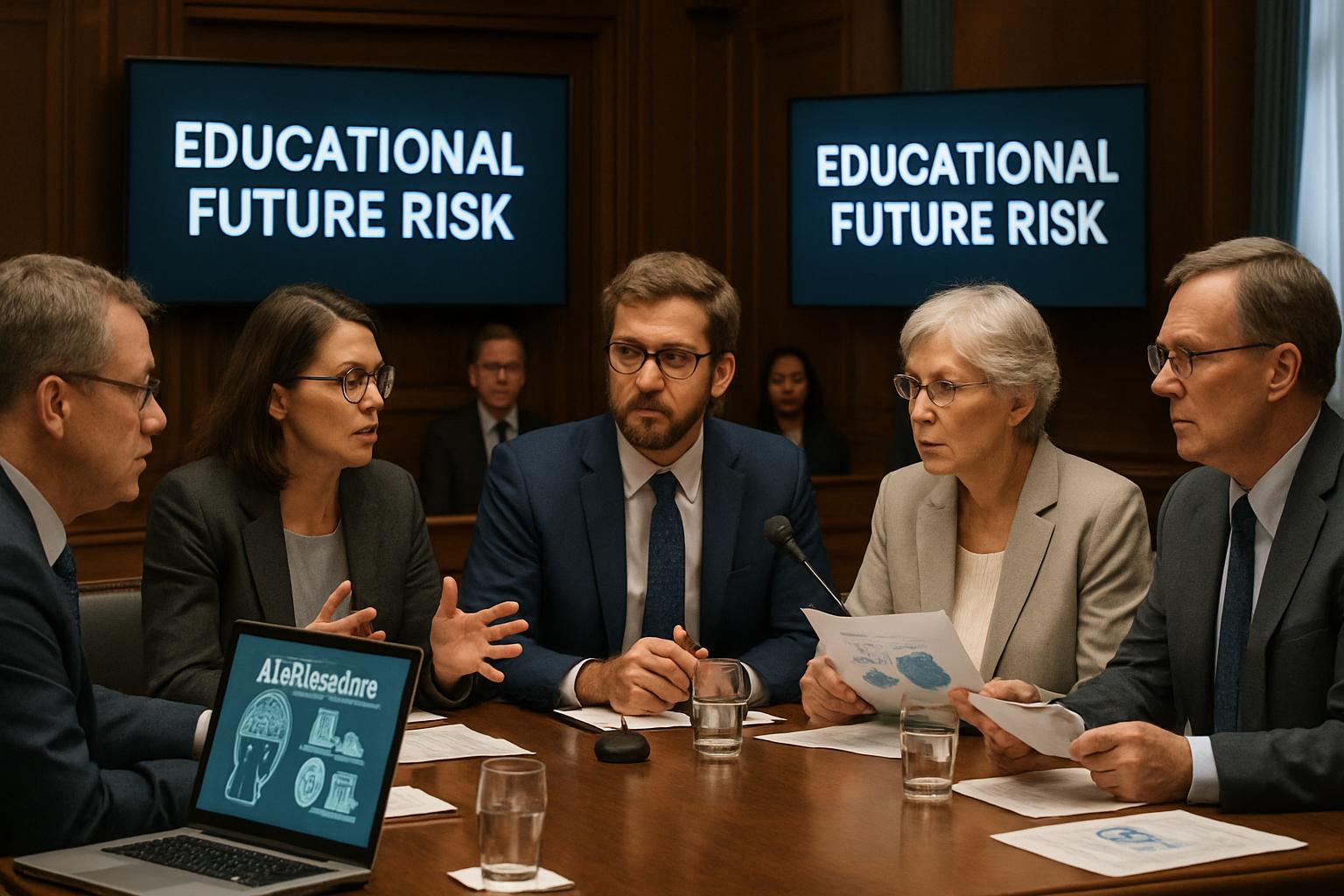
Early pilots show strong student Learning gains in engagement surveys, yet controlled studies remain scarce. Nevertheless, platform vendors market the concept aggressively across admissions fairs. Analysts warn that hype without metrics amplifies Educational Future Risk for institutions.
These cases illustrate momentum and ambition around AI professors. However, understanding adoption drivers clarifies where the trend heads next.
Drivers Behind Rapid Adoption
Rising enrollment and faculty shortages strain budgets worldwide. Therefore, administrators seek scalable tutoring that preserves outcome quality. Generative models deliver instant formative feedback, which students view as modern Teaching support. Additionally, AI can translate content into multiple languages, extending Digital equity. Market research by Grand View projects double-digit growth through 2030.
Moreover, venture capital flows toward course-aware assistants, citing lower content production costs. Universities hope savings offset declining public subsidies and reduce textbook fees. Consequently, decision makers risk lock-in if early platforms dominate standards.
Adoption drivers mix economic pressure with student demand for personalization. Nevertheless, benefits must outweigh Educational Future Risk before campuses commit fully.
Benefits Transforming Course Delivery
AI promises several concrete advantages already visible in pilot data.
- Round-the-clock help improves Learning continuity for remote cohorts.
- Personalized hints accelerate coding practice without extra Teaching staff.
- Automated drafting slashes Digital textbook costs by up to 60 percent.
- Consistent rubrics increase grading transparency and support academic Ethics.
Furthermore, Harvard reports reduced backlog of debugging questions during peak weeks. Students used the bot for short, iterative sessions, a pattern hard to replicate with humans. Meanwhile, UCLA faculty spent more time on discussion facilitation and qualitative feedback. Therefore, human roles shifted toward higher-order mentoring rather than procedural guidance.
Benefits center on scalability, yet ignoring safeguards invites Educational Future Risk. However, advantages hinge on robust guardrails, which we examine next.
Risks Prompting Policy Action
Every technological leap introduces new liabilities for academic leaders. Hallucinated content threatens assessment validity and core Ethics standards. Consequently, California’s AB 2370 mandates a human instructor of record in community colleges. The law takes effect January 2025 after lobbying by the FACCC union. In contrast, private universities keep experimenting with minimal statutory friction.
California Law Sets Precedent
Legislators framed the bill as protection against Educational Future Risk and automation layoffs. Moreover, accreditors may cite the statute when updating quality guidelines nationwide. Institutions now weigh compliance costs against innovation benefits.
The California case signals mounting scrutiny from policymakers. Therefore, universities must address risk proactively before mandates expand.
Ethical And Labor Tensions
Beyond regulation, labor groups question whether AI devalues professional Teaching identity. Faculty argue that relational mentoring and tacit knowledge resist automation. Additionally, bias in training data can marginalize underrepresented students, compounding Digital divides. Analysts note that unresolved bias represents a direct Educational Future Risk for accreditation.
Nevertheless, some educators see AI as a chance to reclaim creative course design. They delegate administrative drudgery while focusing on deeper Socratic dialogue. Consequently, negotiations increasingly revolve around workload redistribution, not outright bans.
Ethical and labor debates will shape adoption pace. Meanwhile, market metrics provide a data-driven outlook.
Market Outlook And Metrics
Grand View Research values AI in education at $5.9 billion for 2024. Moreover, forecasts predict a high double-digit CAGR through 2030. EDUCAUSE found 95 percent of campus AI policies focus on Teaching and Learning. Consequently, strategic planning offices create new AI governance roles across campuses.
Professionals can deepen expertise with the AI Cloud Professional™ certification. Additionally, such credentials help staff evaluate vendor claims and mitigate Educational Future Risk. Investors view skilled staff as a risk-reduction signal when funding Digital transformation.
Certification Pathways Gain Traction
Early enrollee feedback highlights immediate application of cloud AI security principles. Therefore, certified teams draft clearer data-governance playbooks for course-aware assistants.
Market figures and certification trends underline steady institutional commitment. Nevertheless, schools still need tested roadmaps to limit Educational Future Risk.
Strategic Steps For Institutions
First, map course objectives against AI capabilities rather than chasing novelty. Next, pilot within low-stakes modules and collect granular Learning analytics. Furthermore, maintain a human instructor of record until accreditor guidance matures. Establish cross-functional committees covering privacy, accessibility, and Ethics policy.
In contrast, avoid vendor lock-in by insisting on interoperable, standards-based APIs. Meanwhile, update labor agreements to recognize new mentoring duties. Consequently, institutions position themselves to scale responsibly without amplifying Educational Future Risk.
Careful planning converts risk into strategic advantage. Therefore, continuous evaluation must accompany every future rollout.
AI professors are no longer hypothetical; they now shape day-to-day coursework. However, benefits share space with governance gaps and labor anxiety. Legislators and unions will keep spotlighting Educational Future Risk in upcoming sessions. Meanwhile, evidence from Harvard and UCLA reveals genuine gains in Learning engagement and cost control. Consequently, institutions that balance innovation with strong Ethics and Teaching oversight will lead. Professionals should pursue the linked AI Cloud certification to guide responsible transformation strategies. Moreover, early action secures talent pipelines before demand spikes.


