

AI CERTs
3 hours ago
Post-Quantum Threat Drives Urgent Encryption Overhaul
Rumors claim a supercharged computer recently cracked every laptop lock overnight.
However, experts stress no verified breach of modern local encryption exists.
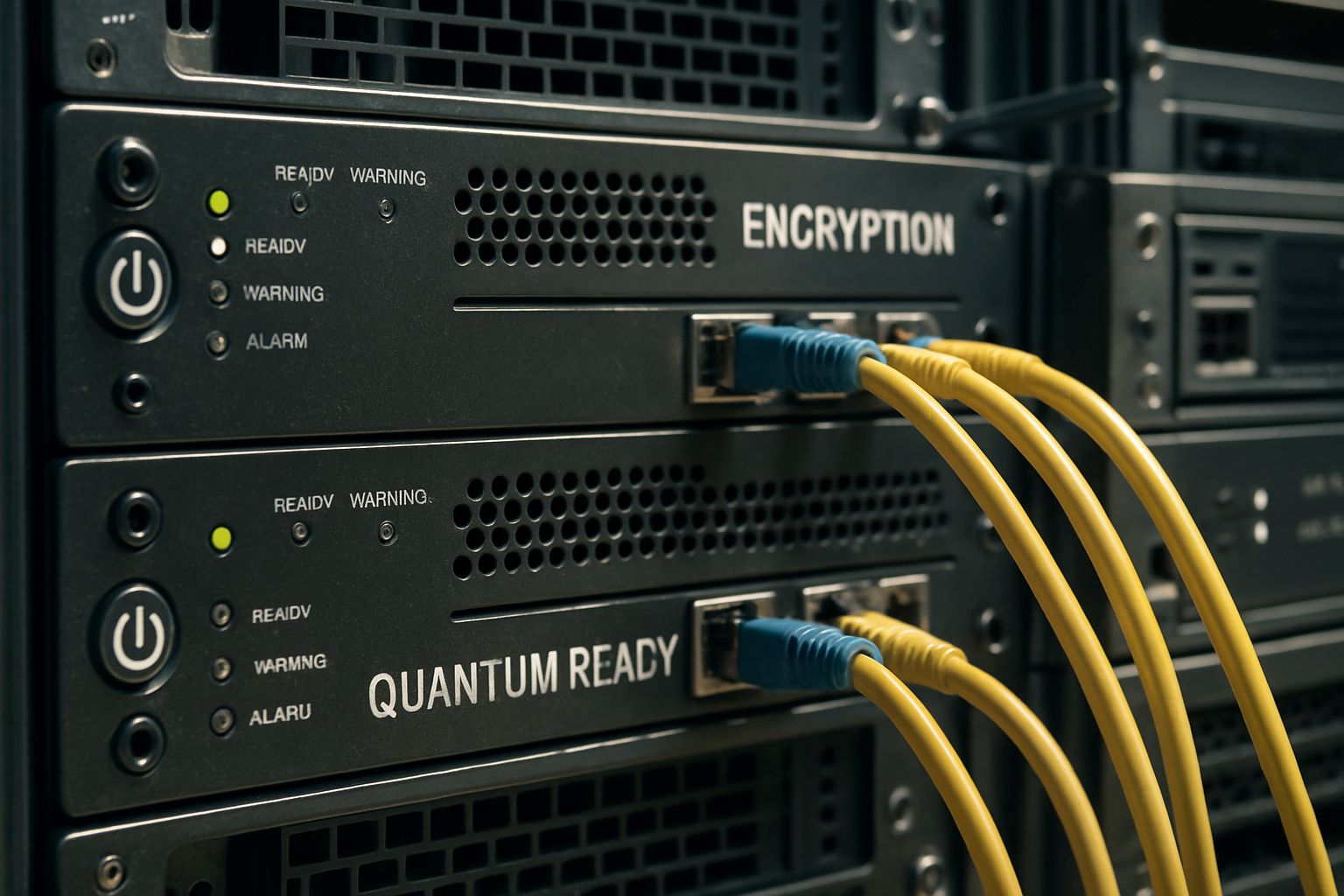
Consequently, the conversation now centers on preparation rather than panic.
The looming Post-Quantum Threat still reshapes enterprise roadmaps and budget sheets.
Moreover, Google’s latest research slashed the estimated cost of breaking RSA-2048 by twentyfold.
Such news narrows timelines, yet practical quantum machines remain years away from production runs.
Furthermore, NIST has already published post-quantum standards and migration guidance.
These shifts create both strategic uncertainty and competitive opportunity for CISOs and architects.
Meanwhile, most organizations lack concrete migration plans according to recent surveys.
This article unpacks the science, policy, and business impact behind the headline story.
Quantum Hype Versus Reality
Media outlets love dramatic claims of instant decryption.
Nevertheless, every sensational headline reviewed so far references toy demonstrations under 90-bit keys.
In contrast, production RSA keys use 2048 bits or more, a vastly different scale.
Craig Gidney's May 2025 preprint detailed the resource gap with transparent math.
According to the paper, fewer than one million noisy physical qubits could crack RSA-2048 within a week.
However, no laboratory has assembled that many fault-tolerant qubits yet.
Google’s public devices still operate below 1000 physical qubits with high error rates.
Security analysts therefore label the current risk theoretical, not operational.
Yet the downward trend in resource requirements keeps executives awake at night.
Consequently, migration urgency follows an S-curve rather than an emergency siren.
These facts separate hype from engineering reality.
However, shrinking estimates intensify the Post-Quantum Threat discussion across boardrooms.
Let us next examine how those estimates evolved.
Shrinking RSA Resource Estimates
Resource calculations have improved almost yearly since 2019.
Moreover, algorithmic tweaks like approximate modular exponentiation cut gate counts dramatically.
Gidney's latest model reduced required physical qubits from twenty million to under one million.
Meanwhile, enhanced error-correction layers trimmed runtime assumptions.
The following numbers illustrate the acceleration:
- 2019 Google estimate: ~20 million qubits, months of runtime.
- 2023 academic follow-up: ~5 million qubits, several weeks.
- May 2025 Gidney preprint: <1 million qubits, under one week.
Consequently, strategists treat each revision as a risk multiplier for long-lived secrets.
Financial archives, health records, and state intelligence fall into that sensitive category.
Resource curves are moving downward at an uncomfortable pace.
Therefore, policymakers have accelerated standardization efforts.
The policy landscape now shapes corporate priorities.
Policy And Standards Momentum
NIST finalized its first post-quantum cryptography algorithms in August 2024.
Kyber and Dilithium variants headline the approved suite.
Furthermore, NSA and CISA urge agencies to inventory cryptographic assets immediately.
Government roadmaps target widespread migration before 2035 for critical systems.
Several nations propose earlier deadlines for high-value data.
Meanwhile, the Defense sector faces extended data retention, magnifying urgency.
Consequently, vendor ecosystems now race to support new primitives across hardware and software.
Professionals can prove expertise through the AI+ Quantum Analyst™ program.
Nevertheless, only a minority of enterprises have begun formal gap analysis according to Bain research.
Standards provide a clear migration compass.
However, compliance alone will not close the looming Post-Quantum Threat window.
Organizational readiness now takes center stage.
Enterprise Preparedness Gaps Exposed
A Bain survey of 180 technology leaders revealed sobering statistics.
Additionally, 90% lacked documented plans for quantum-resistant architectures.
Meanwhile, 71% expected relevant attacks within five years.
Key deficiencies include:
- Absence of cryptographic asset inventories
- Limited crypto-agility in legacy applications
- Insufficient budget for staff training
Security managers often cite unclear timelines when postponing investments.
Modern cryptography governance often suffers from unclear ownership between teams.
Nevertheless, adversaries can store encrypted traffic now and decrypt later.
This 'store now, decrypt later' tactic magnifies exposure for regulated industries.
Regulated Defense contractors report complex supplier encryption chains.
Preparedness remains uneven across sectors.
Consequently, boards link the Post-Quantum Threat directly to fiduciary risk.
Understanding local encryption impact helps refine those budgets.
Implications For Local Encryption
Disk encryption tools primarily rely on symmetric algorithms like AES-256.
Grover’s algorithm only halves symmetric strength, leaving AES-256 effectively at 128-bit security.
Therefore, your laptop’s locked drive is not the easiest quantum target.
Public-key operations on devices tell another story.
TLS certificates, SSH keys, and signed updates still depend on RSA or ECC.
Consequently, compromised endpoints could accept malicious firmware after a future quantum break.
Security engineers should prioritize crypto-agile bootloaders and automatic key rotation.
Moreover, hardware security modules must support upcoming post-quantum algorithms.
Open-source cryptography libraries will incorporate PQC defaults once standards mature.
Local encryption stays resilient for now.
However, adjacent public-key layers raise clear Post-Quantum Threat alarms.
Actionable steps can close those alarms quickly.
Action Plan For Defense
Effective planning begins with a thorough cryptographic inventory.
Subsequently, classify assets by confidentiality duration and regulatory exposure.
Assign high longevity data streams the earliest migration slots.
Next, pilot NIST-approved algorithms in least critical environments.
Furthermore, enable dual-stack modes that support classical and post-quantum suites simultaneously.
Such crypto-agility limits downtime during future switch-overs.
Training remains vital.
Engineers should pursue formal education and certifications.
The earlier mentioned AI+ Quantum Analyst™ credential builds foundational knowledge.
Finally, monitor academic preprints and vendor roadmaps quarterly.
Nevertheless, avoid knee-jerk code changes until standards stabilize.
Structured roadmaps convert uncertainty into manageable milestones.
Therefore, disciplined governance neutralizes much of the Post-Quantum Threat pressure.
Remaining questions involve timeline forecasting.
Looking Ahead Five Years
No expert predicts a 1-million qubit machine before the decade’s second half.
Nevertheless, resource trends suggest continuing acceleration.
Moreover, private or classified progress could exceed public benchmarks unexpectedly.
Security and cryptography communities must watch three indicators:
- Demonstrations of logical qubit counts above 10,000.
- Reductions in error rates below 1e-4 per gate.
- Commercial cloud offerings advertising Shor-service roadmaps.
Each milestone would raise investment urgency again.
Consequently, flexible governance models prepare organizations for abrupt shifts.
The five-year horizon requires vigilance without panic.
Meanwhile, reinforcing culture and tooling mitigates the Post-Quantum Threat effectively.
The following conclusion ties these insights together.
Conclusion And Next Steps
This discussion debunked myths and highlighted practical migration priorities.
The Post-Quantum Threat is real but manageable with disciplined planning.
Moreover, shrinking resource estimates justify measured urgency, not alarmist headlines.
Standards from NIST provide clear direction while vendor ecosystems mature quickly.
Consequently, leaders must inventory assets, build crypto-agile infrastructure, and educate teams now.
Professionals eager to guide those programs should consider formal credentials.
The AI+ Quantum Analyst™ certification offers structured, industry-aligned training.
Therefore, take deliberate steps today and monitor breakthroughs closely.
Your proactive stance will lessen the Post-Quantum Threat impact tomorrow.
Act now by commissioning an internal quantum readiness audit and enrolling key staff.


