

AI CERTS
3 hours ago
Anthropic’s Autonomous Coding Channels Debut
Moreover, real-time prompts arrive through the Model Context Protocol, ensuring low latency interactions. This article unpacks the architecture, setup steps, business impact, and security implications in plain terms. Finally, you will discover practical examples and relevant certifications to deepen professional skills.
Claude Channels Explained Simply
At its core, a channel is an MCP server that pushes chat events into a live session. Additionally, Claude can answer by calling the channel reply tool, closing the loop. The vendor restricts the preview to Discord and Telegram endpoints plus a local fakechat demo. In contrast, other MCP tools call arbitrary APIs instead of human chat. Hence, channels feel conversational yet remain fully programmable.
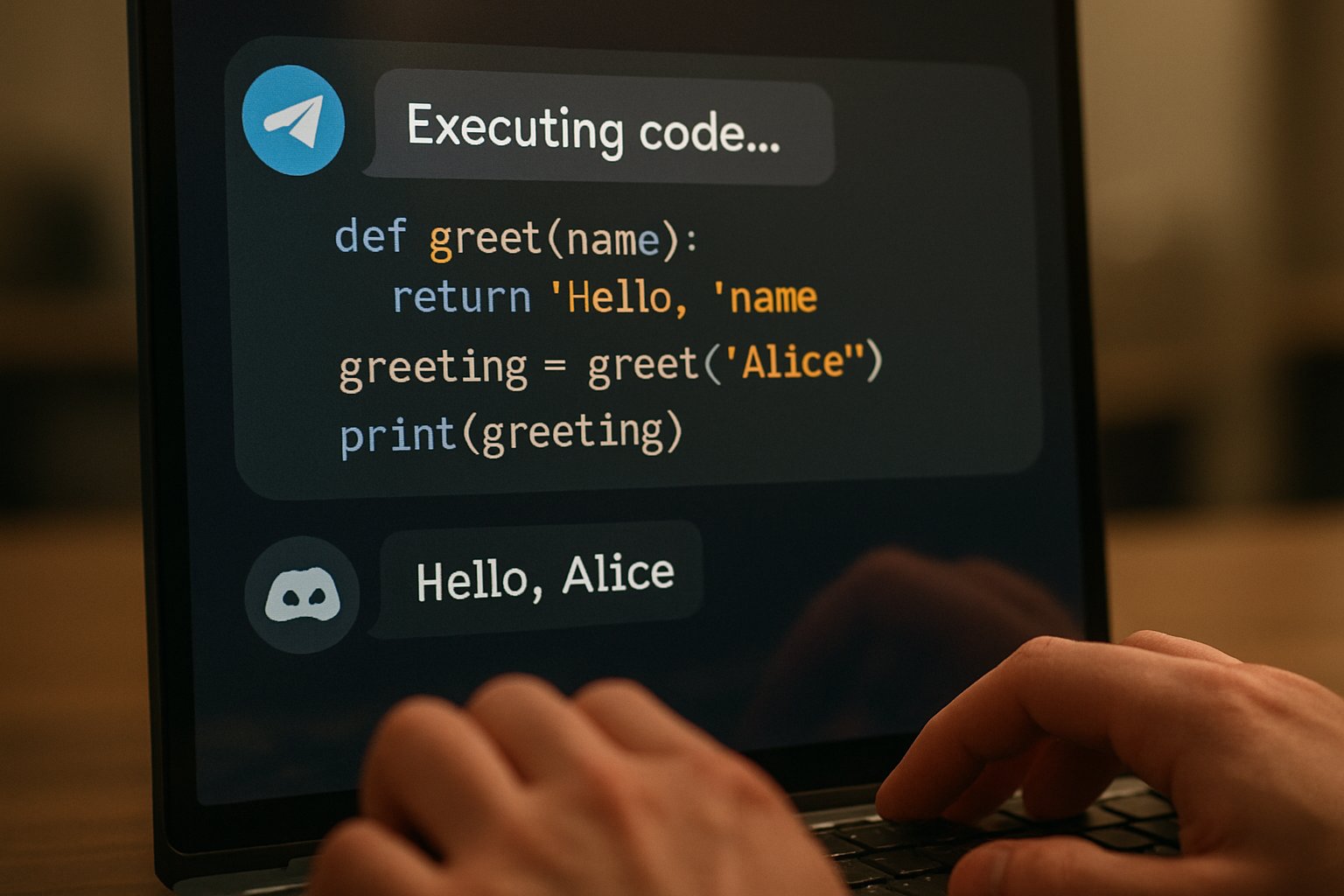
Each plugin ships as a Bun script, reflecting the December 2025 Bun acquisition by the Claude maker. Moreover, Bun delivers startup speeds crucial for quick agent responses. The --channels flag in Claude Code v2.1.80 activates one or many plugins during launch. Consequently, sessions receive <channel> events whenever a user message arrives. Such design forms the mechanical heart of Autonomous Coding Channels.
Channels turn regular chats into programmable inputs that Claude can interpret instantly. Therefore, developers gain synchronous collaboration without leaving their preferred messengers, preparing ground for the next steps.
Installation And Setup Steps
Setting up the preview remains straightforward yet security conscious. First, upgrade to Claude Code v2.1.80 or later. Next, install Bun if it is absent. Additionally, grab an official channel plugin from the Anthropic marketplace. For Discord, generate a bot token and copy the client ID. Similarly, Telegram needs a BotFather issued token.
Subsequently, run claude-code --channels plugin:discord, plugin:telegram inside your project directory. A pairing code appears in the console. Meanwhile, send that code to the bot to authenticate your account. Admins on Team or Enterprise plans must enable channelsEnabled before any pairing occurs. Moreover, allowed sender lists block unsolicited traffic, reducing noise and attack surface.
- Upgrade Claude Code to v2.1.80+
- Install Bun runtime
- Create Discord or Telegram bot tokens
- Enable channels in admin console
- Launch with --channels flag and pair account
These steps finish the technical foundation quickly. Consequently, teams can experiment within minutes and evaluate business value next.
Business Impact And Context
Industry analysts tie Claude Code revenue to nearly one billion dollars annually. Therefore, every new capability must justify itself for enterprise buyers. Autonomous Coding Channels promise tangible productivity gains through reduced context switching. Moreover, remote commands sent through Discord or Telegram let mobile engineers unblock pipelines at night. This responsiveness can cut incident resolution times by critical minutes.
Reuters noted Anthropic's acquisition of Bun as a strategic move to own the runtime layer. Consequently, the company controls both language model and execution environment, tightening integration. Such vertical alignment supports the broader agentic harness vision championed by leadership. In contrast, rival platforms still juggle multiple vendors for comparable workflows.
- 30% faster alert acknowledgement, according to early community tests
- Unified chat and code context improves decision quality
- Lower cognitive load increases developer satisfaction scores
Early numbers suggest compelling cost avoidance and morale benefits. However, no advantage arrives without security and governance trade-offs, explored next.
Security Risks And Mitigations
Security researchers already flagged MCP vulnerabilities in older Slack integrations. Nevertheless, the vendor limited plugin supply and enforced pairing codes during research preview. Allowed sender lists filter unknown users before messages reach the model. Moreover, enterprise admins can disable file access or restrict channel types per project. Prompt injection remains the largest theoretical threat.
Consequently, teams should wrap Autonomous Coding Channels inside an additional agentic harness that validates commands. In contrast, ignoring validation could leak tokens or proprietary code through unintended replies. Regular audits of bot scopes, token rotations, and logging policies mitigate exfiltration risks. Professionals can gain validation through the AI For Everyone™ certification.
Robust controls reduce likelihood of catastrophic leakage. Subsequently, operational practices must accompany technical safeguards, as the next section shows.
Practical Use Case Examples
Community threads showcase diverse applications within days of release. For example, a gaming studio wires Discord bug reports into tests that auto-produce pull requests. Meanwhile, an IoT startup feeds Telegram sensor alerts and gets immediate diagnostic scripts. Moreover, DevOps teams chain CI failures to Autonomous Coding Channels for instant remediation suggestions. A persistent session running in a container keeps the agent alive between pushes.
Consequently, on-call engineers answer incidents from phones rather than laptops, shrinking mean time to recovery. Another pattern uses an internal agentic harness layer to whitelist approved repository actions. Nevertheless, cost considerations arise when maintaining long-lived sessions with high token usage. Early adopters report acceptable spend because chat driven bursts stay brief.
Real examples prove value across diverse domains. Therefore, strategic outlook becomes vital for planning future investments.
Future Roadmap And Outlook
Anthropic has not published a formal roadmap yet. However, documentation hints at Slack and Microsoft Teams channels once preview stabilizes. Additionally, open plugin submissions may arrive after security audits mature. Consequently, third-party marketplaces could flourish, similar to the VS Code extension ecosystem. Analysts expect Autonomous Coding Channels to integrate deeply with deployment pipelines and monitoring suites.
Moreover, expanded telemetry will feed governance dashboards that score agent actions. A richer agentic harness ecosystem will likely emerge, offering policy engines and insurance wrappers. In contrast, enterprises slow to adopt may face talent attraction challenges.
Upcoming features could redefine interactive programming norms again. Subsequently, leaders should start small pilots today to build organizational muscle.
Autonomous Coding Channels are still experimental, yet momentum already feels unstoppable. However, disciplined pairing, logging, and an internal agentic harness remain mandatory for safety. Early Discord and Telegram pilots confirm measurable speed and satisfaction gains for teams. Moreover, the unified runtime keeps latency low as scale grows. Consequently, Autonomous Coding Channels may shift developer expectations toward always-on conversational programming.
In contrast, organizations delaying trials risk competitive erosion in both velocity and retention. Therefore, start a controlled proof-of-concept, measure outcomes, and iterate quickly. Finally, deepen skills through the linked certification and stay ready for the Autonomous Coding Channels era. Adopt Autonomous Coding Channels thoughtfully, and the future of collaborative coding will arrive sooner.


