

AI CERTS
3 hours ago
Sustainable Power Procurement Fuels Google’s 20-Year Solar Plan
They blend co-located assets, innovative tariffs, and firm hydro capacity into multi-region mosaics. Moreover, regulators and communities watch closely to ensure fairness and grid stability. Meanwhile, corporate financiers study these contracts as templates for next decade’s infrastructure funding. Readers will gain data-backed insight to navigate the fast evolving procurement landscape.
Rising AI Workload Demand
AI inference chips now draw more power than legacy server racks ever consumed. Consequently, electricity demand at hyperscale campuses is expected to triple by 2030. In contrast, many host grids still rely on intermittent wind and midday solar peaks. Therefore, continuous carbon-free supply becomes critical for latency sensitive AI clusters. Sustainable Power Procurement offers that continuity through diversified, long-term sourcing. Furthermore, fixed-price contracts hedge volatile merchant power costs, stabilizing cash flow projections. Industry analysts estimate that every exaFLOP of AI capacity will need 18 MW constant load.
Subsequently, corporate energy teams have shifted from annual REC purchases to hourly matching strategies. These fundamentals explain why the latest 20-year deal announcements grabbed investor attention. The next section shows how the firm converts urgency into action. These load projections clarify corporate urgency. Consequently, the next section shows how the firm converts urgency into action.
Search Giant Energy Push
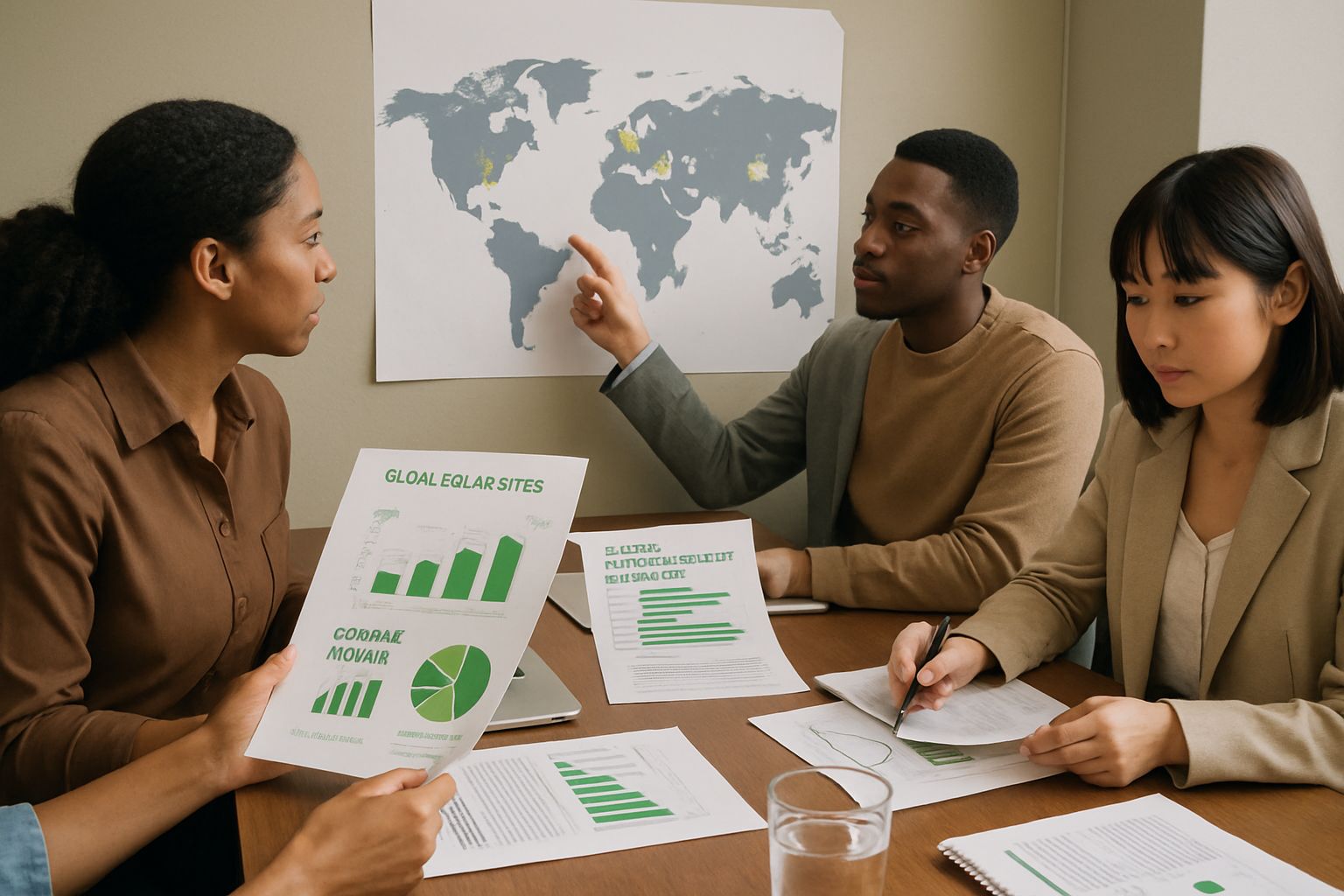
Since 2017, the Mountain View giant has claimed 100% annual renewable matching. However, hourly tracking revealed fossil fuel gaps that threatened climate commitments. Therefore, the corporation pivoted toward firmed resources and campus-adjacent generation. The recent 20-year deal series exemplifies that pivot with diversified assets in three continents. Sustainable Power Procurement now sits on the board agenda alongside chip design and cooling innovation.
Moreover, executives highlight community benefits, including rate shields and local construction jobs. Amanda Peterson Corio states that co-located plants will minimize grid strain in Texas. Meanwhile, new tariff models aim to prevent cost shifting onto ordinary customers. The push reflects a strategic shift beyond annual matching. Therefore, understanding contract structures becomes imperative, as the following section reveals.
Corporate Contract Models Evolving
Contract architecture determines whether clean megawatts materialize or remain on paper. Consequently, procurement teams are experimenting with physical, virtual, and hybrid PPAs. The Clean Energy Accelerator Charge from Xcel showcases an innovative tariff-plus-investment construct favored by Google. Under that model, the buyer funds grid storage while the utility retains asset ownership. Such structures advance Sustainable Power Procurement by aligning incentives across stakeholders. In contrast, the Wilbarger County campus favors a direct, co-located generation leaseback. That arrangement bundles wires, substations, and firming batteries within a single 20-year deal.
Furthermore, hydro framework agreements create optionality for dispatchable capacity without immediate offtake obligations. Each template tackles different regulatory contexts yet targets the same hourly carbon-free aspiration. These varied agreements illustrate a maturing marketplace primed for rapid global replication. Each blueprint shares common risk allocation themes. Subsequently, we examine specific projects delivering those blueprints on the ground.
Notable Regional Project Highlights
Ground-level details reveal how agreements translate into steel, silicon, and spinning water turbines. Moreover, each geography demands tailored engineering and finance.
- Texas: AES will build unspecified MW of co-located renewables for Google under a 20-year deal.
- Minnesota: Xcel package adds 1,400 MW wind, 200 MW solar power, and 300 MW storage capacity.
- Pennsylvania: Brookfield framework enables 670 MW hydro today, scaling to 3,000 MW when Google needs capacity.
- Asia: TotalEnergies and ReNew agreements unlock fresh solar power in Malaysia and India for regional data centers.
These deployments collectively advance Sustainable Power Procurement by injecting nearly 5 gigawatts of clean capacity. Consequently, regional regulators cite the deals as catalysts for broader infrastructure modernization. Nevertheless, some community advocates question land use, water requirements, and long-distance transmission corridors. These outcomes underscore tangible benefits and lingering concerns. Accordingly, the next section evaluates grid-level consequences.
Local Grid Impact Analysis
Every megawatt contracted must connect safely without elevating neighbor bills. Therefore, utilities model peak flows, contingency events, and curtailment risks before approving construction. The Minnesota tariff ties recovery to the buyer, insulating ratepayers throughout the 20-year deal horizon. In contrast, hydro agreements offer seasonal flexibility that complements daytime solar power oversupply. Sustainable Power Procurement also stimulates long-duration storage investments, particularly iron-air battery pilots. Additionally, co-located projects shorten interconnection queues, freeing scarce transmission capacity for other generators.
However, critics worry about over-reliance on one corporate anchor if economic conditions change. The search company counters that diversification across regions mitigates concentration risk. Meanwhile, North American grid operators are updating market rules to reward dispatchable renewables. These reforms could further accelerate corporate climate strategies. Such findings indicate growing alignment between corporate goals and system requirements. Nevertheless, residual uncertainties keep risk management high on executive agendas. Consequently, understanding looming challenges becomes essential.
Emerging Risks And Challenges
Project execution risk tops the worry list for lenders and developers. Moreover, hydropower relicensing introduces federal approvals that span several years. Political shifts might also rewrite subsidy structures supporting solar power buildouts. Sustainable Power Procurement frameworks partly hedge these variables through diversified resource mixes. Nevertheless, credit ratings could still suffer if counterparties face downgrades.
Cybersecurity threats add another layer, especially as on-site controllers integrate with campus networks. After assessing risk, leadership still sees favorable reward potential from the strategy. The above concerns highlight diligence requirements for energy professionals. Therefore, skill development emerges as a competitive advantage, as discussed next.
Essential Skills For Professionals
Corporate buyers now expect energy staff to master finance, policy, and grid modeling. Additionally, fluency in Sustainable Power Procurement lexicon increasingly appears in job postings.
- Hourly carbon accounting
- PPA contract structuring
- Storage dispatch optimization
- Community engagement strategy
Professionals can deepen competence through the AI Supply Chain™ certification program. Moreover, mentors advise building scenario planning skills to value flexible solar power plus storage hybrids. Consequently, practitioners who adapt quickly command premium compensation. These competencies convert risk into opportunity. Meanwhile, strategic education sustains career growth amid market turbulence.
Taken together, multi-continent contracts anchor fresh gigawatts of clean capacity for Google, the Mountain View giant. Consequently, host grids gain new resources while corporations secure cost predictability. Sustainable Power Procurement has therefore matured from concept to proven practice across diverse regions. Moreover, novel tariffs and storage pairings demonstrate replicable paths toward hourly carbon neutrality. Nevertheless, permitting, policy, and credit challenges require vigilant oversight and multidisciplinary talent.
Professionals who acquire skills early will shape forthcoming project pipelines. Therefore, readers should explore the linked certification to stay competitive within this expanding field. Sustainable Power Procurement will likely dominate corporate climate strategy discussions for the next decade. Join the conversation now and help craft the carbon-free grid future.


