

AI CERTS
4 hours ago
Intel Panther Lake: Building the Computing Foundation for AI PCs
Building The Computing Foundation
Intel frames Panther Lake as more than another processor refresh. Therefore, the company markets it as the bedrock layer supporting future AI workflows. The phrase "Computing Foundation" appears throughout Intel slide decks and partner briefings. It underscores an ambition to unify performance, efficiency, and dedicated acceleration under one scalable architecture.
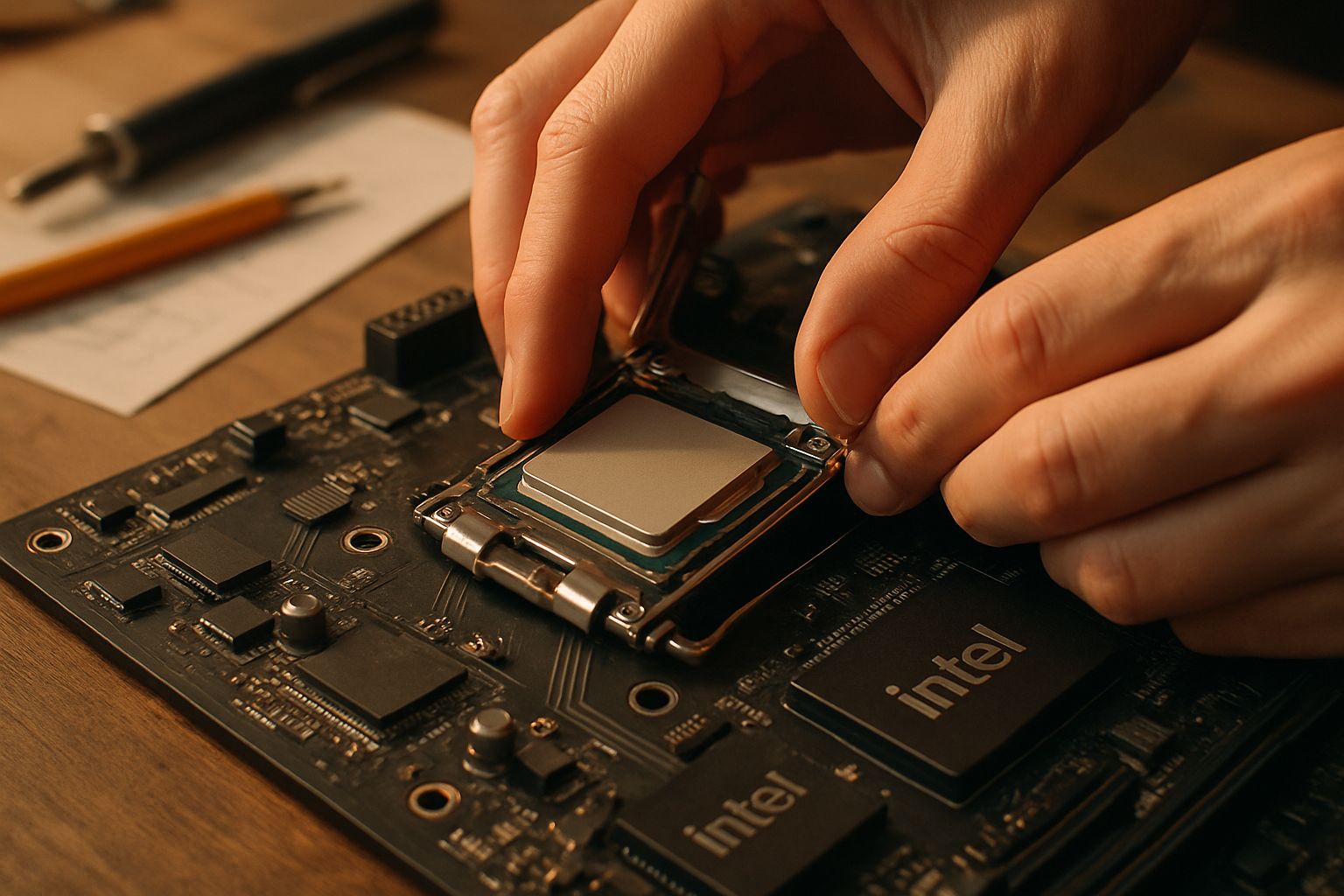
However, marketing slogans matter only when silicon delivers measurable gains. Early disclosures promise more than fifty percent CPU and GPU uplift over the prior generation. Additionally, Intel quotes up to 180 platform TOPS for combined AI throughput. These figures create lofty expectations that industry stakeholders will quickly validate.
These positioning messages set clear performance stakes. Consequently, the next section breaks down the silicon modules driving those claims.
Panther Lake Platform Overview
Panther Lake arrives as the third Core Ultra generation, code-named Series 3. Moreover, the SoC contains three primary tiles: compute, graphics, and I/O. The compute tile hosts new P-cores, E-cores, and the NPU5 accelerator. Each component cooperates through Intel's Foveros interposer to minimize latency and maximize bandwidth.
Intel produces the compute tile on its 18A node. In contrast, the Xe3 graphics tile uses a tailored Intel four process for cost control. Consequently, the multi-chiplet approach lets designers scale Xe3 cores up to twelve while keeping yields acceptable. System makers therefore gain flexible die combinations without redesigning entire boards.
The overview reinforces the Computing Foundation narrative and highlights architecture choices that enable versatility. However, manufacturing innovations further strengthen the story.
Process And Packaging Leap
RibbonFET transistors debut with Intel 18A. Furthermore, PowerVia backside power delivery removes routing congestion above active regions. The combination improves switching speed while lowering leakage. Consequently, Panther Lake claims notable performance per watt gains against earlier nodes.
Intel stacks these tiles through second-generation Foveros technology. Moreover, the method allows vertical cache placement close to compute units. Such advanced hardware demands precise thermal profiling. Thermal density rises, yet Intel's reference boards sustain expected envelopes. Independent reviewers will measure whether OEM cooling solutions replicate those lab results.
Process and packaging choices create cost and efficiency advantages. Subsequently, attention shifts to the AI engines earning the headlines.
AI Throughput Explained Simply
Intel quotes up to 180 platform TOPS. However, that figure merges NPU, GPU, and minor accelerators. The dedicated NPU5 delivers roughly 50 TOPS using INT8 or emerging FP8 formats. Meanwhile, the Xe3 GPU contributes the remaining headroom for larger vision or language models. Together, these engines anchor Intel's Computing Foundation vision.
Microsoft sets a 40 TOPS floor for Copilot+ certification. Consequently, every Panther Lake SKU satisfies that baseline comfortably. Developers can therefore deploy over 900 validated AI models locally, according to Intel. Additionally, more than 350 ISVs already optimize applications for the platform.
- 50 TOPS dedicated NPU throughput
- 180 TOPS combined platform figure
- 900+ pre-tested AI models supported
- 350+ ISV partners committed
These numbers position Panther Lake as an on-device inference powerhouse. Nevertheless, deliverables reach users only when systems actually ship.
OEM Ecosystem And Timing
OEM partners showcased early hardware at CES 2026. For instance, GMKtec unveiled the EVO-T2 mini-PC with dual Thunderbolt ports. ASUS refreshed ExpertBook notebooks, while MSI introduced the Cubi NUC AI+ 3MG desktop. Every design markets the underlying Computing Foundation directly to professional buyers.
Intel targets broad retail availability in January 2026. However, CFO David Zinsner cautions that 18A yields still trail ideal margins. Consequently, launch volumes may remain modest through mid-year. Buyers should monitor preorder windows to secure preferred configurations.
Device diversity appears strong despite possible supply constraints. Therefore, competitive positioning becomes the next focal point.
Competitive Landscape Snapshot Today
Qualcomm's Snapdragon X series emphasizes efficiency. In contrast, AMD's Ryzen AI 400 balances high clocks with RDNA graphics. Moreover, ARM-based designs court Chromebooks and enterprise thin clients. Consequently, Intel must prove its Computing Foundation provides superior real-world throughput per watt.
Benchmark previews show more than fifty percent CPU gains over Lunar Lake. Additionally, early gaming demos run smoothly at 1080p using the Xe3 iGPU. However, memory speed requirements above 7,467 MT/s may influence results. OEMs shipping slower RAM could blunt publicly perceived advantages.
The competitive picture remains fluid as independent reviews near. Meanwhile, buyers still need pragmatic guidance.
Risks And Buyer Guidance
Potential customers should verify Copilot+ certification on chosen models. Furthermore, inspect memory specifications to confirm high-bandwidth modules. Battery size, cooling design, and port selection also affect the total experience. Therefore, read detailed vendor datasheets before committing capital.
Professionals can enhance decision frameworks through formal upskilling. For instance, they may pursue the AI Foundation Essentials™ certification. Such programs reinforce understanding of AI workloads, data paths, and supporting hardware. Consequently, graduates evaluate Computing Foundation claims with deeper technical rigor.
Careful verification mitigates many adoption risks. Subsequently, the discussion turns to overarching strategic lessons.
Strategic Takeaways And Outlook
Panther Lake heralds Intel's most decisive AI PC pivot to date. Moreover, the platform's mix of advanced transistors, chiplet design, and robust software alliances builds a compelling Computing Foundation. Supply constraints and memory sensitivities remain notable caveats. Nevertheless, early signs suggest tangible benefits for workflows that blend CPU tasks with local inference.
In summary, Intel's latest client silicon offers a nuanced blend of speed, efficiency, and dedicated acceleration. Additionally, tight integration with Copilot+ requirements positions Panther Lake laptops as turnkey AI workstations. However, purchase timing should consider 18A supply maturity and memory configurations.
Consequently, readers seeking strategic advantage should track OEM benchmarks and certification lists in the coming quarters. Meanwhile, expanding skills via the earlier linked AI Foundation Essentials™ program ensures readiness to exploit Computing Foundation potential.


