

AI CERTS
4 months ago
Perplexity Computer Reshapes Enterprise AI Search Workflows
This story dissects what the product does, why it matters, and how buyers should evaluate it. Throughout, we examine implications for Enterprise AI Search strategy across industries. However, we also surface unresolved legal and cost risks that decision makers must weigh. Readers will gain actionable due-diligence checkpoints and market context. Meanwhile, technical leaders can benchmark the agent architecture against rivals like Microsoft and Salesforce.
Enterprise Market Shift Explained
Historically, answer engines centered on single models and stateless chats. The company instead markets a fleet of Agents orchestrating 19 specialized models in parallel. Consequently, the platform positions itself as an operating system for objectives, not prompts, echoing CEO Aravind Srinivas’s stage remark. For enterprises, that philosophy translates into measurable Productivity gains when repetitive research, drafting, or data pulls vanish. Industry analysts forecast agentic orchestration to capture a growing slice of the 2026 Enterprise AI Search budget.
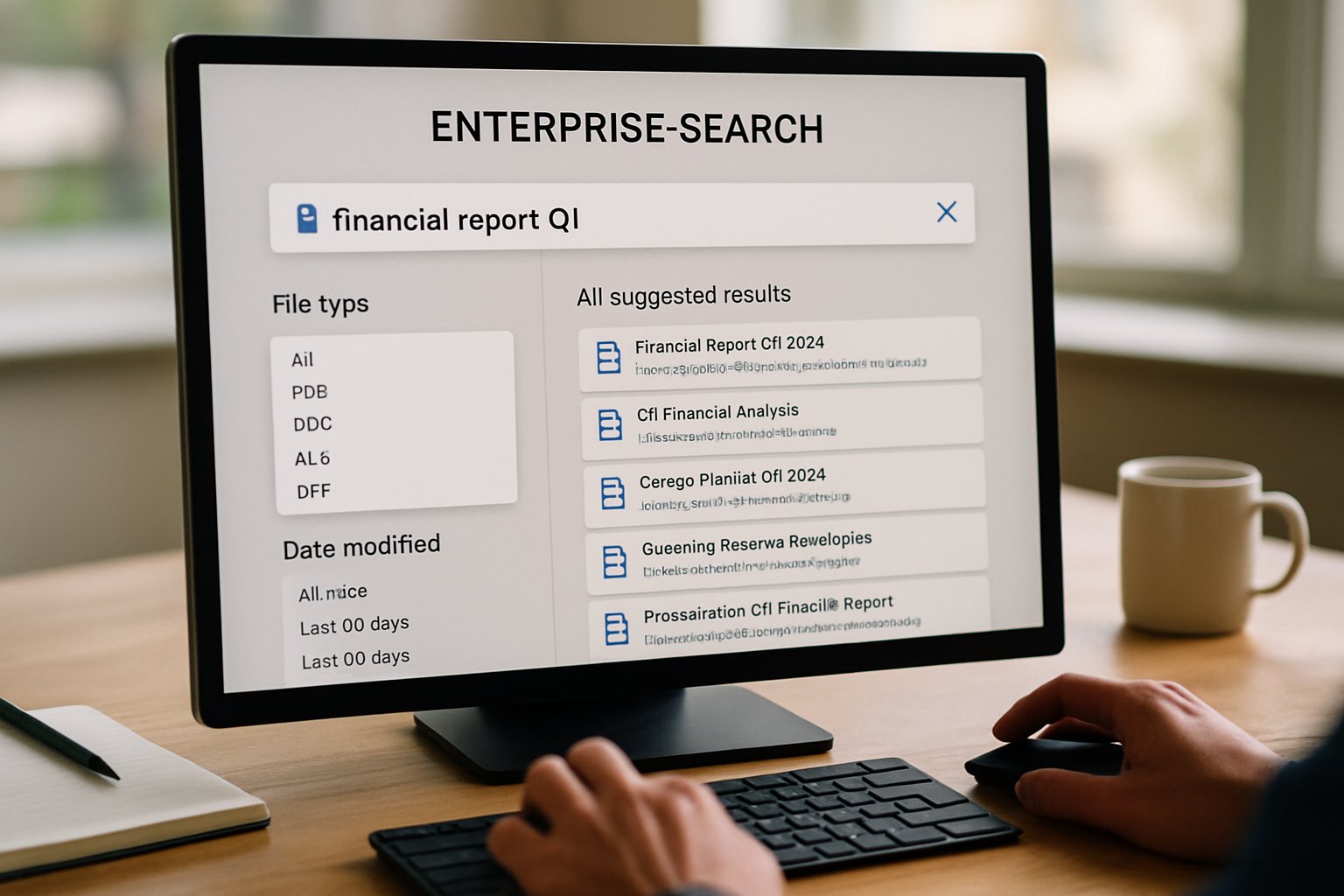
The shift reflects surging demand for objective-driven automation. Nevertheless, strategic value depends on execution, which the next section unpacks.
Inside Perplexity Computer Architecture
Perplexity built Computer around four architectural pillars. Firstly, multi-model orchestration routes each subtask to the most cost-effective engine, whether Claude or Gemini. Secondly, background workflows persist for hours or months, preserving memory inside Firecracker micro-VMs. Thirdly, hundreds of SaaS connectors link email, GitHub, Snowflake, and Salesforce CRM without manual scripting. Finally, every execution occurs within an isolated sandbox that satisfies enterprise compliance teams. Moreover, admins allocate organization-wide credits, enforcing spending caps through dashboards and alerts.
Additionally, the orchestration layer logs every model call, providing audit trails for regulatory reviews. Consequently, engineering teams can trace anomalies and reproduce outputs when required. Furthermore, connector management supports OAuth rotation, reducing manual token handling. Consequently, many pilots treat Computer as the missing execution layer for Enterprise AI Search workloads.
These pillars underpin the claim of best-of-breed flexibility. However, architecture alone never guarantees outcomes, so governance merits closer scrutiny next.
Security And Governance Guardrails
Security diligence ranks first for regulated buyers. Therefore, Perplexity touts SOC 2 attestation, SSO, audit logs, and micro-VM isolation to reassure teams. Data never trains the underlying models, according to published guarantees. Nevertheless, CISOs still probe sandbox escape probability, lateral movement into Snowflake, and contract enforcement rights. Legal staff also monitor ongoing publisher lawsuits alleging unauthorized content use by the vendor. These assurances matter because Enterprise AI Search often involves confidential research notes and proprietary analytics.
- Verify “no-training” clauses in master service agreements.
- Request recent penetration test and micro-VM audit evidence.
- Confirm data retention periods and exportable audit logs.
- Set conservative credit caps before production rollout.
Consequently, a structured checklist accelerates internal buy-in while limiting downstream surprises. Strong guardrails build confidence yet add operational overhead. Subsequently, buyers must weigh cost structures against projected gains.
Pricing And Usage Dynamics
Perplexity anchors consumer access at $200 monthly for the Max tier and 10,000 credits. Enterprise contracts remain negotiable, but still rely on shared credit pools rather than seat licenses. In contrast, competitors like Microsoft bundle Copilot seats into existing subscriptions. Usage billing can trigger sticker shock when Agents compile reports with rich media or long context windows. Enterprise AI Search workloads vary widely, so credit consumption can spike unpredictably.
- Large file ingestion consumes thousands of credits quickly.
- Video generation costs multiple credits per second rendered.
- High-frequency monitoring jobs run continuously and accumulate charges.
Moreover, the platform allows admins to program alerts at configurable spending thresholds. Transparent dashboards mitigate risk but demand active oversight. Therefore, competitive differentiation shifts toward qualitative benefits, addressed next.
Competitive Landscape And Gaps
The platform challenges entrenched vendors across Enterprise AI Search, Salesforce automation, and Microsoft productivity suites. Analysts argue multi-model orchestration offers higher precision than single-vendor stacks. Moreover, Microsoft wields distribution power through Office, while Salesforce embeds Einstein across CRM workflows. However, rivals counter with deep application integration and packaged compliance certifications. In contrast, the company relies on external model APIs, adding dependency risk. Additionally, open-source Agents frameworks could erode differentiation if enterprises self-host cheaper alternatives. Consequently, the company emphasizes speed of innovation and connector breadth.
The battlefield favors vendors who balance openness, security, and predictable economics. Future outlook examines whether that balance is attainable.
Implementation Due Diligence Checklist
Successful rollouts follow a disciplined path. Firstly, pilot limited workflows such as research briefs inside a non-production sandbox. Secondly, integrate only low-risk data before expanding toward Salesforce or Snowflake connectors. Thirdly, measure Productivity gains versus baseline manual hours across finance or marketing teams. Subsequently, present findings to executive sponsors with projected yearly credit budgets. Additionally, document annotation features can record time saved, offering quantitative proof for leadership reviews. Professionals can enhance expertise with the AI Sales Strategist™ certification.
Diligent pilots surface configuration gaps early. Meanwhile, structured metrics strengthen funding requests.
Future Outlook And Risks
Enterprise AI Search spending is projected to surpass $12 billion in 2027, according to Sacra estimates. Therefore, the vendor targets a growing pie yet must navigate unresolved litigation and supplier dependency. Nevertheless, early adopters report double-digit Productivity uplifts after automating reporting, content drafting, and dashboard generation. Furthermore, Salesforce partnership possibilities loom, given overlapping customer bases and complementary data graphs. Conversely, regulatory scrutiny of large language model sourcing could impose new licensing costs. Meanwhile, the agent market remains fluid, with open standards like LangChain Agents maturing rapidly. Enterprise AI Search vendors that solve licensing uncertainty will capture disproportionate share.
Opportunities appear vast, but execution risks mirror the product’s ambition. The conclusion distills actionable next steps.
Perplexity Computer represents a bold experiment pushing Enterprise AI Search beyond simple chat. Its multi-model Agents, secure sandboxing, and rich connectors promise measurable Productivity gains. However, credit variability, legal disputes, and third-party dependencies introduce material uncertainties. CISOs and CFOs should pilot narrow workflows, track spending, and demand contractual safeguards. Consequently, organizations that align governance with agile experimentation will capture early differentiation. Professionals eager to champion these initiatives can validate skills through the linked AI Sales Strategist certification. Act now, test carefully, and let data prove value.
Disclaimer: Some content may be AI-generated or assisted and is provided ‘as is’ for informational purposes only, without warranties of accuracy or completeness, and does not imply endorsement or affiliation.


