

AI CERTS
3 hours ago
AI Basic Service: Altman’s Utility-Scale Infrastructure Vision
Therefore, intelligence might soon resemble electricity—cheap, endless, and universally metered. Reporters, investors, and regulators follow each announcement closely, especially after the OpenAI–NVIDIA letter of intent worth up to $100 billion. Meanwhile, energy analysts compare the planned sites to medium-sized cities in power demand. In contrast, supporters foresee rapid scientific discovery, universal tutoring, and millions of jobs.
This article unpacks the vision, partnerships, Energy hurdles, and policy stakes. It maps how the emerging AI Basic Service could transform markets from California to Texas.
Altman's Utility Vision Explained
Altman unpacked his ideas in the September 23, 2025 blog post titled “Abundant Intelligence.” Furthermore, he declared that compute, not algorithms, will drive the next leap. He proposed a factory model capable of adding a gigawatt of capacity weekly. Consequently, he predicted “intelligence too cheap to meter,” echoing nuclear optimism from the 1950s. Analysts describe the concept as an AI Basic Service that people might tap like water or broadband. Nevertheless, the phrase masks heavy physical needs: servers, accelerators, cooling, and enormous power loads. Altman linked the scale to breakthroughs in drug discovery, personalized learning, and climate modeling, promising broad social dividends.
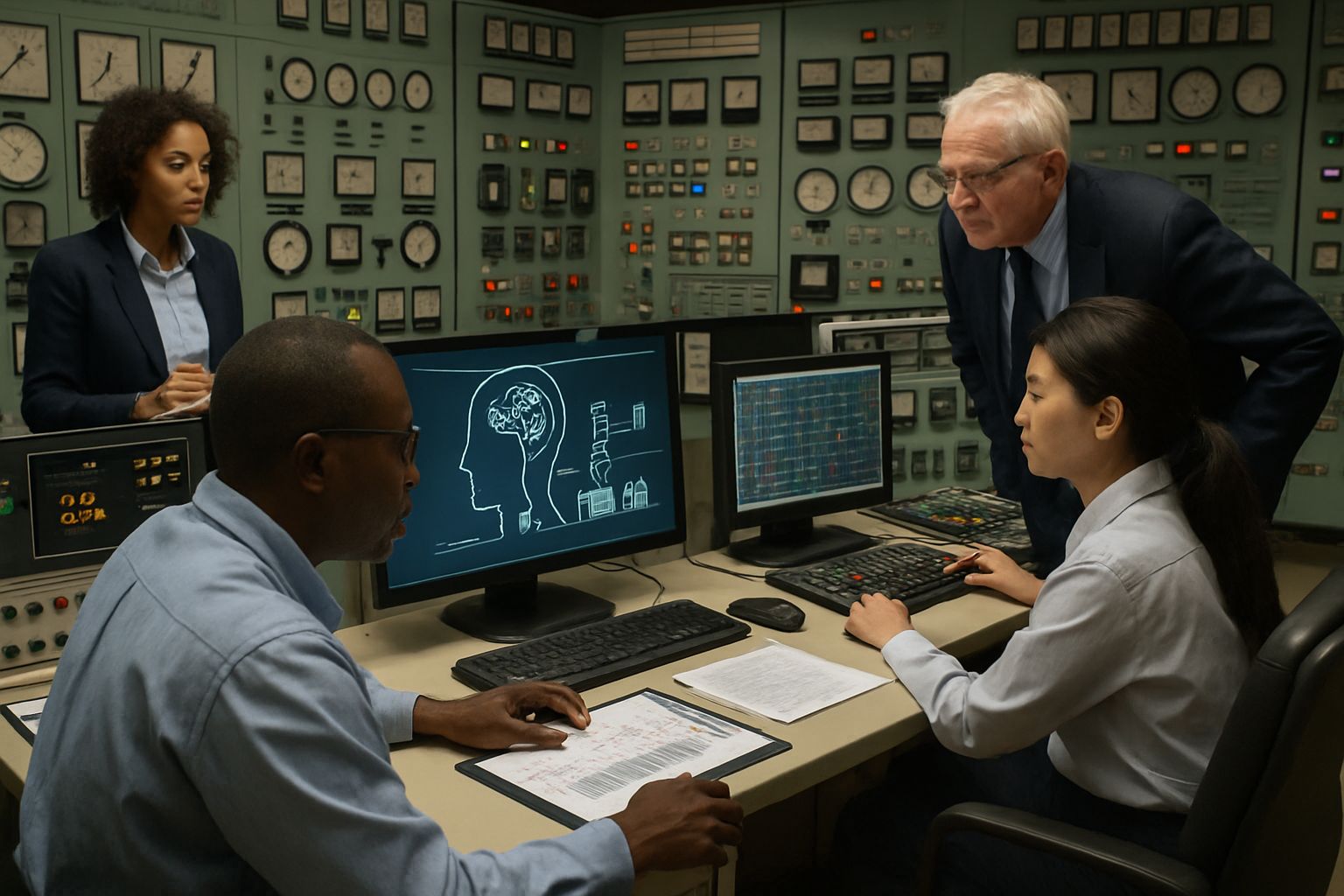
Industry peers echo the shift. Moreover, Google and AWS now tout custom silicon roadmaps measured in gigawatts rather than teraflops. Consequently, competition accelerates, validating Altman’s timetable while intensifying supply pressure.
Altman’s narrative shifts the focus from code to concrete. However, translating rhetoric into steel forms the next discussion.
Strategic Partnership Details Unpacked
Therefore, vision met capital one day earlier on September 22, 2025. OpenAI and NVIDIA signed a letter of intent to deploy at least ten gigawatts of systems. Additionally, NVIDIA committed up to $100 billion as each gigawatt comes online. The first tranche targets the second half of 2026 on the Vera Rubin platform. Oracle, AMD, and cloud giants followed with parallel supply pledges that reinforce the Infrastructure push. Meanwhile, SoftBank’s Stargate consortium scouted locations across the American Sun Belt and other states for multi-gigawatt campuses. Altman positions each site as another node in the AI Basic Service grid, serving more than 700 million weekly users. In contrast, several market analysts warn of speculative exuberance, citing bubble risks if demand plateaus.
Financial details remain preliminary because the agreement remains a letter of intent. Nevertheless, suppliers have begun reserving fabrication slots for next-generation accelerators. Consequently, analysts project cumulative capital outlays exceeding $850 billion across ecosystem players through 2030.
Meanwhile, real estate scouts race to secure water rights, fiber routes, and tax incentives. Moreover, certain counties offer abatements lasting two decades, hoping the Infrastructure anchors local economies after shale revenues decline.
Key Market Numbers Snapshot
- 10 GW equals roughly 4-5 million GPUs, according to reporters.
- Per-gigawatt capital costs range between $8 billion and $12 billion.
- OpenAI claims 700 million weekly active users today.
- NVIDIA investment ceiling: $100 billion linked to deployment pace.
- Target cadence: 1 GW of capacity added every week.
These figures highlight unprecedented financial velocity. Consequently, questions about Energy supply move center stage.
Massive Energy Implications Analyzed
Gigawatt numbers refer to electrical draw, not raw processing throughput. Moreover, each gigawatt data-center cluster requires continuous power comparable to Austin during summer peaks. Energy experts therefore warn of grid stress, extended interconnection queues, and potential rate hikes for nearby residents. Subsequently, developers must secure new generation, often blending nuclear, renewables, and gas with cutting-edge cooling designs. In the region, plentiful wind and relaxed permitting attract builders, yet congestion already challenges the ERCOT network. Consequently, civic groups demand transparency on water use because evaporative cooling may consume millions of gallons yearly. Altman counters that economies of scale will improve efficiency, lowering marginal costs for every AI Basic Service request.
Cooling innovations appear vital. Moreover, NVIDIA prototypes liquid-cooled racks claiming power usage effectiveness below 1.05. In contrast, traditional air systems struggle beyond 300 kilowatts per rack, creating space penalties. Therefore, facility architects embrace immersion baths and on-site heat recycling to greenhouses or district heating loops.
Energy sourcing strategy includes advanced nuclear. Furthermore, several developers filed preliminary permits for small modular reactors colocated with AI Basic Service campuses. Nevertheless, licensing hurdles mean reactors may arrive late, leaving interim dependence on gas peakers and renewables plus batteries.
Power realities can stall even well-funded projects. Nevertheless, broader capacity constraints extend beyond electricity alone.
Debated Infrastructure Challenges Ahead
Scaling millions of GPUs strains supply chains for chips, fiber, concrete, and skilled labor. Additionally, lead times for high-voltage substations can exceed five years, outlasting many startup cycles. Therefore, project managers orchestrate simultaneous construction, procurement, and regulatory clearance. In contrast, regulators weigh cybersecurity, land use, and environmental impact reports. Meanwhile, concentration risk worries policymakers because a handful of corporations could dominate a utility-grade AI Basic Service. Some commentators propose public-private models or antitrust guardrails.
Consequently, investors monitor shifting sentiments at forums such as Davos 2026. There, executives reframed AI as critical Infrastructure rather than software.
Supply chain fragility surfaced during the pandemic and persists. Additionally, neon gas shortages and advanced substrate capacity now threaten GPU deliveries. Therefore, contingency planning includes diverse foundries and broader geographic dispersion of assembly plants. Workforce scarcity complicates timelines. Moreover, data-center electricians command premiums exceeding 30 percent above pre-pandemic rates. Consequently, project budgets now include training academies and veteran retraining programs.
Material, legal, and social hurdles intertwine here. However, governance debates sharpen those stakes further.
Policy And Governance Questions
Utility rhetoric invites regulatory analogies to electricity or telecom services. Moreover, if Intelligence becomes essential, legislators may mandate universal access or price controls. European officials already study emission impacts and algorithmic fairness, suggesting extra compliance layers. Meanwhile, U.S. energy regulators examine routing rights for new high-capacity lines feeding Gulf Coast data-center tracts. Consequently, policy uncertainty complicates financing schedules and could slow AI Basic Service rollout. Nevertheless, clear rules might also reduce risk premiums, unlocking cheaper capital for Infrastructure expansion.
International bodies debate whether an AI Basic Service should observe neutrality principles akin to net-neutrality rules. Furthermore, antitrust scholars propose open access mandates requiring fair interface terms for smaller model providers. Consequently, lobbying has intensified in Washington, Brussels, and Canberra.
Environmental groups demand comprehensive life-cycle assessments. Additionally, they push for binding water usage caps in arid counties. Therefore, project managers must factor possible curtailment periods into capacity forecasts.
Regulation can hinder or accelerate deployment. Therefore, talent development becomes another decisive variable.
Opportunities For Tech Professionals
The mega-buildout creates demand for engineers, electricians, project managers, and AI specialists. Furthermore, employers now prize hybrid skills spanning hardware, power systems, and model optimization. Professionals can enhance their expertise with the AI Cloud Architect™ certification. That credential aligns with scaling an AI Basic Service across diverse cloud fabrics. Meanwhile, regional planners in Texas seek experts versed in interconnection codes and battery siting. Consequently, career pathways branch beyond traditional software roles into physical Infrastructure stewardship. Additionally, vendors request compliance officers fluent in emerging data and sustainability standards.
- High-performance networking architects
- Data-center Energy efficiency analysts
- Regulatory affairs specialists for AI utilities
- Supply-chain managers for chip logistics
Universities also react. Consequently, several Texas engineering schools created degrees combining power electronics with machine learning. Moreover, corporate scholarships target underrepresented groups to fill widening talent gaps.
Skill gaps could bottleneck ambitious timelines. In contrast, proactive training helps teams capture first-mover advantage.
Altman’s factory ambition signals a pivotal shift toward tangible assets underpinning tomorrow’s cognition. Moreover, ten gigawatts of capacity, $100 billion of hardware, and city-scale Energy loads redefine what an AI Basic Service entails. Challenges span Infrastructure financing, grid resilience, environmental stewardship, and equitable governance. Nevertheless, partnerships, innovative policy, and an upskilled workforce can translate vision into inclusive prosperity. Therefore, readers should monitor contract milestones, regional permitting, and efficiency breakthroughs that shape real deployment. Professionals eager to lead this transformation should pursue advanced credentials and stay engaged with evolving standards. Explore the linked certification today and position yourself at the forefront of the utility-grade intelligence era.


