

AI CERTS
3 hours ago
Meta Bets on Nuclear to Meet Exploding AI Power Demand
Consequently, hyperscalers now seek firm, always-on supply rather than only intermittent renewables. Meta’s multibillion dollar nuclear portfolio exemplifies that pivot with unprecedented scale and speed. Additionally, the agreements reveal fresh market leverage where single companies underwrite entire reactors. Sustainability reporting requirements also intensify the urgency of reliable carbon-free supply. This article unpacks the deals, numbers, opportunities, and risks for professionals tracking energy, AI, and finance.
Meta Nuclear Strategy Unveiled
Meta disclosed two waves of contracts between 2025 and 2026, covering existing and advanced reactors. June 2025 brought a 20-year power purchase agreement with Constellation’s 1,121 MW Clinton plant. Meanwhile, January 2026 added a package with Vistra, TerraPower, and Oklo totaling up to 6.6 GW. Therefore, Meta now ranks among the largest private purchasers of U.S. Nuclear Energy. Executives stress the move directly supports escalating AI Power Demand across global Data Centers. In contrast, earlier Meta procurements centered on solar and wind, which lack consistent output at night.
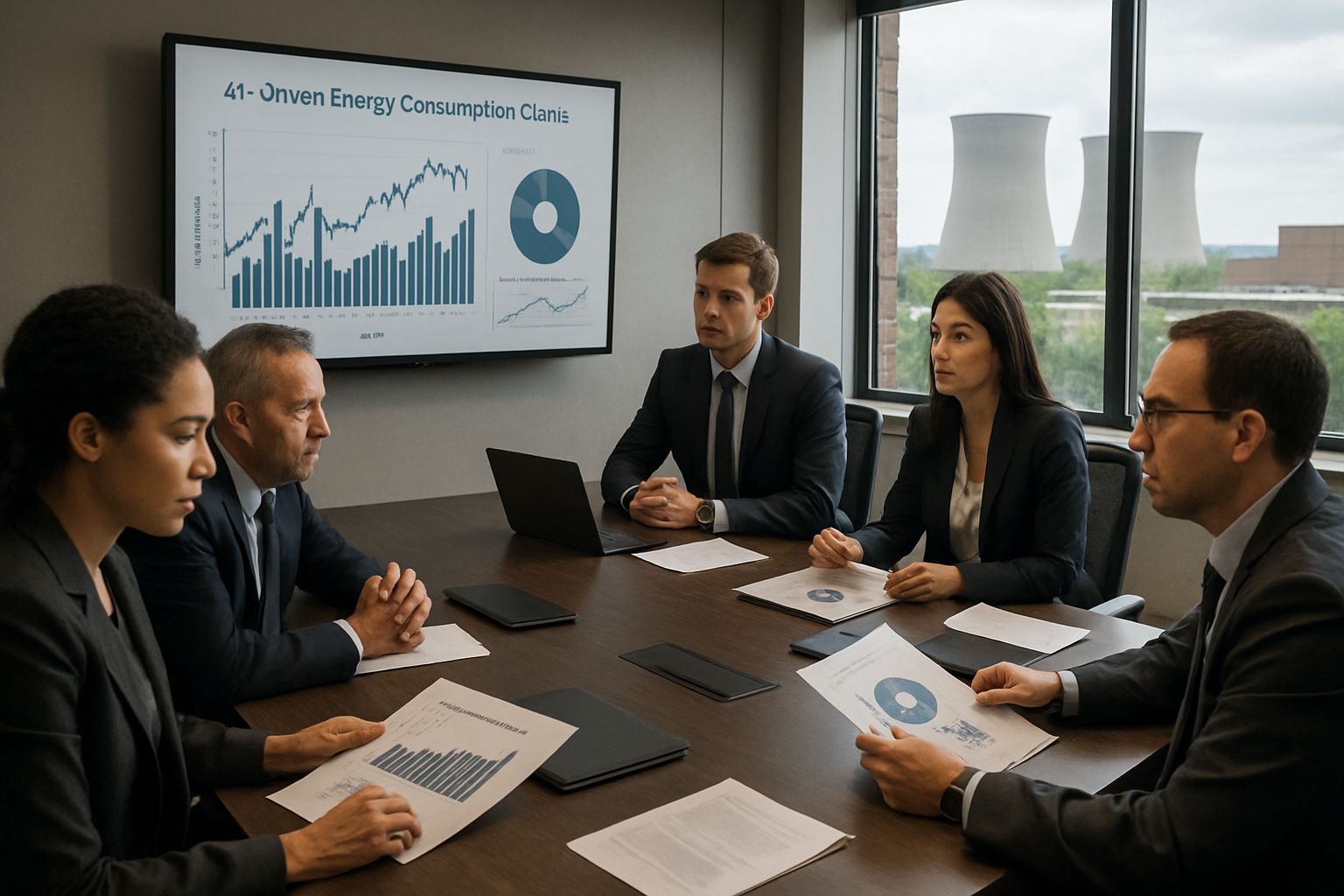
Meta’s strategy delivers firm capacity and technology leadership simultaneously. Consequently, peers will study the nuclear turn closely before launching similar bids.
Nuclear Deals Timeline Overview
Understanding timing helps gauge revenue certainty for reactors and load coverage for servers. First milestone arrives in late 2026 when Vistra begins deliveries from Perry and Davis-Besse. Moreover, Constellation’s Clinton output joins Meta’s portfolio in mid-2027 after license extensions conclude. Subsequently, plant uprates add 433 MW gradually through 2034, boosting the Vistra tranche above 2,600 MW. Advanced units follow later. TerraPower targets two Natrium reactors by 2032, while Oklo eyes an Aurora campus possibly by 2030. Furthermore, Meta retains rights for additional Natrium units delivering several gigawatts before 2035. AI Power Demand projections guided each milestone within the negotiated construction schedules.
The phased schedule aligns capacity growth with product rollouts and model refresh cycles. Therefore, AI clusters avoid stranded investment while generators secure predictable income.
Capacity Numbers Explained Clearly
Raw megawatt counts illustrate why investors pay attention. Below are the headline figures confirmed in company filings.
- Constellation Clinton: 1,121 MW contracted through 2047.
- Vistra fleet: 2,176 MW plus 433 MW uprates.
- TerraPower Natrium: up to 2.8 GW firm with storage.
- Oklo Aurora campus: about 1.2 GW targeted.
- Total potential: roughly 6.6 GW for Meta.
Collectively, these volumes rival the capacity of several regional utilities. Moreover, they exceed many previous corporate clean-energy procurements by an order of magnitude. Analysts expect the contracts to satisfy AI Power Demand spikes reaching gigawatt scale per data campus. In contrast, typical cloud farms once consumed only dozens of megawatts. Consequently, scaling plans now resemble heavy industry rather than conventional office parks. Developers assume persistent AI Power Demand when justifying reactor uprates and storage add-ons.
Capacity commitments underpin huge capital decisions on both sides of each PPA. Next, we examine the motivations driving such bets.
Drivers Behind These Agreements
Several intertwined forces pushed Meta toward nuclear. First, ballooning inference workloads strain grid real-time reserves. Moreover, regulators and investors demand credible Sustainability plans beyond renewable certificates. Nuclear Energy offers dispatchable, carbon-free output that operates regardless of weather. Consequently, pairing reactors with hyperscale Data Centers simplifies capacity planning and carbon accounting. Additionally, Meta gained political goodwill by preserving thousands of regional jobs.
Vistra and Constellation both highlighted payroll and tax benefits in release materials. Furthermore, early backing of TerraPower and Oklo accelerates advanced reactor commercialization. That support aligns with Meta’s historic bet on bleeding-edge infrastructure. Therefore, the company positions itself as an innovation catalyst while satisfying AI Power Demand responsibly.
Economic, environmental, and reputational incentives converge around the nuclear path. Subsequently, remaining hurdles define the narrative’s next phase.
Risks And Challenges Ahead
No large-scale project proceeds without friction. Licensing advanced reactors requires new Nuclear Regulatory Commission approvals and specialized fuel supply. Meanwhile, regional grid operators caution that sudden industrial clusters can raise wholesale prices. Jesse Jenkins from Princeton warned higher retail bills may follow if planning lags. Moreover, timelines stretching to 2035 expose Meta to policy swings and construction overruns. AI Power Demand could outpace even these timelines if generative models grow exponentially. Cost details remain confidential, limiting investor transparency. Nevertheless, long-term PPAs partially shield utilities from market volatility. Therefore, stakeholders must watch regulatory dockets, supply chains, and financing updates closely.
Risks center on permits, costs, and grid integration. In contrast, proactive governance can convert those threats into competitive advantages.
Implications For Tech Industry
Meta’s blueprint resets energy procurement norms for hyperscale peers. Google, Microsoft, and Amazon already explore similar nuclear options, yet none match this capacity. Furthermore, utilities gain new revenue channels by courting digital clients with long contracts. Investors may re-rate reactor assets once perceived retirement risks decline. Consequently, Wall Street coverage of Nuclear Energy could shift from defensive to growth narratives. Policy makers also notice that AI Power Demand now influences regional economic development plans.
Moreover, suppliers of cooling systems, transformers, and high-voltage equipment see expanded addressable markets. Practitioners can strengthen career prospects by understanding this convergence of computing and infrastructure. Professionals can enhance their expertise with the AI Architect™ certification. Subsequently, those skills help translate complex utility data into cloud budgeting strategies.
Industry effects extend well beyond Meta’s balance sheet. Therefore, early movers may lock advantageous rates and influence regulatory priorities.
Conclusion And Next Steps
Meta’s nuclear surge marks a pivotal moment for clean infrastructure and cloud economics. The deals guarantee 6.6 GW of dependable output, aligning perfectly with looming AI Power Demand across continents. Furthermore, the program revitalizes existing plants, sparks advanced designs, and promotes long-term Sustainability narratives. Nevertheless, success hinges on licensing speed, supply chains, and transparent cost structures.
Energy leaders should audit portfolios now, because competition for carbon-free baseload will intensify. Consequently, organizations that anticipate AI Power Demand and secure firm supply early will dominate emerging markets. Explore further analysis and bolster your credentials with the linked certification to stay ahead.


