

AI CERTS
3 hours ago
Meta’s AI Model Delay Signals Harder Scaling Era
Meta Delay Timeline Overview
On April 5 2025, the company unveiled the Llama-4 family. Subsequently, two smaller models, Scout and Maverick, shipped immediately. Meanwhile, Behemoth remained in training with no firm date. The Wall Street Journal broke the AI Model Delay story on May 15 2025. In contrast, earlier guidance suggested a June rollout. Coverage now pegs release for fall or later. Rumblings intensified mid-June when Meta invested heavily in Scale AI to bolster data pipelines.
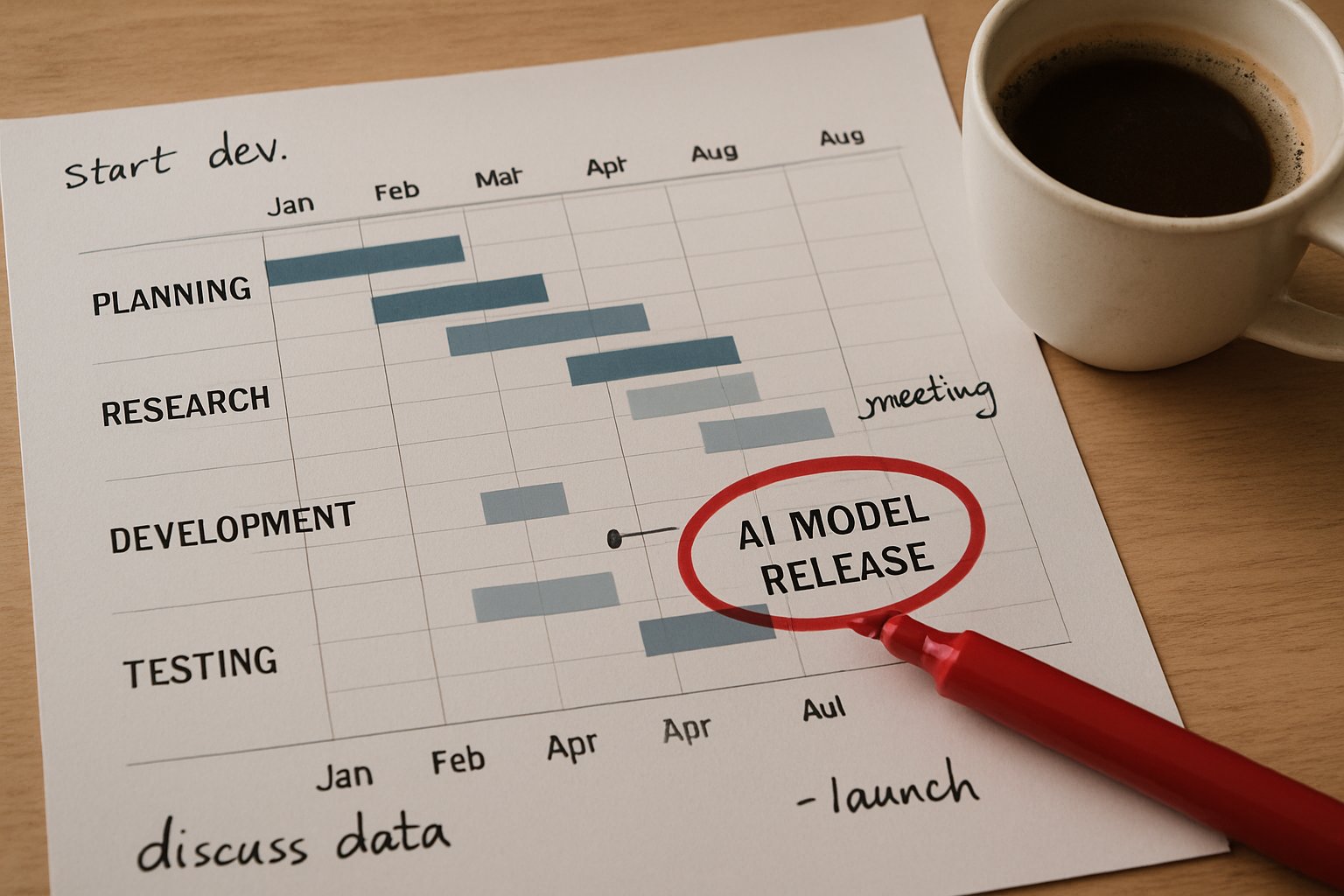
Key takeaway: shifting deadlines disrupted expectations. Nevertheless, the firm’s spending spree implies continued commitment.
This evolving schedule sets the stage for examining technical performance.
Performance Issues Surface Publicly
Benchmarks drive reputations. Nevertheless, internal evaluations showed Behemoth offered only incremental gains versus Scout, Maverick, and external rivals. Therefore, executives hesitated to launch. Analysts argue diminishing returns plague frontier models. Moreover, larger parameter counts raise inference latency, creating user friction. Public reports cite 288 billion active parameters, yet rival claims edge toward trillion-scale numbers. Despite architectural advances like Mixture-of-Experts, consistent quality remained elusive. Consequently, the AI Model Delay aims to protect brand credibility.
Takeaway: incremental advantages seldom justify additional complexity. Consequently, performance scrutiny will intensify next cycle.
The next section explores why engineering complexity exploded.
Engineering Challenges Detailed Further
Model refinement rarely follows a straight line. Additionally, expanded context windows near one million tokens strain memory budgets. Routing algorithms inside MoE layers complicate GPU utilization. Furthermore, longer context increases evaluation latency during fine-tuning. These obstacles slowed LLM Training workflows, according to press summaries. Engineers also battled data freshness issues, prompting the Scale AI partnership.
Planned Mitigation Steps Ahead
To regain momentum, teams adopted several measures:
- Refactor MoE routing to cut idle GPU time
- Automate curriculum schedules for adaptive LLM Training
- Inject synthetic math problems to boost STEM benchmarks
- Profile inference paths to trim interactive latency
Professionals can enhance their expertise with the AI Developer™ certification. It covers similar optimization techniques.
Takeaway: focused engineering can still unlock gains. However, process overhauls consume time before benefits appear.
With challenges mapped, financial pressures come into view next.
Business And Spending Impacts
Capital expenditures ballooned during 2025, reaching an estimated $70 billion. Consequently, investors questioned return horizons. Moreover, delayed rollouts stall monetization plans for Instagram and WhatsApp chatbots. Internal morale reportedly suffered, though official statements remain upbeat. Nevertheless, delaying may avert reputational damage that could hurt long-term revenue. Analysts note that large-scale LLM Training already absorbs vast power budgets. Any regression requires costly reruns, further heightening scrutiny.
Summary: financial stakes magnify every AI Model Delay. Therefore, leadership must balance speed, quality, and budget control.
Stakeholder reactions now shape competitive positioning.
Industry Reactions And Benchmarks
OpenAI, Google, and Anthropic continue showcasing impressive scores on MMLU, MATH, and GSM8K. Consequently, Meta faces perception risks. However, many experts agree that scaling laws show tapering gains. In contrast, smaller targeted models sometimes beat giants on cost-adjusted metrics. Early third-party tests suggested Behemoth lagged in reasoning speed due to higher latency. Still, the open-weight strategy could revive community goodwill once performance stabilizes.
Comparative Latency Figures Reported
Recent independent dashboards list average response times:
- GPT-5 early preview: 1.8 seconds
- Gemini Ultra: 2.1 seconds
- Behemoth internal build: 3.4 seconds
Latency gaps explain usability concerns influencing the AI Model Delay decision.
Takeaway: competitive benchmarks drive narrative control. Moreover, transparent reporting may restore confidence.
The final section looks forward to potential release scenarios.
Future Roadmap And Options
Leadership outlines three scenarios. Firstly, incremental patches could enable a winter 2025 launch. Secondly, deeper retraining might push release into 2026 yet deliver sharper gains. Thirdly, the company could pivot toward domain-specific distilled models for enterprise APIs. Furthermore, regulatory landscapes like the EU AI Act may dictate documentation requirements, influencing timing. Meanwhile, continued collaboration with Scale AI should streamline data labeling, accelerating future LLM Training. Engineers watching from the sidelines can prepare by upskilling. Professionals may start with the linked AI Developer™ program to master large-model optimization.
Takeaway: strategic flexibility remains essential. Consequently, the next quarterly update will provide critical signals.
The article now concludes with actionable reflections.
Conclusion
Meta’s prolonged AI Model Delay underscores harder scaling economics. Nevertheless, decisive pauses can safeguard reputation, improve engineering, and optimize spending. Furthermore, industry rivals face similar diminishing returns, suggesting a broader inflection point. Consequently, professionals should monitor latency metrics, MoE developments, and emerging regulatory shifts. Finally, readers seeking hands-on mastery should explore the AI Developer™ certification to stay competitive in a tightening talent market.


