

AI CERTS
3 months ago
Animaj AI Kids Backlash Reshapes YouTube Animation
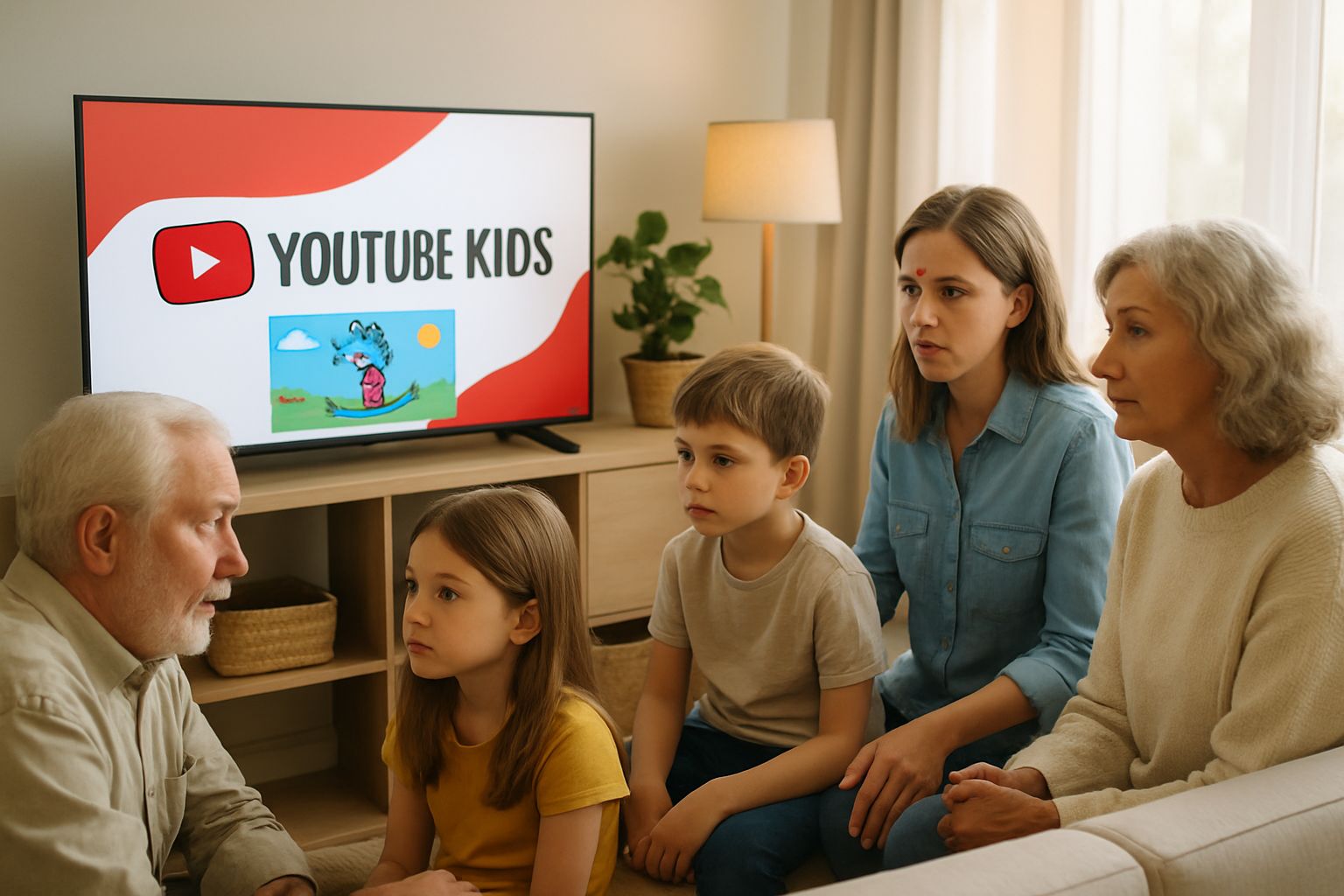
Consequently, lawmakers, advocates, and creators want urgent safeguards.
This article unpacks the backlash, funding story, policy gaps, and what comes next for Animaj AI Kids.
Furthermore, we detail expert opinions and strategic steps for studios seeking ethical scaling.
Readers also receive actionable certification guidance to future-proof creative skills.
In contrast, defenders argue automation democratizes multilingual content for underserved families.
Therefore, balanced analysis remains essential before regulators rewrite digital animation rules.
Funding Fuels Rapid Growth
Animaj AI Kids closed an $85 million Series B in June 2025 led by HarbourView Equity.
Moreover, the round financed proprietary sketch-to-motion tools and shored up IP acquisitions like Pocoyo.
Subsequently, monthly YouTube views climbed toward 22 billion, according to company materials.
Animaj AI Kids leveraged that scale to court Google's AI Futures Fund during March 2026.
Consequently, engineers gained early access to advanced DeepMind models for asset generation.
These investments cement enormous production capacity.
However, rapid growth also intensified public scrutiny, as the next timeline shows.
Key Timeline Event Log
- June 2025: Funding round turbocharges AI pipeline.
- Feb 23 2026: Global music deal with Sony and The Orchard.
- Feb 26 2026: NYT investigation spotlights AI slop on kids' feeds.
- March 2026: Google AI Futures Fund investment announced.
Collectively, these milestones illustrate breathtaking momentum across finance, distribution, and technology.
Nevertheless, momentum collided with reputational risk after the NYT report.
That report triggered the backlash explored below.
NYT Investigation Sparks Outcry
Reporters reviewed 1,000 Shorts recommended to Animaj AI Kids viewers.
They found surreal loops, distorted voices, and disjointed plots, hallmarks of AI slop.
Moreover, experts warned such hyper-stimuli may hinder language development and emotional regulation.
Dr. Jenny Radesky subsequently urged labels, monetization limits, and parental opt-outs.
YouTube initially argued animated content falls outside its synthetic media disclosure rule.
In contrast, Mashable quickly aggregated parent testimonies describing confused, overstimulated children.
Consequently, Google removed or demonetized several flagged channels, though exact numbers remain opaque.
The investigation reframed a niche concern into a mainstream debate.
Therefore, policy loopholes became the next battleground.
Expert Voices Weigh In
Child advocates call the exemption a dangerous gap.
Meanwhile, Animaj executives insist human oversight reviews every AI episode before upload.
Common Sense Media, Mashable, and academic panels nevertheless demand formal provenance tags.
Furthermore, several creators told Mashable they fear a race to the bottom powered by AI slop.
Professionals can enhance their expertise with the AI+ UX Designer™ certification.
Consequently, skilled designers may future-proof careers while elevating content standards.
Stakeholders broadly agree on the need for transparent labeling.
Next, we examine how policy currently falls short.
Platform Policy Loopholes Persist
YouTube’s deepfake disclosure covers realistic synthetic humans but excludes cartoons.
Therefore, parents cannot filter AI slop from Kids mode with existing settings.
Moreover, the policy gap contradicts Google's public commitment to responsible AI for minors.
Animaj AI Kids now faces questions about disclosure obligations.
In contrast, Animaj argues its metadata already flags synthetic segments for internal audits.
Nevertheless, external researchers cannot access that metadata, so trust remains fragile.
Policy exemptions leave vulnerable users exposed.
Subsequently, balancing innovation and safety becomes the central challenge.
Balancing Innovation And Safety
Generative pipelines undeniably slash production timelines and localization costs.
Furthermore, faster iteration lets Animaj AI Kids test storylines across 242 million monthly viewers.
However, quantity can eclipse narrative coherence, birthing additional AI slop.
Investors welcome scalable libraries; parents prioritize developmental integrity.
- Pros: reduced budgets, rapid dubbing, greater global accessibility
- Cons: incoherent plots, overstimulation, unverified data privacy for minors
Consequently, the studio promotes a "human in the loop" quality layer.
Nevertheless, Animaj still lacks third-party audits to verify claims.
These tensions illustrate why guardrails must evolve with technology.
The following outlook maps potential solutions.
Business And Regulatory Outlook
Market momentum shows little sign of slowing despite the uproar.
Moreover, Animaj AI Kids continues courting brands for merchandising and music crossovers.
Analysts predict further regional acquisitions as Animaj seeks scale before stricter rules arrive.
Meanwhile, U.S. and EU lawmakers draft bills mandating provenance labels for children’s AI media.
Consequently, compliance readiness could become a competitive advantage.
Executives can prepare by tracking four priority actions.
- Audit pipelines for explainable AI checkpoints.
- Embed watermarking and clear parental disclaimers.
- Establish independent child-psychology advisory boards.
- Upskill designers through accredited AI courses.
Professionals again can pursue the AI+ UX Designer™ track to meet emerging standards.
Robust governance may protect young audiences while preserving creative upside.
Nevertheless, only coordinated effort across platforms, studios, and regulators will close current gaps.
Animaj AI Kids sits at the center of a pivotal industry test.
The studio’s meteoric rise demonstrates how generative tools can rewrite content economics.
However, the NYT backlash shows reputation erodes fast when AI slop reaches children.
Furthermore, policy exemptions leave guardians without reliable filters on YouTube.
Consequently, proactive governance, transparent labeling, and skilled human oversight must guide future releases.
Professionals aiming to lead that charge should explore accredited upskilling like the AI+ UX Designer™ certification.
Take action now to shape safer, smarter, and more inspiring digital playgrounds with Animaj AI Kids lessons.
Disclaimer: Some content may be AI-generated or assisted and is provided ‘as is’ for informational purposes only, without warranties of accuracy or completeness, and does not imply endorsement or affiliation.


