

AI CERTS
3 hours ago
Amazon AI Sell-off Spurs Bubble Fears and Regulatory Warnings
The episode now anchors a broader debate: is the sector entering a disciplined build-out or drifting toward another speculative Bubble?
Earnings Shock Waves Emerge
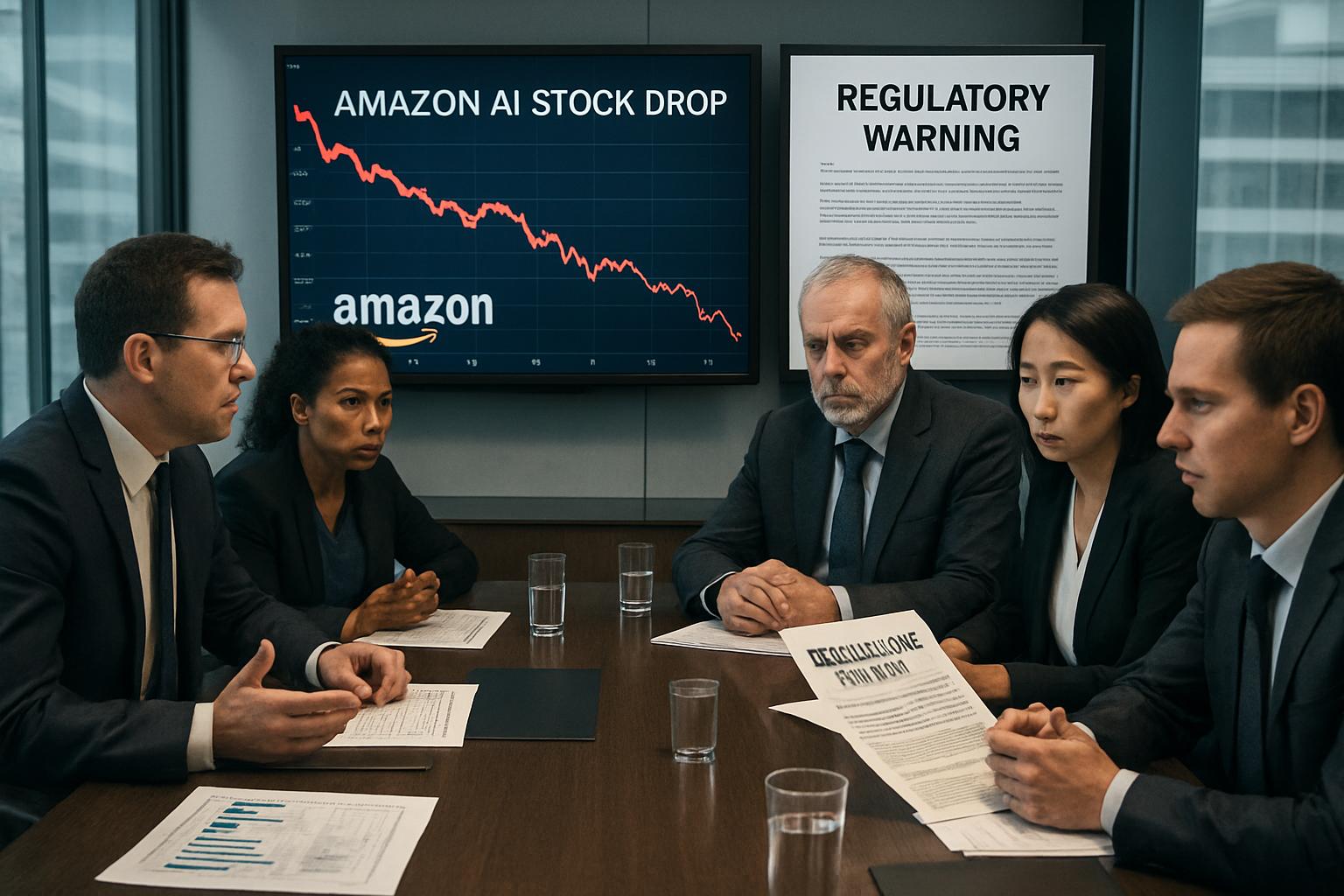
Amazon posted fourth-quarter revenue of $213.4 billion, up 13 percent year-over-year. However, guidance to boost capital expenditures to about $200 billion stunned analysts on the call. Reuters noted shares slid nine percent on 6 February, extending the Amazon AI Sell-off into a multi-session rout. Meanwhile, fellow hyperscalers fell in sympathy as the wider Market repriced cash-flow expectations.
- $12.5 billion AWS operating income reported for Q4 FY2025
- Roughly $470 billion wiped from Amazon’s market capitalization mid-February
- Combined 2026 hyperscaler capex estimated above $600 billion
These datapoints underscore the scale of spending shock. Therefore, traders quickly questioned near-term margin trajectories. The section’s turbulence sets the stage for deeper structural issues.
Nevertheless, focus soon shifted from earnings math toward systemic risk. The next section examines that spending surge.
Capital Spending Surge Seen
Andy Jassy defended the investment, stressing long-term return on invested capital. Additionally, management highlighted rising demand for AI training clusters, custom silicon, robotics, and low-earth-orbit satellites. In contrast, several brokerage notes argued consensus models had assumed roughly half the announced figure. Consequently, cash-flow forecasts moved sharply lower, accelerating the Amazon AI Sell-off.
Goldman Sachs research framed the move differently. Moreover, its analysts suggested infrastructure cycles often appear excessive during early deployment phases yet deliver durable moats later. Such nuance illustrates why the current Tech debate resists binary labels.
Capital intensity creates operational ripple effects. Subsequently, supply-chain partners must secure power, land, and advanced chips at unprecedented speed. However, execution risk grows as project counts multiply. These factors amplify investor unease before monetization proves out.
Short-term pain now feels tangible. Still, the surge may unlock future AI productivity. That potential fuels optimism while Bubble critics stay vocal.
Bubble Fears Revived Fast
Bank of England officials had warned in December about “materially stretched” AI equity valuations. Therefore, February’s drawdown looked like an overdue reality check. CNBC commentators repeatedly referenced dot-com parallels, boosting search traffic around the phrase Amazon AI Sell-off. Furthermore, IMF staff noted credit exposures in private markets that fund data-center construction.
Critics emphasize three fragile links. Firstly, index concentration means five names drive vast passive flows. Secondly, debt used to finance server farms could strain if earnings stumble. Thirdly, risk-parity funds lean on low cross-asset correlations that may break during a broad Market selloff.
Nevertheless, not every observer shouts “Bubble.” Some view current multiples as reasonable given structural growth. That divergence keeps volatility elevated while evidence accumulates.
The renewed fear narrative primes regulators to act. The following section reviews official responses and potential policy paths.
Regulatory Risk Signals Flash
Supervisors moved quickly. Moreover, the Bank of England’s Financial Policy Committee highlighted the February stress as validation of earlier concerns. In contrast, United States agencies focused on disclosure quality rather than direct capital requirements. Consequently, cross-border coordination remains patchy.
Policy chatter now centers on three tools: enhanced scenario testing for large-cap tech exposures, margin guidance for prime brokers, and thematic risk reports for parliamentarians. Additionally, some lawmakers campaign for tighter scrutiny of hyperscaler power usage given grid-stability pressures.
Professionals can deepen their mastery of AI infrastructure risks through the AI + Robotics™ certification. Such programs build technical fluency vital for strategic risk assessments.
Authorities have not signalled imminent punitive measures. Nevertheless, the policy drumbeat increases headline risk. These developments feed directly into shifting investor psychology.
Regulatory noise therefore shapes sentiment as much as fundamentals. The next section explores how investors respond.
Investor Sentiment Split Widely
Portfolio managers now occupy three camps. Firstly, momentum sellers exited quickly during the Amazon AI Sell-off. Secondly, valuation skeptics trimmed but retained exposure, citing AWS strength. Thirdly, long-term believers added holdings, viewing the pullback as a rare entry point.
MoffettNathanson analysts reduced price targets yet kept outperform ratings. Meanwhile, some hedge funds sold call spreads, anticipating continued Market chop. Conversely, pension funds highlighted strategic alignment with automation megatrends.
Moreover, options implied volatility stayed elevated through mid-February, reflecting unresolved disagreement. Consequently, near-term share paths look path-dependent on incremental news flow.
Sentiment thus oscillates between risk aversion and opportunity seeking. The competitive context intensifies that dynamic, as outlined next.
Competitive Landscape Shifts Rapidly
Microsoft and Alphabet also flagged rising data-center budgets for 2026. Additionally, Nvidia benefits from soaring accelerator demand, even during the Amazon AI Sell-off. In contrast, smaller cloud firms struggle to match hyperscaler scale, risking client attrition.
Meanwhile, telecom operators court partnerships to share fiber and power sites. Furthermore, chipmakers explore advanced packaging to ease compute bottlenecks. Such moves illustrate how Tech supply chains realign when one titan changes course.
Consequently, competitive barriers may strengthen if Amazon executes well. However, execution missteps could open niches for agile rivals. Therefore, strategic flexibility remains essential for all ecosystem players.
The shake-up offers lessons for executives planning large AI bets. The final section summarises actionable insights.
Strategic Takeaways Ahead Now
Boards should reassess capital allocation frameworks under heightened scrutiny. Moreover, scenario testing against regulatory and funding shocks appears prudent. In contrast, neglecting transparency invites harsher oversight.
Key questions to guide planning:
- Do projected AI revenues justify multi-year negative free cash flow?
- How resilient are supply chains facing power or chip shortages?
- Which metrics best track post-deployment monetization speed?
Additionally, communications teams must prepare clear narratives for outlets such as CNBC. Transparent messaging can temper volatility when the next Amazon AI Sell-off style event strikes. Professionals armed with specialized training, including the linked certification, will navigate these demands effectively.
These strategic themes conclude the analysis. Nevertheless, ongoing monitoring will refine them as data emerge.
The article now closes with a concise synthesis and forward-looking call.
Conclusion: February’s Amazon AI Sell-off exposed delicate balances between ambition, valuation, and policy oversight. Bubble alarms rang, yet structured opportunity remains for disciplined actors. Furthermore, regulatory engagement and technical literacy will separate winners from laggards. Consequently, executives should blend prudent capital stewardship with innovation urgency. Explore advanced certifications and stay tuned for further coverage on evolving Tech Market dynamics.


