

AI CERTS
5 hours ago
PagerDuty Advance Agents Transform Incident Management Workflows
Meanwhile, analysts praise the open ecosystem approach enabled by the new Model Context Protocol connector. Nevertheless, caution persists because generative systems can hallucinate during crises. This article examines the capabilities, promises, and pitfalls shaping the next era of operational AI. Readers will gain actionable insights on adoption patterns, risk mitigation, and certification paths. Finally, professionals will understand how these developments reshape modern on-call culture.
AI Agent Suite Overview
PagerDuty positions Advance as the umbrella brand for its generative and agentic capabilities. Furthermore, the suite now includes SRE, Scribe, Shift, and Insights agents available in general availability. Each agent focuses on a specific stage of the Incident Management lifecycle, forming an integrated pipeline. In contrast, earlier versions offered only a chat assistant embedded in incident timelines. The Model Context Protocol server links third-party agents through a secure API bridge.
Consequently, organizations can orchestrate external LLMs without abandoning existing workflows. The vendor claims more than 250 customers adopted the MCP server within two months. Additionally, Slack, Microsoft Teams, and AWS Bedrock integrations anchor the chat surface and alignment. RedMonk analysts praised the open ecosystem stance, noting reduced lock-in risk. These structural changes set the stage for deeper automation examined in the next section.
Core PagerDuty Agents Explained
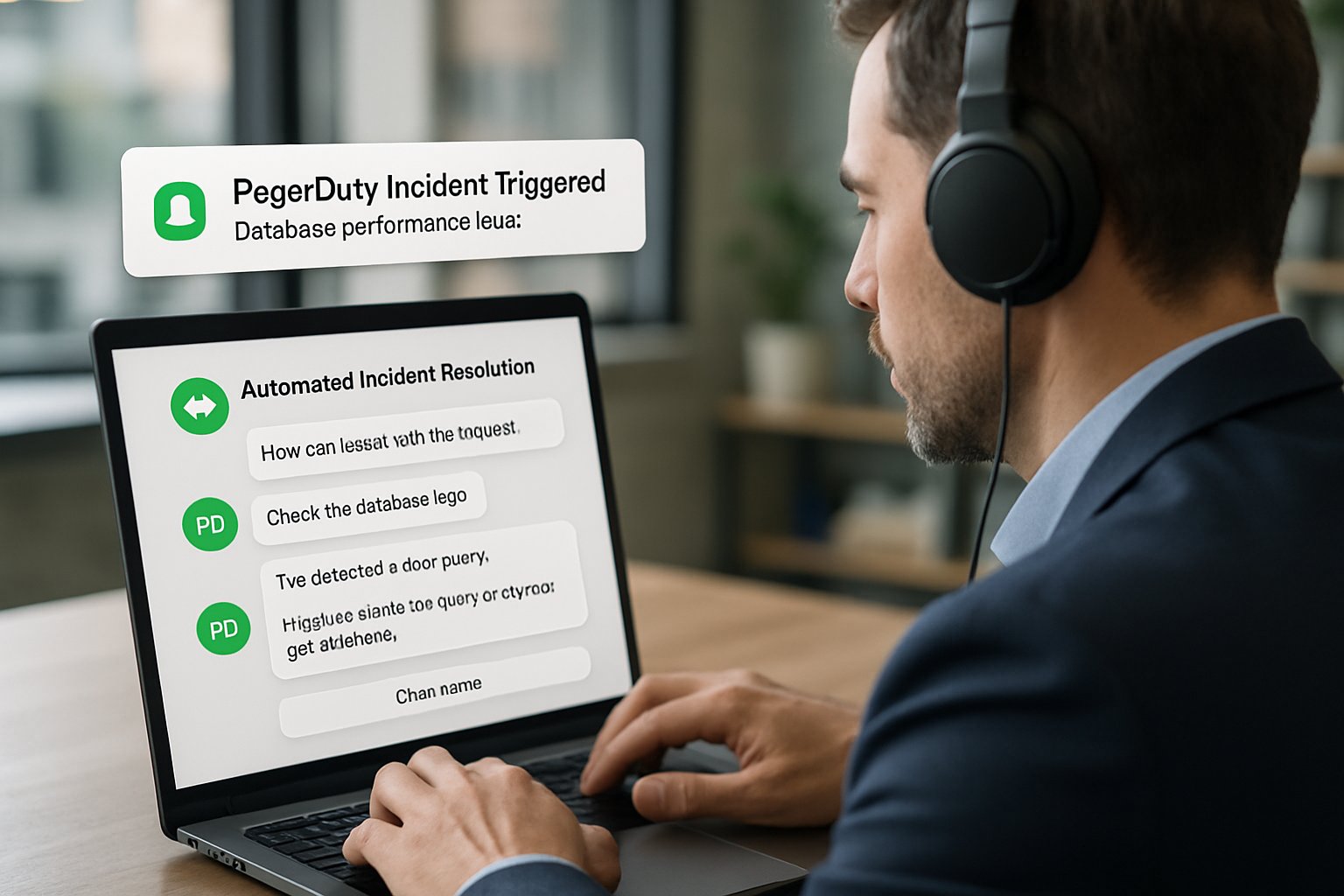
Four agents sit at the center of the suite, each handling distinct operational toil. Moreover, their design reflects lessons from thousands of incident postmortems. The SRE Agent concentrates on rapid triage, surfacing related alerts and suggested remediations. It can even execute approved runbooks, yet human oversight remains mandatory. Consequently, the agent improves Incident Management speed without eliminating accountability.
- Scribe Agent records meetings, generates transcripts, and drafts status updates automatically.
- Shift Agent detects on-call conflicts and applies overrides, reducing scheduling toil.
- Insights Agent queries analytics data and surfaces proactive coaching for teams.
Additionally, each component shares context through Advance memory, promoting cumulative learning across the ecosystem. Their semi-autonomous nature limits runaway actions while still cutting manual effort significantly. In total, PagerDuty offers more than 150 enhancements around these agents, according to its Fall release. Analysts note that success depends on disciplined service catalog hygiene and robust tagging strategies. These capabilities promise tangible gains, yet the supporting integrations amplify their reach.
Ecosystem And Key Integrations
Modern engineering stacks rarely live in isolation; PagerDuty acknowledges this reality. Therefore, the vendor built connectors to AWS Bedrock, Amazon Q Business, Slack, and Microsoft Teams. The MCP server extends that ecosystem by enabling bidirectional context exchange with external agent platforms. Consequently, organizations can invoke autonomous remediation steps from non-PagerDuty pipelines when incidents escalate. Amazon Bedrock Guardrails provide content safety layers that block risky agent outputs. Meanwhile, Slack workflows let engineers query Insights Agent directly from chat rooms.
Customers like Block reportedly save thirty minutes per incident using the Bedrock integration. Incident Management data remains the single source of truth, ensuring consistent postmortems across tools. Moreover, the open approach aligns with industry calls for portable agent standards. These integrations broaden reach, yet benefits must outweigh complexity, as the next section explores.
Operational Benefits And Claims
Marketing materials trumpet impressive gains from the agent rollout. For context, PagerDuty cites up to fifty percent faster mean time to resolution among pilot users. Moreover, an IDC study sponsored by the vendor reports 795 percent ROI and two-month payback. Nevertheless, practitioners demand concrete metrics before embracing new tooling.
- 74% less downtime across monitored services, according to the same IDC brief.
- 30 minutes saved per incident when Advance uses Amazon Bedrock for summarization.
- 250+ customers adopted the MCP server within two months of launch.
Additionally, the AI agents reduce repetitive tasks, freeing engineers for strategic work. Faster triage shortens alert storms that often exhaust on-call staff during peak traffic. Consequently, Incident Management workflows become smoother, strengthening customer trust. Despite these promises, benefits vary based on data quality and governance maturity. Therefore, teams should baseline current metrics before enabling automated actions. These numbers illustrate upside, yet understanding risk remains essential, as discussed next.
Risks And Open Questions
No technology arrives without caveats. Generative agents can hallucinate, producing dangerous instructions during critical triage moments. Consequently, PagerDuty embeds human approval gates before autonomous remediation executes. Data privacy adds another layer because Scribe Agent records meetings and stores transcripts in cloud storage. Legal teams must scrutinize consent workflows and retention policies carefully. Furthermore, Advance operates under a credit model that may increase licensing spend unpredictably. Vendor lock-in remains a concern despite the ecosystem stance; platform outages could paralyze response.
In contrast, the MCP connector mitigates some dependency by enabling diversified agent sourcing. Therefore, robust testing, rollback plans, and audit trails are essential before expanding autonomous scope. These challenges highlight the need for governance; however, mature controls can unlock safe velocity. Rigorous testing and clear policies tame most outlined risks. Subsequently, attention can shift to market adoption signals discussed ahead.
Adoption Signals To Watch
Adoption metrics suggest rising comfort with agentic tooling. The company reports more than 330 organizations live on the AI agent capabilities across its Operations Cloud. Early adopters of the MCP server surpassed 250 within eight weeks. Furthermore, analysts view those numbers as strong leading indicators of broader production rollouts. Customer stories from Block and unnamed fintechs highlight meaningful triage reductions during holiday traffic. Consequently, boards now ask reliability leaders about agent roadmaps during quarterly reviews.
In contrast, some smaller teams still view the credit model as prohibitively complex. Evidence suggests a two-phase pattern: chat assistants first, deeper automation next. Therefore, monitoring pilot expansion rates provides the clearest adoption forecast for 2026. These signals inform strategic planning, which guides the implementation steps explained next.
Implementation Guidance And Checklist
Successful rollouts begin with clear objectives and staged feature flags. Teams should document existing Incident Management flows and baseline mean time to resolve. Subsequently, enable SRE Agent in read-only mode to validate triage suggestions without risk. Establish human approval gates before any remediation executes. Moreover, confirm Slack and Teams scopes to grant the Scribe Agent proper meeting access.
- Create a dedicated MCP test environment and restrict production credentials.
- Integrate Bedrock Guardrails to filter unsafe or off-topic outputs.
- Train engineers on prompt crafting and override procedures.
- Track key metrics, including Incident Management speed, false positives, and engineer sentiment.
Additionally, budget for credit usage based on projected incident volume and agent autonomy levels. Professionals can deepen their architecture expertise through the AI Architect™ certification. That course emphasizes safe, scalable deployment patterns for AI agents in production. Therefore, combining structured education with phased rollouts maximizes success odds. These steps foster resilient adoption, preparing organizations for evolving standards and audits.
PagerDuty’s agent suite represents a significant shift in modern Incident Management philosophy. Moreover, the blend of triage automation, transcript generation, and analytics promises faster, clearer response cycles. Benefits appear real, yet governance, cost controls, and safety guardrails remain decisive factors. Consequently, teams must iterate cautiously, measuring outcomes at every phase.
Organizations that follow the guidance outlined above can unlock resilient Incident Management improvements while protecting stakeholders. Furthermore, leaders seeking deeper architectural skills should pursue the linked AI Architect™ credential. Explore that program today and position yourself to steer AI operations safely.


