

AI CERTS
5 hours ago
Infrastructure Approval Spurs Lincolnshire AI Campus
Stakeholders now debate how the project reconciles growth, server-driven innovation, and climate goals. However, a separate Elsham proposal east of Scunthorpe faces heavier scrutiny. The contrasting fortunes frame a national conversation about power, water, and policy for an AI age.
Council Grants Green Light
The July decision delivered the first Infrastructure Approval within the UK’s emerging AI Growth Zones programme. Therefore, Humber Tech Park secured permission in principle while reserved matters remain. The council’s May 2025 economic report lists the site as pillar one of its Growth Zone submission. Rob Waltham, council leader, called the vote “a massive vote of confidence” for the local economy. Meanwhile, Greystoke Land, the promoter, estimates £2.5–£3 billion of private capital will flow into the area. Lincolnshire businesses expect strong supply-chain gains if timelines hold.
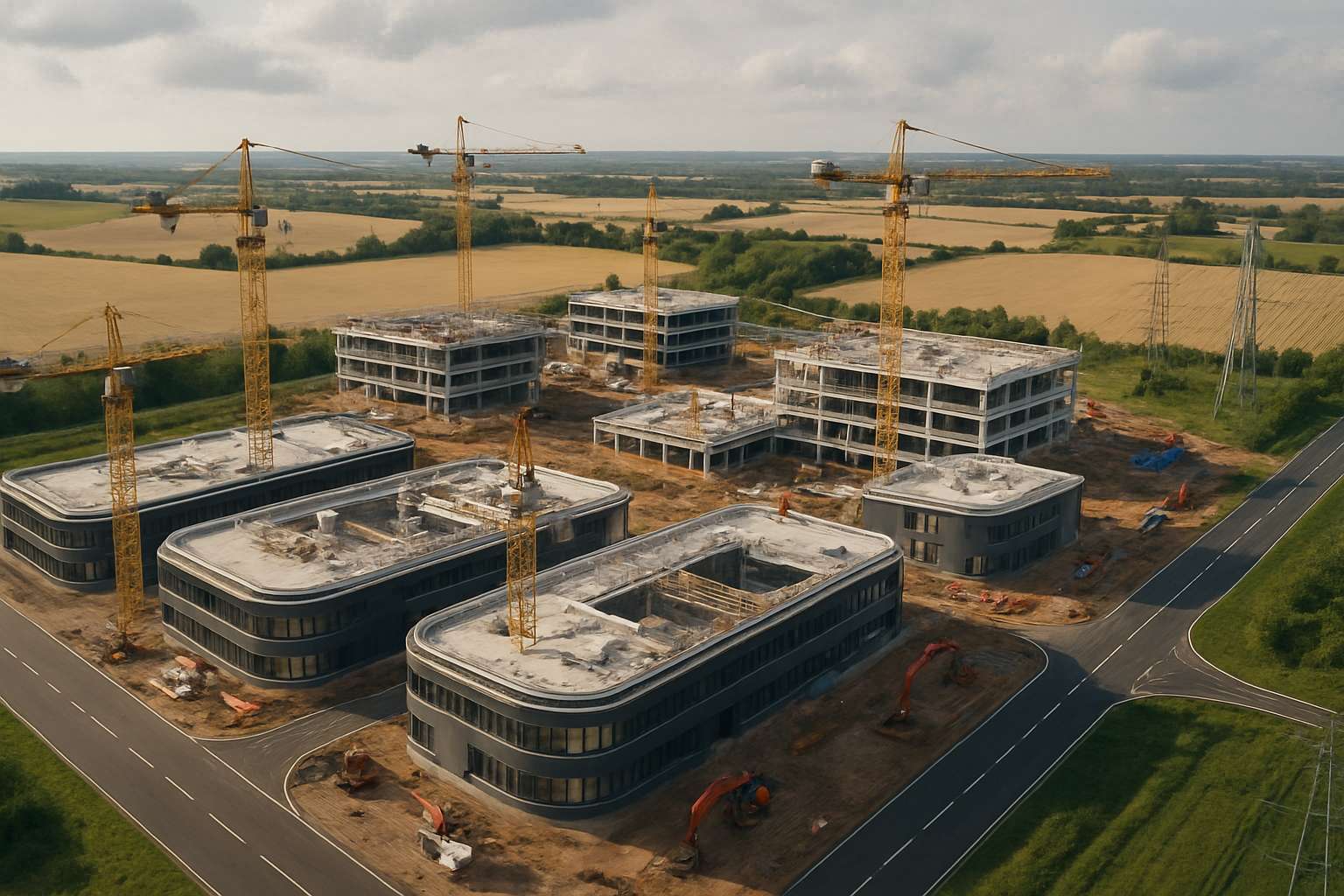
Nevertheless, planners attached strict conditions on grid connection, drainage, and biodiversity offsets. The authority wants all detailed designs lodged by December 2025 to maintain the 2027 service date. That timetable preserves eligibility for national incentives linked to AI Growth Zones. Infrastructure Approval now triggers those time-critical engineering studies. Consequently, developers must show how 384 MW of firm capacity can be delivered without overwhelming regional energy networks.
These milestones underline the project’s momentum. In contrast, Elsham’s fate is uncertain amid protests and utility objections.
Policy Context Aligns Goals
January 2025 saw the UK launch its AI Opportunities Action Plan. Subsequently, DSIT proposed Growth Zones to streamline mega-site planning. Northern Lincolnshire swiftly filed a full bid in May 2025. Infrastructure Approval for Humber Tech Park therefore acts as proof-of-concept for Westminster. Moreover, ministers describe hyperscale data-centres as “engines of the AI age.”
However, national targets clash with regional realities. Anglian Water warned of “acute” water scarcity across Eastern England. The utility urges caution before routing treated drinking water to industrial cooling loops. Furthermore, local NGOs fear an emissions lock-in if projects run on a fossil-heavy grid. Professionals looking to navigate such trade-offs can deepen expertise through the AI Cloud Architect™ certification.
Overall, policy momentum favours growth. Yet, sustainability rules will determine whether additional Infrastructure Approval requests receive equal support.
Project Scale Explained Clearly
Greystoke’s brochure lists headline figures that dwarf previous regional builds. Consequently, understanding the numbers is vital.
- Site area: roughly 200 acres (76 ha) near key freight corridors.
- IT power capacity: 384 MW, enough to supply 375,000 UK homes.
- Annual energy draw if fully loaded: many billions of kWh.
- Construction jobs: about 3,000 during peak phases.
- Operational roles: 370–408 high-skill posts averaging £50k–£55k salaries.
Furthermore, planners highlight potential heat-recovery loops for nearby greenhouses. Nevertheless, no binding heat offtake partner has signed yet. A confirmed offtake could reduce campus emissions and support circular energy use. Infrastructure Approval mandates evidence of such systems before foundations start. Therefore, developers must integrate sustainability engineering into final blueprints.
These figures show the promise and challenge in equal measure. However, opponents stress that scale amplifies risk.
Environmental Concerns Mount Quickly
The separate Elsham Tech Park application illustrates potential downsides. Guardian coverage on 6 June 2025 reported projected annual emissions of 857,000 tonnes CO2 and 3.7 billion kWh of energy demand. Consequently, campaigners likened the footprint to five airports. Martha Dark of Foxglove asked whether policy serves Big Tech or British citizens.
Moreover, Anglian Water’s July 2025 statement cited limited groundwater reserves near Scunthorpe. The utility fears intensive server cooling could strain potable supplies. In contrast, Greystoke argues that closed-loop systems and treated effluent reuse can mitigate impacts. Infrastructure Approval for Humber Tech Park already requires a water management plan. A similar condition will likely appear for Elsham if consented.
Nevertheless, carbon intensity remains debated. Advocates note that grid decarbonisation could halve lifecycle emissions by 2030. Therefore, many urge government to tie future Infrastructure Approval to firm renewable Power Purchase Agreements.
These arguments show public scepticism remains strong. Consequently, developers must prove credible mitigation to secure continued progress.
Regional Job Potential Soars
Economic modelling suggests the campus may inject £400 million annually into wider Lincolnshire supply chains. Furthermore, average salaries exceed current district medians by 80 percent. College principals in Scunthorpe plan vocational programmes targeting server maintenance and advanced cooling. Consequently, youth retention could improve.
Nevertheless, critics warn of uneven benefit distribution. Land values near Killingholme have already risen, squeezing small enterprises. Moreover, high energy prices linked to new grid reinforcement could affect households. Infrastructure Approval tries to balance these forces through Section 106 funding for skills and efficiency grants. Developers also pledge a community fund worth £5 million.
Infrastructure Approval therefore anchors an inclusive growth agenda. However, continued dialogue will ensure promises translate into reality.
Next Steps Timeline Ahead
The following milestones will decide ultimate project viability:
- Reserved-matters submission by December 2025 covering design, landscaping, and drainage.
- Grid connection agreement with National Grid before Q2 2026.
- End-user announcement expected Q3 2025, revealing the anchor cloud tenant.
- Construction start targeted for mid-2026 pending financing close.
- Service commencement window opening in 2027.
Meanwhile, North Lincolnshire awaits DSIT’s verdict on its AI Growth Zone application. A positive ruling could expedite future Infrastructure Approval requests across the county. Conversely, rejection would complicate financing.
These dates provide a roadmap for stakeholders. Subsequently, attention will shift to supply contracts and on-site renewable integration.
Strategic Takeaways Summarised
Humber Tech Park’s outline consent places Lincolnshire at the heart of Britain’s AI build-out. Moreover, Infrastructure Approval demonstrates how aligned policy, capital, and planning can fast-track projects. However, Elsham’s contested bid proves that social licence cannot be assumed. Sustainable water, energy, and emissions strategies remain decisive. Therefore, professionals should monitor grid deals, cooling innovations, and final environmental statements.
These insights capture the balance of risk and reward. Consequently, informed engagement will shape the region’s digital and ecological legacy.
Conclusion
North Lincolnshire’s first AI megaproject now carries formal Infrastructure Approval, setting an ambitious template for UK data infrastructure. Furthermore, the decision unlocks billions in investment, hundreds of high-skill jobs, and a chance to reposition Scunthorpe within advanced tech supply chains. Nevertheless, water scarcity, carbon emissions, and grid stress demand transparent solutions. Stakeholders must therefore track forthcoming planning stages and policy rulings. Professionals eager to lead these next steps should explore the linked AI Cloud Architect™ certification and stay engaged as milestones unfold.


