

AI CERTS
3 hours ago
Meta Backlash Spurs Deepfake Trust Governance
At the center sits Meta, whose delayed response let a fabricated Haifa strike video rack up 700,000 views. Moreover, regulators and watchdogs argue current defences fail when conflicts escalate. Against this backdrop, Deepfake Trust Governance becomes an executive imperative for every platform and advertiser. Therefore, this article unpacks the backlash, outlines the detection race, and maps the policy horizon.
Oversight Board Public Rebuke
Meta’s independent Oversight Board reversed a previous moderation call on 10 March 2026. However, the ruling carried broader significance than a single post. The Board demanded a standalone AI content standard, mandatory C2PA credentials, and faster escalation for deceptive visuals.
Critically, the Haifa clip, an AI-generated deepfake, stayed online for hours and drew roughly 700,000 views. Moreover, fact-checkers had flagged it as false long before internal action. Nevertheless, monetization controls failed to immediately halt potential ad boosts.
These lapses fueled industry Backlash and questioned Deepfake Trust Governance across platforms. Consequently, executives began reassessing response timelines.
Crisis Video Case Lessons
Conflict situations accelerate information flows dramatically. Therefore, even minutes of delay can let manipulated Media seed damaging narratives. In contrast, Meta’s current "AI info" label relies heavily on user disclosure and manual escalation.
The Board proposes a "High Risk AI" tag for war, elections, and health emergencies. Additionally, it recommends automated watermark checks before content becomes eligible for distribution. Such controls align with rising Deepfake Trust Governance expectations among policymakers.
Stakeholder workshops have started prototyping red-team drills that simulate conflict misinformation.
Real-time provenance and rapid labels could curb viral spread. However, technological scale remains a daunting constraint, leading into detection tool debates.
Scaling Deepfake Detection Tools
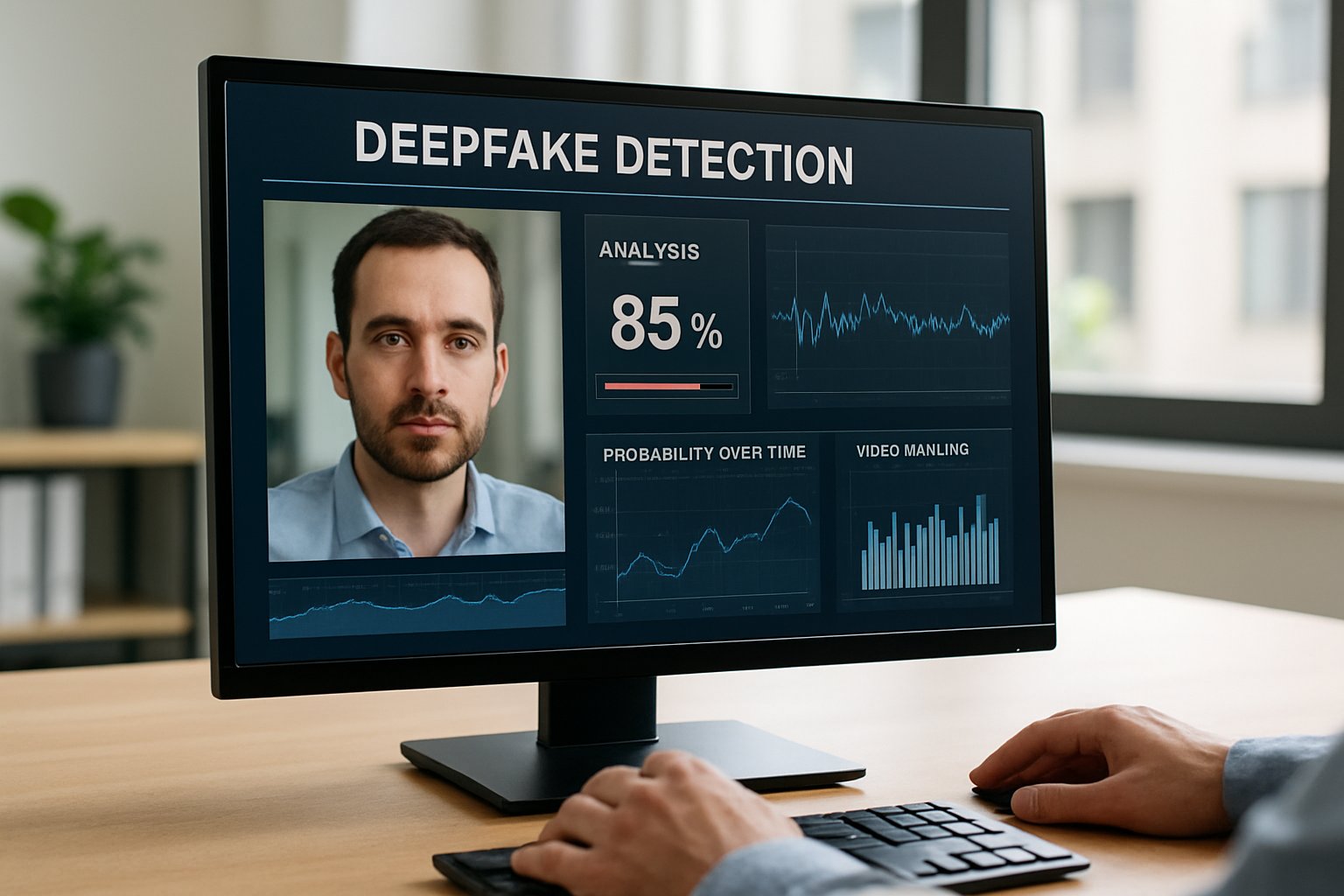
Platform security teams process billions of uploads weekly. Moreover, adversaries iterate models to bypass filters. Consequently, automated detectors must adapt continually without eroding privacy or hampering creativity.
Content Provenance Standards Rise
Recent data underscores the scale problem:
- Around 95,000 deepfake videos circulated online during 2023, a 550% jump from 2019.
- Tech Transparency Project found scam deepfake ads reaching over one million users before removal.
- The platform removed over one billion fake accounts in a single recent quarter, company figures show.
Meanwhile, YouTube opened a likeness detection pilot for journalists and candidates. In contrast, the social giant has yet to release comparable claimant tools publicly. Nevertheless, the company states it will implement Oversight Board guidance "when operationally possible." Every metric makes clear why Deepfake Trust Governance must evolve from guideline to enforceable baseline. Effective scaling underpins lasting Deepfake Trust Governance.
Cross-platform experimentation shows promise but lacks uniform standards. Therefore, financial incentives behind deceptive content demand closer examination next.
Monetization Deepfake Risk Factors
Advertising fraud thrives when synthetic footage hides behind polished production. Moreover, scammers exploit platform targeting tools to reach vulnerable users quickly. Tech Transparency Project documented paid clips impersonating officials and promoting bogus relief schemes.
Such campaigns spent thousands while evading disclosure rules. Consequently, critics ask why automated ad reviews missed blatant manipulation signals. Meanwhile, the firm claims it refunds advertisers and improves classifiers after each incident.
Revenue incentives complicate swift removal decisions and fuel more Backlash. Therefore, lawmakers are turning heightened attention toward enforceable Deepfake Trust Governance obligations.
Mounting Regulatory Forces Now
In January, a bipartisan senator group demanded detailed platform briefings on sexualized synthetic content controls. Additionally, several U.S. states are drafting mandatory watermark statutes. European regulators are considering takedown deadlines under updated Digital Services rules.
Congress may schedule hearings as early as spring. Consequently, compliance leads weigh resource allocations for provenance infrastructure and audit trails. Furthermore, international coordination complicates rule alignment across jurisdictions. Policy analysts predict fines for slow removals could reach significant percentages of global turnover. Such financial pressure often accelerates product roadmaps faster than voluntary commitments.
Professionals can enhance their expertise with the AI Cloud Architect™ certification. Moreover, curriculum modules address watermarking, C2PA workflows, and Deepfake Trust Governance program design.
Imminent policy moves tighten accountability timelines. Consequently, governance models must mature rapidly to uphold Deepfake Trust Governance promises.
Path Toward Robust Governance
Stakeholders now debate a layered defence built on provenance, labeling, and verification. Additionally, cross-platform coalitions like C2PA push common metadata formats. Meanwhile, watermark research from Google and Microsoft promises invisible yet machine-readable markers.
Implementation still faces resource, latency, and speech challenges. Nevertheless, market pressure from advertisers and news Media accelerates adoption curves. Consequently, Deepfake Trust Governance emerges as a competitive differentiator. Industry alliances are drafting interoperability documentation to simplify tool integration for smaller platforms.
Unified standards will not arrive overnight. However, steady iteration and transparent reporting can sustain trust momentum.
Conclusion and Next Steps
Platforms, regulators, and advertisers now share a singular objective: repair fractured information trust. Furthermore, the Oversight Board ruling proves that self-regulation alone cannot sustain momentum. Market forces, legislative deadlines, and reputational Backlash converge in real time. Consequently, organizations embracing transparent credentials, rapid labeling, and cross-platform coordination will set the pace.
This path reflects the essence of Deepfake Trust Governance, where verifiable origin, context, and accountability replace confusion. Meanwhile, news Media and civil society will keep pressuring stragglers. Therefore, leaders should audit current workflows, invest in scalable watermark tooling, and pursue continuous training. Finally, act today and shape safer digital speech.


