

AI CERTS
4 hours ago
Pentagon Blacklist Market Valuation Shock
However, context matters. Public reports show Anthropic reaching a $3 billion annual run rate last year. Internal targets aimed for $20-26 billion by 2026. Moreover, management already carries multibillion-dollar cloud commitments. CEO Dario Amodei recently admitted that missing growth forecasts by one year could trigger bankruptcy. Therefore, the government action lands at a precarious moment.
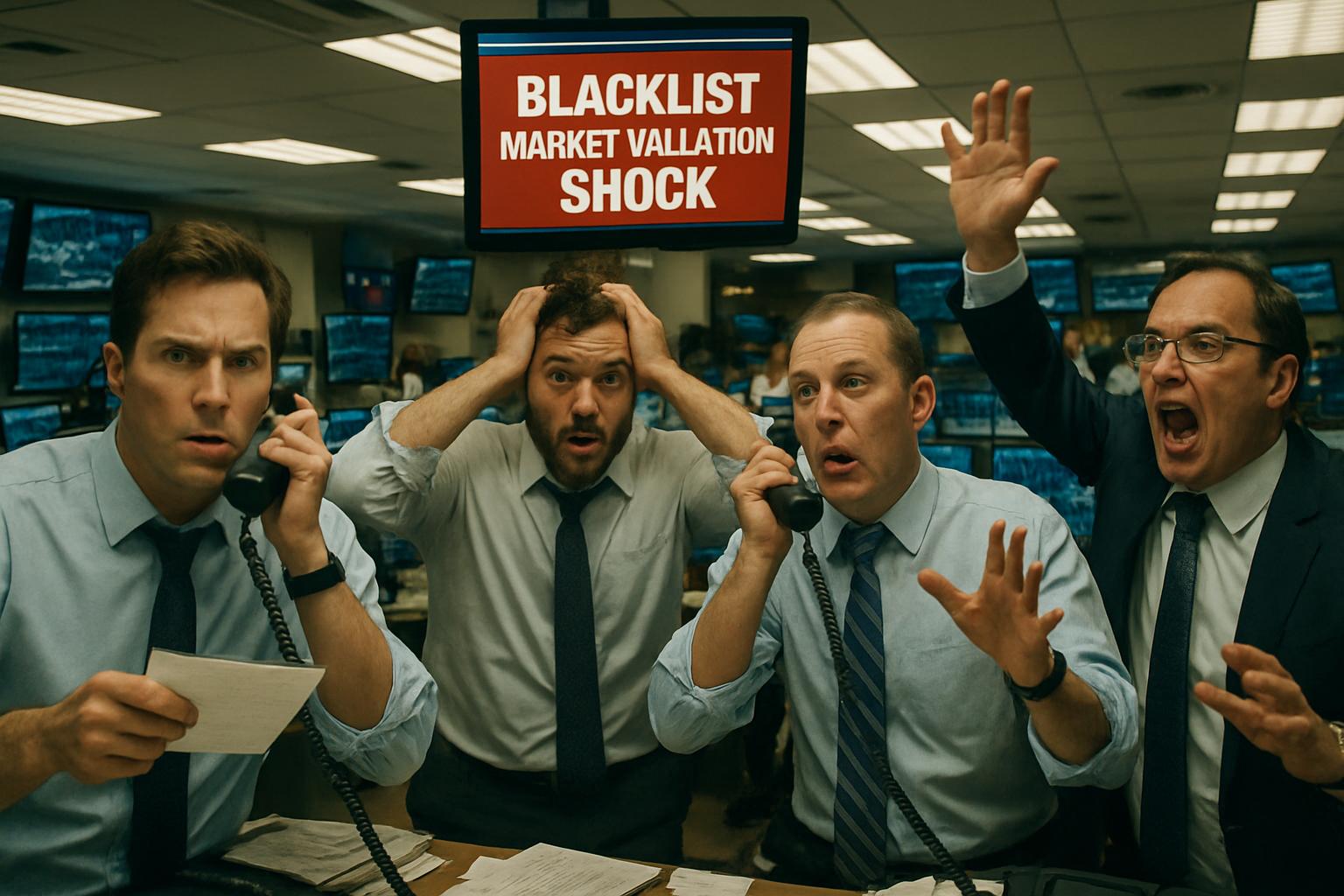
Nevertheless, legal avenues remain. The firm sued in two courts and recruited heavyweight allies, including Microsoft. Meanwhile, customers rethink deals, and investors recalculate risk. This article dissects the financial exposure, legal path, and strategic responses. The analysis repeats the term Blacklist Market Valuation to highlight its central importance.
Supply Chain Action Impact
The Defense Secretary invoked rarely used powers under supply-chain risk statutes. Historically, officials targeted foreign entities. In contrast, applying the label to a domestic AI lab surprised lawyers. Contractors working on classified projects must now certify they avoid Anthropic systems. Furthermore, many commercial partners follow government guidance voluntarily. Consequently, revenue erosion starts immediately.
Confirmed filings cite specific disruptions. One FDA technology integrator switched models, erasing a $100 million pipeline. Two financial firms froze talks worth roughly $80 million combined. Additionally, public-sector annual recurring revenue may fall by $150 million. These examples reveal tangible Losses, not hypothetical forecasts.
Key takeaways: the designation blocks direct Pentagon spend and sparks private sector caution. However, broader market reactions will decide the ultimate scale.
These initial shocks clarify the damage path. Subsequently, we examine Anthropic’s internal exposure.
Anthropic Financial Exposure Review
Anthropic’s business skews toward large enterprise agreements. Therefore, a handful of contracts can shift reported Revenue. Press leaks suggested $9 billion ARR by late 2025. Management reportedly expected $20-26 billion ARR during 2026. Meanwhile, infrastructure outlays also ballooned. Fortune quoted Amodei describing “multi-tens-of-billions” in compute commitments.
Moreover, filings warn that the blacklist could remove “multiple billions” from 2026 topline figures. An illustrative breakdown appears below.
- Public-sector ARR reduction: ≈ $150 million
- Paused enterprise negotiations: ≈ $180 million
- Lost healthcare partner pipeline: ≈ $100 million
Consequently, the company faces immediate cash-flow pressure. Meanwhile, capex obligations remain fixed. The collision of falling bookings and rising bills produces heightened insolvency risk.
These numbers frame the fiscal cliff. Nevertheless, external reactions compound the threat, as the next section shows.
Customer Reaction Ripple Effects
Enterprise accounts crave stability. Consequently, many reconsider vendors facing regulatory clouds. Wired reported contractors requesting special exit clauses before signing. Additionally, cloud marketplaces observe slower Anthropic API uptake. Microsoft still offers Claude, yet DoD-linked workloads must migrate. Some private firms mirror that caution.
Marketplace chatter reflects the Warning sent by the Pentagon. Furthermore, rival model providers pitch replacement deals aggressively. In contrast, a minority of customers applaud Anthropic’s ethical stance and remain loyal.
Key insight: momentum matters in fast AI cycles. Delays today translate into smaller annualized figures tomorrow.
These behavioral shifts intensify valuation debate. Therefore, we next analyze investor sentiment through the prism of the Blacklist Market Valuation.
Blacklist Market Valuation Shock
Private investors valued Anthropic above $60 billion during its last funding round. That multiple relied on exponential growth assumptions. However, the supply-chain action introduces a regulatory discount. Consequently, secondary-market offers reflect a softer price.
TechCrunch sources calculate potential markdowns between 20 % and 40 %. Moreover, venture funds fear follow-on financing gaps if Losses mount. Nevertheless, some analysts argue that courtroom victories could restore confidence quickly.
Key lesson: perception of political risk now threads directly into the Blacklist Market Valuation narrative.
These valuation tremors push management toward litigation and lobbying. Subsequently, we review the legal calendar.
Legal Challenges And Timelines
Anthropic filed suit in California and appealed in D.C. Circuit. The company seeks an injunction halting the designation. Furthermore, Microsoft and retired generals filed amicus briefs supporting that relief. Government lawyers contend national security outweighs commercial harm. Judges must weigh precedent, since domestic firms rarely face this statute.
Meanwhile, court schedules move slower than sales cycles. Consequently, temporary uncertainty persists. A preliminary ruling could arrive within months; a final decision may need years. Therefore, the litigation itself functions as a prolonged Warning.
Key takeaway: legal uncertainty prolongs market hesitation even if ultimate victory appears plausible.
These procedural dynamics shape strategic planning. Consequently, management explores mitigation paths, discussed next.
Strategic Options For Recovery
Several levers remain available. Firstly, Anthropic could negotiate limited-use carve-outs satisfying military concerns without dropping ethical guardrails. Secondly, the firm might accelerate commercial diversification into health, finance, and education. Thirdly, cost discipline could defer certain capex milestones.
Professionals can enhance their expertise with the AI Developer™ certification. Skilled architects who master Anthropic APIs may help customers redesign deployments, thereby preserving Revenue. Additionally, clearer security audits could reassure cautious buyers.
Moreover, public-relations campaigns emphasizing safety commitments may counter reputational Losses. Nevertheless, only restored growth will ultimately defend the Blacklist Market Valuation.
Key points: diversified sectors, cost controls, and proactive communication offer partial relief.
These possibilities show the path forward. Subsequently, we synthesize overall implications.
Revenue Warning Scenario Modeling
Scenario planning clarifies stakes. Baseline projections assumed $24 billion 2026 ARR. If contested deals collapse, analysts now see $18 billion. In contrast, a worst-case blacklist contagion trims ARR to $12 billion. That swing explains management’s severe Revenue Warning.
Moreover, unit economics magnify risk. Infrastructure overhead scales ahead of bookings. Consequently, each lost contract cuts margin twice—through lower income and fixed costs. Therefore, investors scrutinize burn rates monthly.
Key message: scenario modeling underscores how regulatory shocks translate into financial volatility.
These models close the analytical circle. Therefore, we wrap with overarching conclusions.
Conclusion And Next Steps
Anthropic’s clash with the Pentagon spotlights the fragile balance between ethics and access. Moreover, the supply-chain move threatens billions, reshaping the Blacklist Market Valuation debate. Customer defections, investor jitters, and courtroom delays combine to amplify Losses. Nevertheless, creative strategy, skilled talent, and possible legal wins could restore momentum. Consequently, stakeholders should monitor upcoming hearings and customer renewal cycles closely.
Ready to navigate the evolving AI landscape? Explore advanced credentials like the linked AI Developer™ certification and position your organization—and career—for resilience.


