

AI CERTS
3 hours ago
Amazon-OpenAI $50B Deal Signals Strategic Tech Consolidation
Moreover, the move reshapes competitive relationships among AWS, Microsoft, and other hyperscalers. This article unpacks the mechanics, motivations, and implications for enterprise decision-makers. Additionally, readers will gain actionable insights, regulatory context, and strategic guidance for future planning. This exploration of Strategic Tech Consolidation offers concise analysis for technical and business audiences.
Deal Overview And Drivers
Amazon committed up to $50 billion, with $15 billion due before 31 March 2026. Subsequently, the remaining $35 billion activates once undisclosed milestones are reached, according to SEC filings. The same announcement unveiled an expanded $100 billion AWS infrastructure pact lasting eight years. Meanwhile, OpenAI disclosed parallel investments of $30 billion each from NVIDIA and SoftBank, totaling $110 billion.
Therefore, the round values the company at $730 billion pre-money. Drivers include soaring compute demand, supplier diversification pressure, and positioning against Microsoft Azure. In contrast, Amazon gains significant enterprise workloads and clear differentiation for its in-house Trainium silicon. This combination illustrates Strategic Tech Consolidation as firms trade capital for platform control.
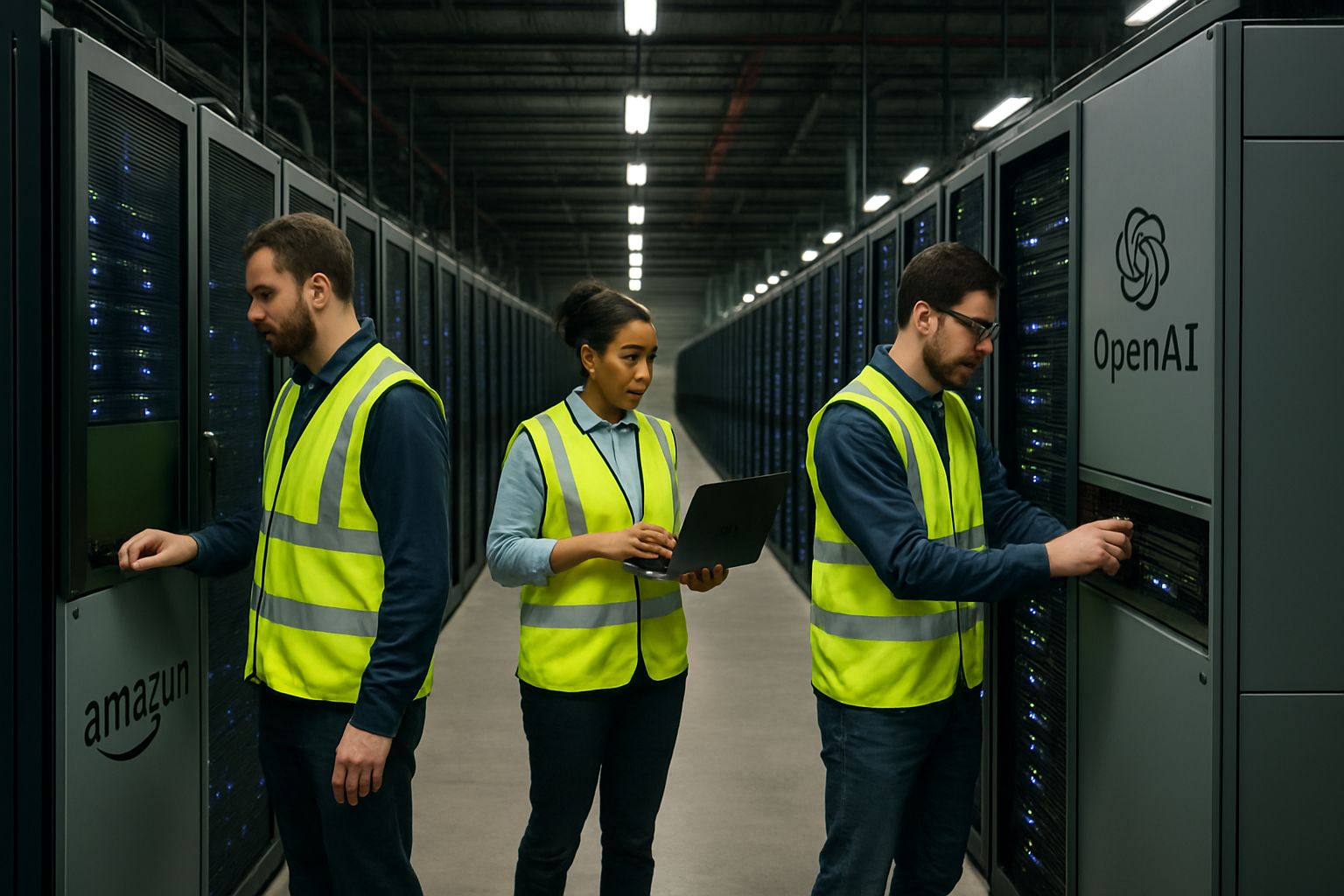
- $50 billion Amazon equity commitment
- $100 billion expanded infrastructure agreement
- $110 billion total OpenAI financing
Amazon supplies capital, compute, and distribution. OpenAI contributes premier models and surging usage. Together, these forces propel unprecedented momentum. Next, we examine the technical backbone enabling that momentum.
Stateful Runtime Explained Clearly
Traditional stateless APIs forget context after each call. Consequently, developers struggle to build multi-step agents with memory and identity persistence. The new stateful runtime environment announced with AWS stores conversation history, tool outputs, and user preferences. Moreover, the architecture leverages dedicated Trainium3 and Trainium4 clusters delivering two gigawatts of capacity. OpenAI executives argue this design is vital for the forthcoming Frontier platform. Frontier will run exclusively on AWS for third-party distribution, per the joint statements. Microsoft retains exclusivity for stateless API traffic on Azure under the existing contract.
"Azure remains the exclusive cloud provider of stateless OpenAI APIs," Microsoft and OpenAI declared. Consequently, the partnership carefully avoids overlapping Microsoft’s contractual territory. This section shows how technology boundaries mirror capital boundaries within Strategic Tech Consolidation. Stateful runtime promises richer agents and predictable workloads. However, contractual carve-outs preserve complex channel dynamics. We now explore competitive and regulatory stakes surrounding the deal.
Competitive And Regulatory Landscape
Industry observers compare the arrangement to historic telecom peering agreements. Nevertheless, antitrust regulators may scrutinize bundled equity and distribution rights. The FTC previously probed hyperscaler-AI tie-ups and could revisit this record-setting Investment. Meanwhile, EU authorities track market foreclosure risks in foundational model services. Analysts highlight that Amazon also backs Anthropic, raising multi-tenant neutrality questions. In contrast, Microsoft’s dominant stateless API position remains intact, albeit limited to Azure.
Microsoft Position Remains Intact
OpenAI now operates across multiple Cloud providers, reducing single-vendor dependency. Consequently, policymakers will weigh competition benefits against potential over-consolidation. Strategic Tech Consolidation often accelerates innovation while concentrating power. These tensions will influence approval timelines and possible consent decrees. Regulators must balance innovation incentives with open market safeguards. Next, financial mechanics illustrate how contingent funding shapes those debates.
Financial Mechanics And Risks
Public filings reveal staged payments tied to undisclosed performance milestones. GeekWire noted extensive redactions that obscure precise trigger definitions. Therefore, Amazon retains flexibility to limit exposure if OpenAI misses objectives. However, the approach also introduces uncertainty for capital planning on both sides. William Blair analysts estimate incremental AWS revenue could hit several billions annually.
Moreover, Amazon will invest heavily in Trainium capacity, adding further capex pressure. Large Infrastructure Investment often extends payback periods, unsettling some shareholders. Nevertheless, management argues long-term leadership in AI offsets short-term dilution. Strategic Tech Consolidation thus demands rigorous scenario modeling by finance teams.
Analyst Revenue Growth Estimates
- Several billions in annual AWS revenue, per William Blair
- 2 GW Trainium capacity reserved for OpenAI workloads
- Eight-year infrastructure horizon under expanded contract
Contingent funding, redacted clauses, and escalating spend create layered risk. Yet, transparent monitoring can mitigate surprises, as we discuss next.
Market Impact And Forecasts
Gartner predicts enterprise AI spending will top $1.5 trillion by 2027. Consequently, capacity buyers seek stable partnerships, reinforcing the Amazon-OpenAI alignment. Capital markets perceive the partnership as the year’s defining Investment event. Analysts expect competitive responses from Google, Oracle, and specialized Cloud startups. Additionally, chipmakers like NVIDIA benefit from broader demand stimulated by such headline deals. For customers, more diverse deployment options reduce vendor lock-in risk.
However, platform fragmentation complicates governance and latency optimization. Strategic Tech Consolidation continues shaping procurement strategies across verticals, from finance to healthcare. These forecasts underscore the scale of decisions facing technology leaders. Subsequently, we explore actionable steps executives can take today.
Strategic Options For Leaders
Enterprise architects should audit current stateless workloads and identify candidate agentic workflows. Then, migration roadmaps can align with forthcoming Frontier availability on Amazon infrastructure. Moreover, procurement teams must model contingent cost scenarios tied to milestone funding structures. Security officers should examine data residency because stateful sessions involve prolonged storage. Concurrently, leaders can upskill with executive-level AI programs.
Professionals can boost expertise via the AI Executive Essentials™ certification. Such learning ensures Strategic Tech Consolidation decisions remain informed and resilient. Therefore, disciplined governance, budgeting, and skills development form a balanced response. Leaders can act today without overcommitting resources. We now summarize core insights.
Conclusion And Forward Outlook
Amazon’s gamble signals accelerating Strategic Tech Consolidation across the AI stack. Furthermore, OpenAI gains unprecedented funding and multi-cloud reach. Meanwhile, Microsoft preserves its stateless API dominance while avoiding capital dilution. Regulators will dissect filed agreements, yet approval seems likely given innovation incentives. Consequently, enterprise buyers should prepare for rapid agentic adoption and shifting pricing models. Moreover, vigilant monitoring of milestone disclosures will clarify financial exposure.
Today’s partnership illustrates how capital, compute, and control converge. Strategic Tech Consolidation will reward prepared organizations over the coming decade. Embrace thoughtful planning, pursue continual learning, and leverage certification programs to stay competitive. Act now to harness opportunity amid this evolving landscape.


