

AI CERTS
3 weeks ago
Rowspace fuels PE Dealflow Automation revolution
CEO Michael Manapat says finance needs domain-specific intelligence that respects security constraints. Moreover, COO Yibo Ling argues mainstream tools miss nuanced accounting realities. Therefore, Rowspace positions itself as a finance-native AI platform that connects models, memos, and ledgers.
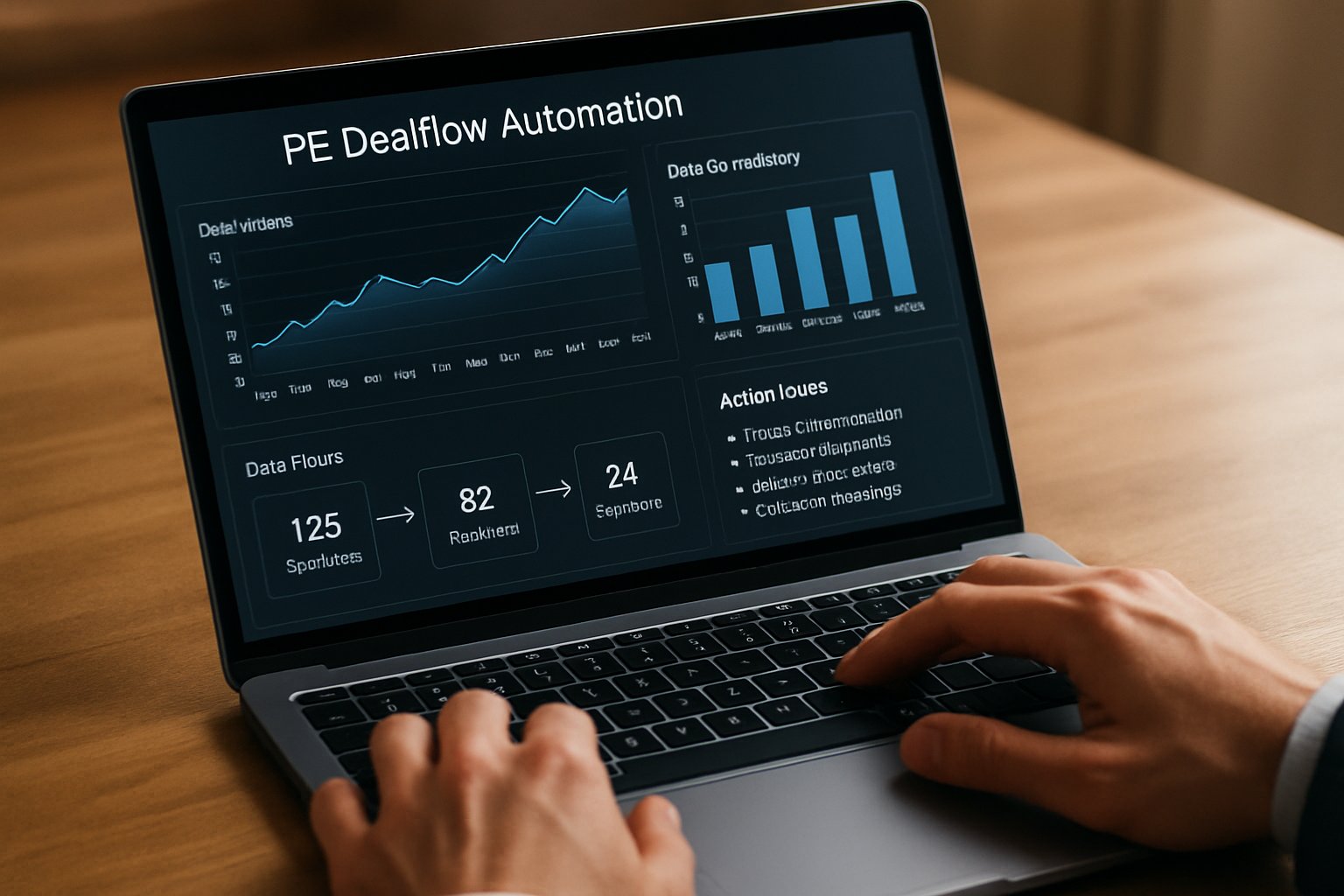
Meanwhile, early customers reportedly manage close to a trillion dollars in assets. Rowspace claims seven-figure annual contracts with roughly ten leading firms. Such traction suggests rapid maturation of AI for private equity workflows. However, funding alone will not guarantee adoption.
Launch Signals Market Shift
Rowspace’s public debut arrives during a critical data convergence moment. Global deal flow volumes rebound after recent macro uncertainty. Consequently, investors seek tools that compress diligence cycles while guarding sensitive information.
Traditional spreadsheets limit insight when teams review thousands of documents across years. In contrast, Rowspace ingests both structured ledgers and unstructured PDFs, then surfaces synthesized conclusions. This promise directly resonates with firms tracking hundreds of portfolio entities.
Furthermore, the platform deploys inside customer clouds, satisfying compliance officers wary of data exfiltration. Such architecture differentiates Rowspace from generic SaaS chatbots that export proprietary files.
Rowspace's timed launch leverages renewed appetite for digital transformation. Consequently, PE Dealflow Automation appears poised to accelerate industry momentum.
Funding Underscores Investor Confidence
Sequoia Capital led both the seed and Series A rounds, co-leading later with Emergence. Moreover, strategic investors like Stripe bring firsthand knowledge of scaling secure infrastructure. Rowspace benefits from their engineering playbooks and financial network introductions.
Grand View Research expects AI in asset management to exceed $15 billion by 2030, growing above 25% CAGR. Therefore, backers treat this capital as fuel for land-and-expand strategies, not mere runway.
Seven-figure contracts already indicate promising payback periods if retention remains high. Nevertheless, concentration risk looms because early revenue rests on fewer than a dozen logos.
Deep pockets provide hiring capacity and compliance resources. Subsequently, investors expect PE Dealflow Automation to translate funding into durable recurring revenue.
Inside Finance-Native AI Engine
Unlike generic LLM wrappers, Rowspace embeds domain rules for IRR, covenants, and waterfall scheduling. Consequently, outputs reflect accounting logic familiar to seasoned analysts.
The engine unifies tables from ERP systems with narrative memos, enabling context-rich reasoning. Additionally, traceability layers record data lineage for audit review.
Benefits cited by the company include:
- Faster reconciliation across portfolio KPIs and credit metrics
- Consistent application of investment committee heuristics
- Automated alerts when covenants risk breach
- Embedded insights inside Excel, Teams, or APIs
Moreover, deployment within client infrastructure limits data residency concerns and simplifies regulatory attestations. Professionals can enhance their expertise with the AI+ Researcher™ certification.
This alignment of security and usability underpins the push toward PE Dealflow Automation across top funds.
The finance-native engine aspires to convert decades of tacit judgment into machine-readable edge. Consequently, robust modeling foundations make upcoming workflow integrations easier.
Dealflow Workflows Integrated Seamlessly
Rowspace integrates insights directly into Excel formulas, Slack threads, and custom dashboards. Therefore, analysts avoid context switching that traditionally slows deal flow reviews.
Automated tagging links similar transactions, highlighting comparable valuation multiples in seconds. Meanwhile, natural-language queries surface minority deals with matching governance structures.
Private equity firms report that junior staff can refocus time on thesis refinement rather than document hunting.
Furthermore, customizable scoring ranks inbound deal flow using historical win rates. Such automated prioritization reduces cognitive overload during busy fundraising quarters.
Consequently, leadership gains clearer visibility into pipeline health and resource allocation.
Integrated workflows transform scattered inputs into streamlined decision dashboards. Therefore, PE Dealflow Automation advances from flashy demo to daily operating system.
Risks Demand Robust Governance
Despite excitement, model risk management remains paramount for regulated managers. Federal Reserve guidance urges banks to validate AI models, document assumptions, and monitor drift.
The company says every inference carries explanatory footnotes for audit trails. Nevertheless, firms must still integrate outputs into existing governance frameworks.
Data quality also challenges adoption because legacy systems house inconsistently labeled metrics. In contrast, the vendor offers cleaning pipelines but implementation effort varies by client maturity.
Additionally, reliance on seven-figure contracts with few clients concentrates revenue risk. Therefore, diversification across mid-market private equity shops may become strategic.
Governance hurdles cannot be ignored during any automation rollout. Nevertheless, disciplined oversight can coexist with PE Dealflow Automation when processes mature.
Outlook For Private Investors
Market analysts expect rising competition among data infrastructure vendors targeting private equity. Novata, Intapp, and Palantir have signaled accelerated roadmap releases.
However, the startup emphasizes its domain specificity and deployment flexibility as enduring moats. Consequently, sustained investment in specialized models could preserve differentiation.
Grand View Research projects continuing double-digit growth for AI powered asset management solutions. Therefore, buyers gain leverage to demand open APIs and transparent metrics.
Automated insights will likely become table stakes within three years, mirroring previous CRM adoption cycles. Meanwhile, firms embracing PE Dealflow Automation earliest may capture compounding edge before rivals adapt.
The outlook favors innovators who combine data ownership with trustworthy AI tooling. Subsequently, investors should benchmark Rowspace against peers while pursuing specialist talent development.
Finance transformation rarely hinges on a single product. However, the finance-native stack embodies the broader shift toward PE Dealflow Automation, uniting data and judgment. Private equity leaders that standardize workflows early gain measurable speed and risk visibility. Moreover, reduced manual oversight frees analysts to craft sharper theses and expand deal flow pipelines.
PE Dealflow Automation also attracts talent comfortable with modern engineering best practices. Consequently, firms can compound insights faster than rivals relying on spreadsheets. Professionals who wish to guide such programs should pursue the AI+ Researcher™ credential. Ultimately, PE Dealflow Automation will separate adaptive investors from those trapped in legacy processes.


