

AI CERTS
4 months ago
ABB Simulates Industrial Robotics Automation ROI
Early pilots at Foxconn and Workr fuel excitement, yet seasoned integrators remain cautiously optimistic. Moreover, the announcement arrives as digital-twin budgets surge across factory automation programs worldwide. Analysts expect hyper-real simulation to slice commissioning delays, cut waste, and accelerate product iteration. However, leadership teams must still verify that promised returns survive beyond marketing slides. This report dissects the technology, the numbers, and the open questions shaping future adoption.
Sim to Real Leap
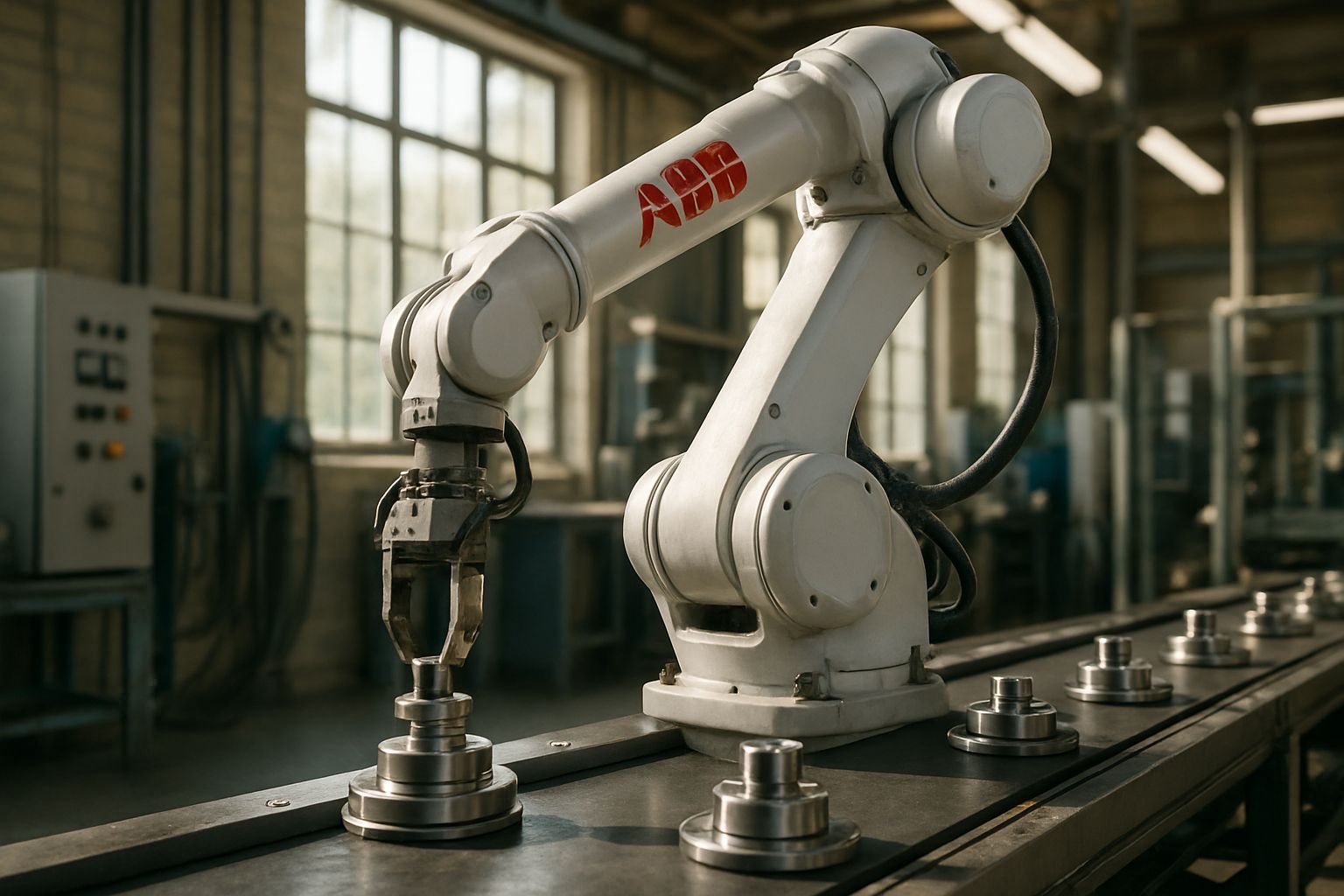
Traditional offline programming loses accuracy when virtual robots meet dusty production floors. In contrast, HyperReality imports ABB’s controller firmware directly into NVIDIA Omniverse. Therefore, the virtual cell mirrors timing, I/O latency, and sensor noise with high fidelity. ABB states the model reaches 99 percent behavioral correlation, shrinking positional error to 0.5 millimeters from previous 10 millimeters. Moreover, synthetic images generated inside the twin feed vision models that later run on edge GPUs. Consequently, Industrial Robotics Automation planners gain reliable virtual datasets. This advance could reshape Industrial Robotics Automation planning cycles worldwide.
Deepu Talla, NVIDIA Vice President for Robotics, stressed necessity. “High-fidelity simulation lets AI practice safely, then transfers learning without surprises,” he said during the launch webcast.
Engineers finally see a plausible path toward dependable virtual commissioning. Nevertheless, product details determine whether savings materialize; those arrive next.
Inside HyperReality Product Details
RobotStudio already serves about 60,000 engineering seats. Subsequently, the HyperReality add-on layers Omniverse physics, USD scene graphs, and generative synthetic data tools. Subscription pricing remains undisclosed, yet ABB hints at a consumption model aligned with cloud GPU hours. Furthermore, the software exports simulation artifacts into shop-floor dashboards through ABB Ability APIs, easing integration with established MES stacks. Such integration aligns with broader Industrial Robotics Automation toolchains already running on ABB Ability. HyperReality embeds ROI simulation dashboards that visualize cost deltas in real time. Successful pilots could ripple through global factory automation strategies.
Pilot users report tangible schedule gains. Foxconn engineers virtually tuned an electronics assembly line, finishing programming 80 percent faster than customary cycles. Meanwhile, Workr shaved two weeks off a packaging cell’s commissioning window by detecting reachability clashes before steel cutting. Foxconn engineers saw near-physical realism during training.
ABB asserts that HyperReality can lower deployment costs by up to 40 percent and halve time-to-market for complex skus. However, public datasets supporting those percentages remain unavailable.
Features appear comprehensive, spanning physics, vision, and controller parity. Yet numbers matter most for board approvals; therefore, the next section interrogates ROI claims.
ROI Claims And Caveats
Vendor brochures spotlight several headline metrics. Firstly, 99 percent sim-to-real matching promises minimal surprise during ramp-up. Secondly, 40 percent cost reduction and 50 percent faster launches tease dramatic balance-sheet relief. Finally, 80 percent shorter commissioning appeals directly to integrators facing labor shortages.
- Positioning accuracy: 0.5 mm claimed using Absolute Accuracy calibration.
- Energy savings: 15-18 percent reported under separate ABB Genix deployments.
- Digital-twin ROI: 3:1–5:1 ratios observed by independent integrators.
Nevertheless, independent evidence remains scarce. McKinsey cautions that simulation returns vary by process complexity and data maturity. Additionally, upfront modeling effort can offset hoped-for savings in smaller shops. Therefore, journalists and buyers should request full pilot worksheets covering subscription fees, cloud compute, and engineering labor. These metrics, if verified, would mark a turning point for Industrial Robotics Automation economics. Rigorous ROI simulation therefore stands at the core of procurement due diligence.
Claims demonstrate potential yet invite scrutiny and data transparency. Consequently, understanding market context helps stakeholders gauge risk.
Market Context And Demand
Digital-twin spending continues to outpace broader automation budgets. McKinsey positions the technology as a trillions-dollar value unlock across factory automation ecosystems. Moreover, SoftBank’s 2025 acquisition of ABB Robotics signals strategic pressure to monetize Physical AI quickly. Consequently, rival vendors like Siemens, Schneider, and Ansys partner with NVIDIA Omniverse to defend share.
Adoption momentum also stems from regulatory shifts. Environmental mandates push manufacturers to document energy footprints; hyper-real twins simplify scenario testing without halting lines. In contrast, legacy simulation tools lack the sensor fidelity needed for modern ESG audits. Digital twins already underpin next-generation factory automation lines in automotive and electronics sectors. Wider adoption now hinges on clear standards.
Market forces converge around high-fidelity twins, making 2026 a critical inflection for Industrial Robotics Automation programs. Next, expert commentary offers balanced perspectives.
Expert Voices Provide Balance
Marc Segura, President of ABB Robotics, framed the launch as a milestone. “We have closed the sim-to-real gap, unlocking industrial-grade precision,” he stated. Furthermore, Foxconn engineers told Evertiq they saw “remarkable alignment” between virtual and physical cells during early phases. Balanced insights remain vital for Industrial Robotics Automation program managers.
However, academic researchers highlight edge-case fragility. Papers published on arXiv show rare material properties and wear patterns can derail transfer accuracy. Consequently, they advocate continuous field telemetry to refine models post-deployment.
Professionals can enhance their expertise with the AI Robotics™ certification, gaining skills for validating complex ROI simulation pipelines.
Voices inside and outside ABB agree that measurement rigor remains essential. Strategic considerations now take center stage for adoption roadmaps.
Strategic Outlook And Adoption
Boards crave certainty before approving capital layouts. Therefore, early adoption centers on high-mix, high-margin products where delays carry stiff penalties. Moreover, integrators anticipate offering simulation-as-a-service, spreading upfront costs across multiple customers.
Scalability still hinges on skilled digital-twin engineers. Consequently, certification programs and vendor academies aim to widen talent pipelines. Additionally, cloud GPU availability affects queue times; volatile spot prices could erode projected savings.
Industrial Robotics Automation initiatives also face cybersecurity scrutiny. Meanwhile, IT and OT teams must coordinate patching schedules, digital-twin model governance, and change management. McKinsey suggests establishing cross-functional steering committees to mitigate risk. Boards funding factory automation upgrades now demand simulation evidence before committing robots. Future releases will extend ROI simulation to multi-cell orchestration scenarios.
Strategic levers involve talent, infrastructure, and governance, not just software licenses. The following conclusion synthesizes the insights and outlines next steps.
Conclusion And Next Steps
ABB and NVIDIA push the frontier of Physical AI by merging high-fidelity simulation with proven robotics hardware. The partnership promises faster deployments, higher precision, and compelling cost curves for Industrial Robotics Automation stakeholders. However, independent validation will decide whether bold ROI simulation statements endure real production stresses. Moreover, governance, security, and talent gaps require equal attention.
Consequently, leaders should demand transparent pilot data, invest in workforce upskilling, and stage incremental rollouts. Interested practitioners can review the earlier certification link to accelerate readiness. Measured adoption will likely accelerate as evidence accumulates.
Disclaimer: Some content may be AI-generated or assisted and is provided ‘as is’ for informational purposes only, without warranties of accuracy or completeness, and does not imply endorsement or affiliation.


