

AI CERTS
4 weeks ago
VIAVI’s Edge AI Infrastructure Monitoring Breakthrough
The March 2026 launch of the true-phase FTH-DAS brings embedded AI to the rack edge. Moreover, the device promises sub-meter localization and automated event classification in real-time. This article unpacks the tech, market forces, and deployment considerations shaping next-generation monitoring programs. Meanwhile, competitive vendors race to offer AI Infrastructure Monitoring platforms of their own.
Market Growth Drivers Now
Grand View Research pegs the distributed fiber optic sensor market at USD 1.64 billion for 2025. Furthermore, analysts forecast nearly USD 4 billion by 2033, reflecting an 11.9 percent CAGR. In contrast, APAC outpaces North America in growth rate, though the latter retains revenue lead.
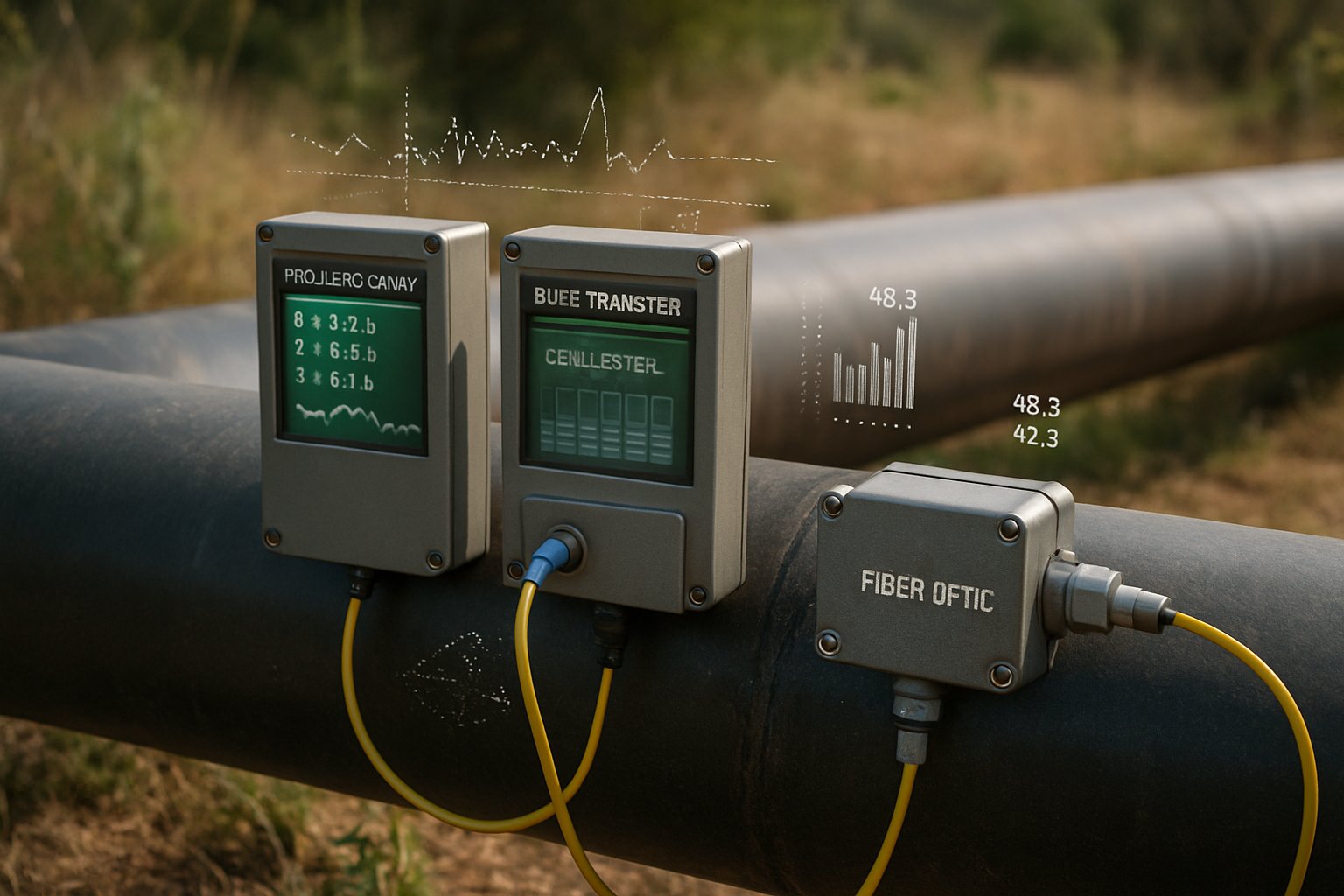
Security, pipeline leak detection, and power-line thermal rating headline demand catalysts. Additionally, AI Infrastructure Monitoring lowers staffing burdens by filtering noise before alarms reach control rooms. Therefore, vendors embedding on-device intelligence differentiate quickly.
These figures confirm sustained momentum. Meanwhile, technical foundations warrant closer inspection.
How Distributed Sensing Works
Distributed Acoustic Sensing (DAS) converts standard fiber into a continuous vibration antenna. It launches coherent light pulses and measures Rayleigh backscatter along every meter. Subsequently, spatial algorithms localize events such as digging or footsteps.
DTSS and DTS leverage Brillouin and Raman scattering to capture temperature and strain signatures. However, sample rate falls as cable length grows, forcing bandwidth-range trade-offs. VIAVI’s interrogators address this limit with dual channels supporting 100 kilometers aggregate reach.
True-Phase Edge Advantage Now
The new FTH-DAS applies patented phase-stepping interferometry for higher signal fidelity. Consequently, localization accuracy tightens to roughly 33 centimeters. Edge GPUs run convolutional models that classify vehicles, leaks, and human movement in real-time. Moreover, operators can push model updates over 1 or 10 GbE links.
Precision and autonomy underpin this architecture. Next, we examine the commercial rollout. AI Infrastructure Monitoring enables precise situational awareness.
VIAVI True-Phase Launch
VIAVI introduced the rack-mountable interrogator on 10 March 2026. Kevin Oliver, VP and GM, called it a leap toward AI Infrastructure Monitoring at global scale. Furthermore, the unit’s 2U chassis integrates dual channels, 1 TB storage, and 10 GbE networking.
Most importantly, AI inference happens locally, shrinking latency and bandwidth demands. Consequently, field teams receive validated alerts within seconds rather than minutes. VIAVI couples hardware with Alarm Management Software and APIs for northbound integration.
- 50 km per channel reach
- 0.33 m spatial resolution
- 1 Hz to 50 kHz frequency response window
- Dual-channel true-phase DAS architecture
- Embedded edge AI accelerators
These specifications target multi-asset operators. However, benefits must translate into operational value.
Operational Benefits In Focus
Continuous coverage along existing fiber slashes sensor deployment costs. Moreover, sub-meter detection enables pinpoint excavation guidance and targeted maintenance. AI Infrastructure Monitoring further trims false-positive tickets, freeing analysts for higher priorities.
Utilities also exploit DTSS data for dynamic cable rating, unlocking latent capacity without new conductors. In contrast, perimeter security users integrate classified alerts with CCTV and drone workflows. Additionally, managed services offload analytics tuning to vendor experts.
Professionals can enhance their expertise with the AI Network Security™ certification. Consequently, teams align skills with emerging monitoring architectures.
Operational gains appear compelling. Nevertheless, real-time deployments surface obstacles.
Deployment Challenges Remain Acute
Massive data streams challenge storage policies and retention budgets. However, edge summarization mitigates traffic yet cannot eliminate compliance obligations. Environmental coupling also varies; aerial fiber reacts differently than buried cable. AI Infrastructure Monitoring strategies must respect these physical realities.
Moreover, frequency bandwidth declines with distance, forcing configuration trade-offs. Therefore, planners must model threat spectra and choose optimal sample rates. DAS installations need calibration campaigns to benchmark noise floors.
Procurement teams confront integration services that equal hardware prices. Nevertheless, AI Infrastructure Monitoring aims to shorten commissioning by shipping pretrained models. Subsequently, total project timelines may compress.
Challenges remain surmountable with planning. Next, services and support close remaining gaps.
Integration And Service Models
VIAVI positions ONMSi and SystemCare as turnkey companions to FTH units. Consequently, cloud dashboards visualize alarms, trends, and model performance in real-time. APIs expose data to SCADA, SIEM, and GIS systems for unified asset management.
Moreover, private cloud options address sovereignty needs for defense customers. In contrast, VIAVI-hosted SaaS appeals to smaller utilities lacking DevOps staff. AI Infrastructure Monitoring frameworks govern lifecycle updates and security patches.
Competitors such as Silixa, AP Sensing, and Luna pursue similar hybrid models. However, VIAVI touts thousands of deployed test heads that feed ongoing algorithm refinement. Therefore, installed base scale acts as a defensive moat.
Services complete the AI Infrastructure Monitoring story. Finally, strategic takeaways deserve emphasis.
Key Takeaways And Next
VIAVI’s true-phase FTH-DAS illustrates how sensing, edge compute, and analytics now converge. Moreover, market forecasts signal double-digit growth for distributed solutions over the next decade. Consequently, organizations adopting AI Infrastructure Monitoring gain speed, precision, and cost advantages. Nevertheless, data management, calibration, and integration remain critical workstreams. Professionals should evaluate service packages, field trials, and certification paths before signing contracts. Therefore, consider deepening skills through the linked AI Network Security™ program and schedule pilot engagements today.


