

AI CERTS
4 hours ago
West Texas Outage Highlights AI Operational Risk
However, many questions remain about how a modern direct-to-chip system succumbed to a common freeze. This article dissects the failure, business fallout, and mitigation paths for data leaders. Moreover, it offers guidance on strengthening future builds against similar shocks.
Abilene Outage Incident Overview
Initially, local outlets reported an extended power event. Further investigation revealed cooling, not power, crippled operations. The campus relies on closed-loop direct-to-chip water circuits. When outside air plunged to 12°F, primary chillers froze. Consequently, coolant circulation stopped, and racks overheated within minutes. Operators initiated emergency shutdowns across two active buildings, totaling about 400 MW. Moreover, thawing interfaces required specialized crews and replacement sensors. Recovery spanned roughly three days, according to tenant messages seen by Bloomberg.
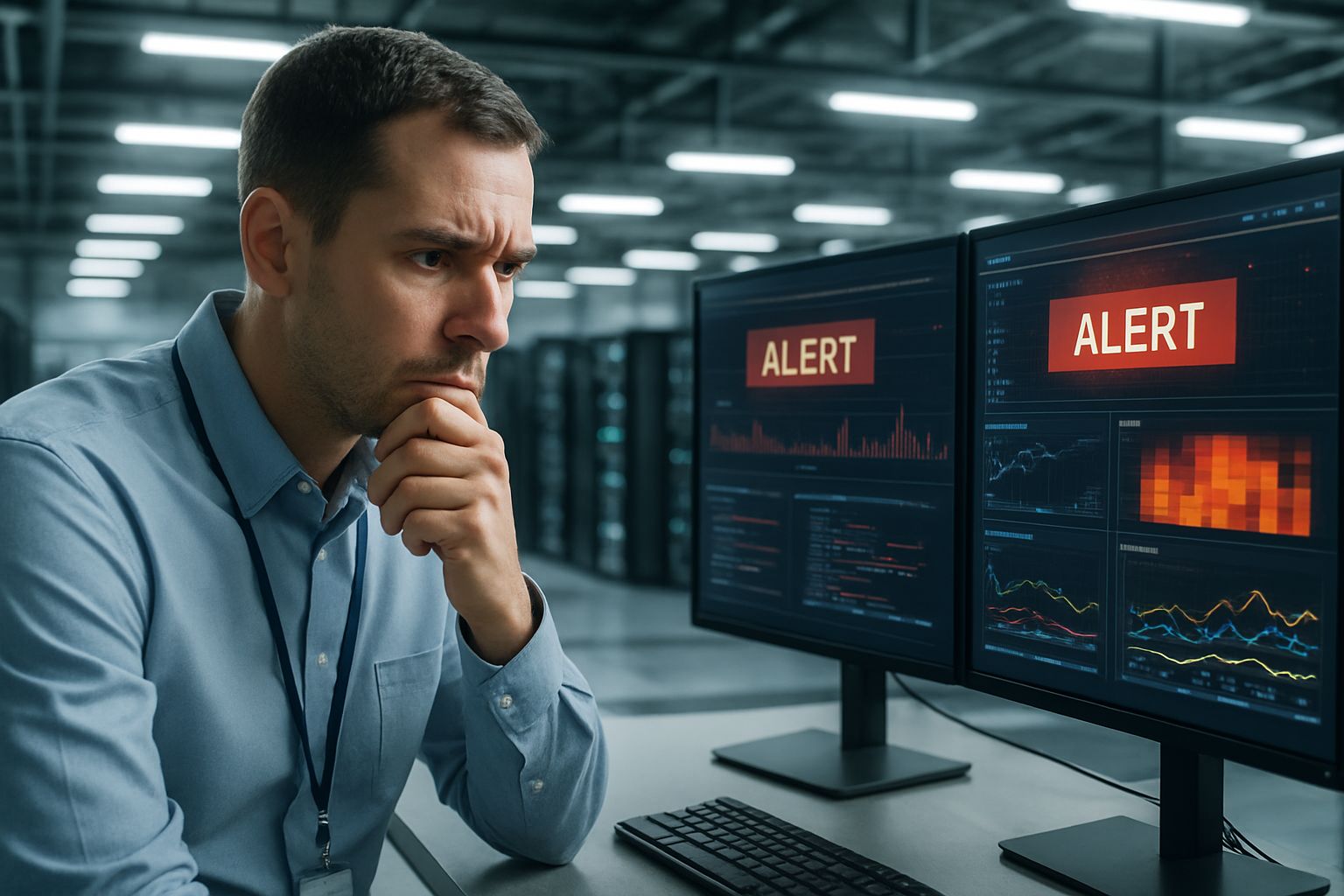
The outage highlighted design gaps in freeze protection. Therefore, AI Operational Risk considerations must expand beyond electricity alone. Next, we examine the cooling architecture underpinning those vulnerabilities.
Liquid Cooling Technology Basics
Direct-to-chip cooling moves heat by circulating water directly over CPU and GPU cold plates. The secondary loop connects to a coolant distribution unit, or CDU. Meanwhile, the primary loop rejects heat through outdoor chillers or dry coolers. Operators favor this approach because it supports 80-100 kW racks with lower fan energy. Additionally, the closed circuit minimizes ongoing water consumption after the initial million-gallon fill. Nevertheless, the design introduces pumps, sensors, and valves that create new failure points. In contrast, air cooling lacks these fluid dynamics but cannot support dense Blackwell GPUs. Therefore, engineering teams must weigh efficiency against exposure to freeze, leak, and flow events.
Closed loops unlock higher density yet demand rigorous mechanical resilience. Moreover, ignoring these subtleties elevates AI Operational Risk significantly. With the fundamentals clear, we can analyze why the winter storm proved so disruptive.
Winter Storm Failure Mechanics
Cold snaps stress both primary and secondary liquid paths. However, designers sometimes overlook how fast exchanger surfaces can drop below freezing under low load. Direct-to-chip plates stay warm, yet the facility loop can stagnate when pumps interlock with temperature sensors. Consequently, stagnant water may freeze, block flow, and shatter brazed joints. Uptime Institute notes cooling issues represent almost 11% of reported outages worldwide.
Furthermore, AI clusters amplify heat loads, reducing temperature margins during control missteps. Field engineers at Abilene told local media that chiller glycol concentration was insufficient during the winter storm. Subsequently, ice blocked headers, and CDU sensors tripped, forcing emergency power offs. Moreover, replacement pumps shipped from Dallas, extending downtime to 72 hours.
Freeze events cascade quickly through direct-to-chip architectures. Therefore, neglecting weather analytics adds measurable AI Operational Risk. The technical failure soon spilled into financial negotiations, as the next section describes.
Business Fallout And Negotiations
Bloomberg reported Oracle and OpenAI paused a 600 MW expansion after the outage. Meanwhile, Crusoe insisted its roadmap remained intact. However, tenants questioned contractual uptime commitments and cooling redundancy budgets. Meta allegedly explored leasing the shelved capacity, signaling shifting confidence among hyperscalers. Financiers also scrutinized water inventory figures and local grid stability projections. Consequently, Abilene joins a growing list of sites where cooling reliability dictates project financing. Uptimes losses translate into millions in opportunity cost for GPU renters. Additionally, reputational damage lingers, complicating future site selections.
The expansion pause exposes the monetary side of AI Operational Risk. Consequently, boards demand clearer engineering assurances before funding new megaprojects. To contextualize that caution, we compare sector benchmarks and outage data next.
Benchmarking Sector Risk Trends
Uptime Institute’s 2025 report lists cooling as the second leading cause of data center downtime. Globally, 67% of outages exceeding $100,000 involved power or cooling failures. Moreover, AI clusters elevate average rack density eightfold, compounding thermal runaway risk. In contrast, traditional enterprise racks seldom exceed 10 kW and tolerate brief HVAC interruptions. Therefore, facilities embracing direct-to-chip architectures must adopt predictive maintenance and weather modeling.
- 11% of 2025 outages traced to cooling failures.
- 72 hours downtime reported at Abilene during the winter storm.
- 600 MW expansion postponed pending reliability review.
Subsequently, insurers have begun pricing coverage based on measured cooling maturity scores. Nevertheless, companies can offset premiums by proving rigorous procedural testing.
Benchmark data underscores how lapses convert into capital penalties and headlines. Therefore, ignoring trends guarantees elevated AI Operational Risk across portfolios. Mitigation strategies and relevant certifications follow in the next segment.
Mitigation Strategies And Certifications
Engineering controls begin with glycol mixes rated for regional record lows. Furthermore, redundant pumps and CDUs should auto-failover within seconds. Periodic valve cycling prevents stagnation during light winter storm loads. Meanwhile, continuous leak detection limits collateral gear damage. Beyond hardware, operators must refine incident playbooks and charter tabletop freeze drills. Additionally, predictive analytics can fuse weather feeds with pump telemetry to preempt faults. Professionals can enhance their expertise with the AI Architect™ certification. The curriculum covers cooling design reviews, risk quantification, and incident exercises. Consequently, graduates can articulate AI Operational Risk controls to executive stakeholders.
Robust tooling and trained staff shrink exposure windows dramatically. In contrast, ad-hoc processes magnify failure blast radii. Finally, we assess Abilene’s prospects after recent investments and lessons.
Future Outlook For Abilene
Crusoe recently reaffirmed commitment to deliver the remaining six buildings by 2027. Oracle echoed support, yet insisted on verified cooling upgrades before recommencing expansion talks. Meanwhile, local officials fast-tracked permits for additional dry coolers and storm hardening. Moreover, ERCOT is evaluating grid buffers to accommodate staggered energization schedules. Industry sources suggest Meta may still sign, contingent on post-winter storm audits. Therefore, the campus could regain momentum if freeze safeguards prove effective during the next cold snap.
Abilene’s trajectory now depends on demonstrable resilience, not announcements. Consequently, AI Operational Risk management will shape its destiny. The concluding section distills key insights for practitioners worldwide.
Liquid cooling offers undeniable efficiency and density gains. However, the Abilene incident shows small design oversights can escalate into headline AI Operational Risk. Moreover, winter storm patterns are intensifying, widening exposure windows. Therefore, governance frameworks must integrate weather analytics, mechanical testing, and certified staff competencies. Leaders who operationalize these controls, and obtain advanced credentials, reduce AI Operational Risk while preserving scale. Explore the linked coursework, audit your playbooks, and keep GPUs spinning, regardless of forecast.


