

AI CERTS
3 weeks ago
DJI ROMO Vacuum Breach Raises AI Robot Security Concerns
Within nine minutes, Azdoufal accessed data from about 6,700 ROMO units across 24 countries. Live video, microphones, and precise home maps streamed freely through an insecure cloud broker. Moreover, DJI patched the servers on February 8 and 10, 2026, and later paid $30,000. This article dissects the timeline, technical root, industry impact, and practical defenses for stakeholders. Readers will also find certification guidance to strengthen future AI Robot Security efforts.
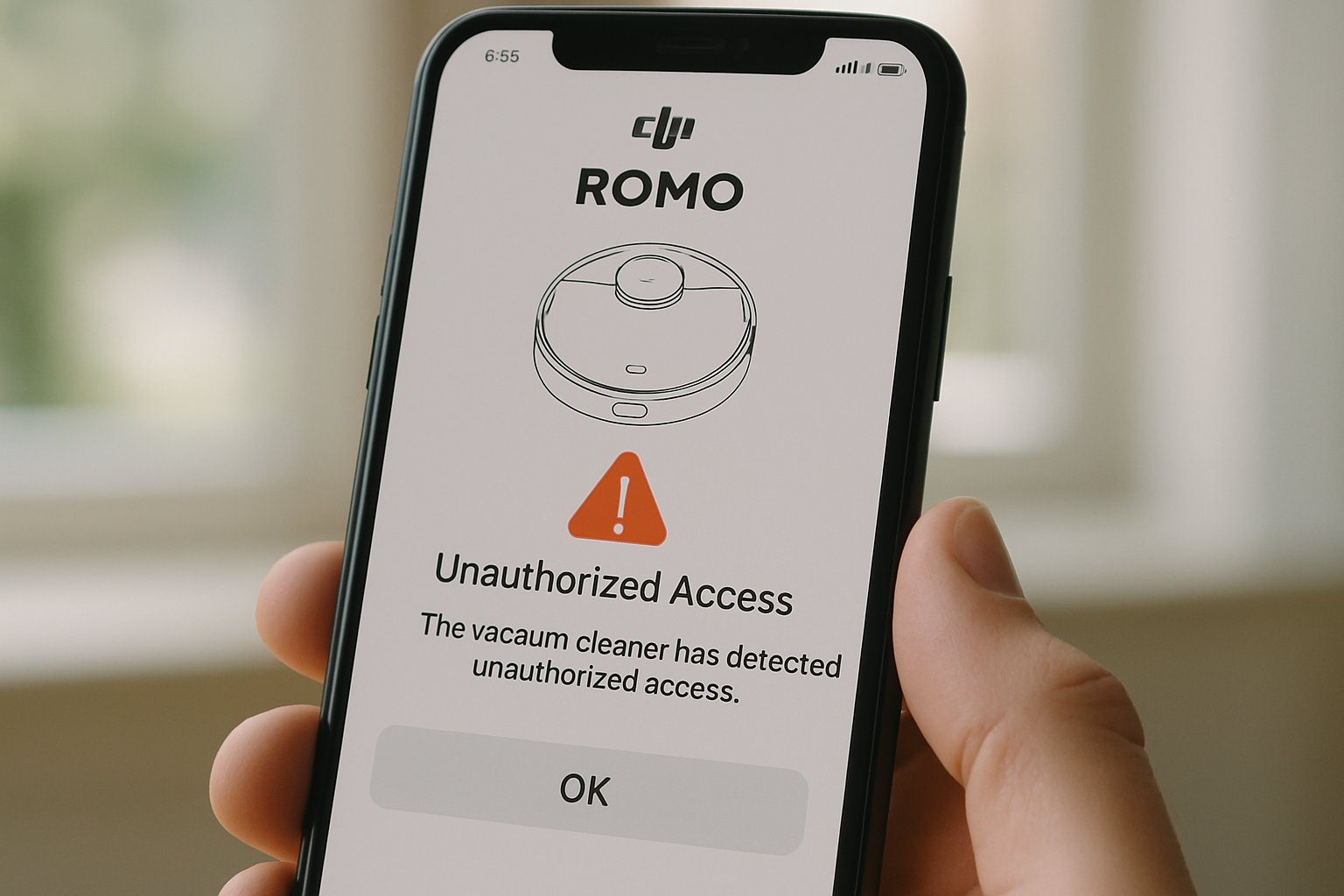
Strong AI Robot Security practices could have prevented this exposure.
Flaw Exposed Smart Homes
Researchers call the vulnerability an authorization failure inside DJI Home's MQTT broker. Essentially, one valid token unlocked message streams belonging to thousands of unrelated devices. Consequently, attackers could subscribe to topics transmitting camera feeds, microphones, and room telemetry.
Azdoufal told The Verge, “I found my device was just one in an ocean of devices.” The quote underscores the scale of the backend flaw and its sweeping reach. MQTT permitted wild-card subscriptions once initial authentication succeeded, according to multiple analyses.
Sensitive visuals and metadata leaked without user consent, undermining household privacy worldwide. Nevertheless, DJI moved quickly, as the next section details the rapid patch timeline.
Timeline Of Rapid Patches
DJI initiated remediation before any public disclosure, according to company statements. On February 8, engineers deployed an initial server fix across primary nodes. Furthermore, a February 10 rollout extended protection to secondary regions still vulnerable.
The Verge published its demonstration on February 14, validating the earlier repairs but revealing residual exposure. Subsequently, DJI cross-checked logs and confirmed full closure within hours, officials claimed. Early March saw the firm award Azdoufal a $30,000 bounty, acknowledging responsible reporting. Observers praised DJI's transparency compared with earlier controversies involving drone firmware. Nevertheless, some researchers question the completeness of internal audits performed during remediation.
These milestones illustrate an AI Robot Security incident lifecycle spanning only two weeks from discovery to payout. Consequently, understanding the flaw's mechanics becomes essential, which the following section explains.
Technical Root Cause Explained
Under the hood, ROMO vacuums communicate through MQTT topics named after each device. In contrast, the cloud broker lacked topic-level permissions, so every authenticated client enjoyed broad access. Therefore, any token accepted by the server unlocked live streams and mapping data from others.
Analysts emphasize that transport encryption remained intact; the breach occurred after TLS termination. Moreover, insiders or compromised apps could silently harvest billions of messages without packet sniffing. Meanwhile, replay attacks remained possible until topic restrictions tightened. The backend flaw demonstrated how missing authorization dwarfs encryption when designing AI Robot Security architectures.
The lesson is clear: enforce least privilege at every microservice boundary. Next, we examine how similar lapses plague the wider connected-device market.
Wider Industry Security Context
IoT history records comparable incidents at multiple vacuum and camera brands over recent years. Additionally, Finisterre told reporters the ROMO case echoes patterns of weak cloud authorization. Effective AI Robot Security demands rigorous server controls beyond client encryption. In contrast, regulators now demand baseline protections through the EU Cyber Resilience Act and US rules.
DJI already appears on the FCC Covered List, intensifying scrutiny of data residency and privacy. Consequently, enterprises must audit vendor architectures before integrating consumer devices into workplace networks. Professionals can enhance their expertise with the AI Security Level 2 certification. Such credentials assure recruiters that practitioners understand both edge and cloud threat models.
Industry pressure is steering vendors toward transparent postmortems and formal bug-bounty programs. Nevertheless, end users still need concrete defense steps, presented in the subsequent section.
Mitigation Steps For Users
While DJI promises automatic updates, users should validate firmware versions through the companion app. Moreover, isolating ROMO and other smart devices on a separate VLAN reduces lateral risk. Disabling cameras or microphones, when not required, further curbs potential privacy exposure. Setting device schedules during local hours also prevents unnecessary wide-area exposure.
- Check device patch notes and confirm February build numbers appear.
- Place robovacs on guest networks that block cross-device discovery.
- Monitor router logs for unexplained MQTT traffic spikes.
Following these practices addresses immediate risk and complements organizational AI Robot Security strategies. Meanwhile, policymakers are shaping standards that could mandate such controls, explored next.
Policy And Future Outlook
Legislators increasingly link AI Robot Security to national security, especially for Chinese manufactured hardware. Therefore, upcoming rules may require server-side audit logging and third-party penetration tests for cloud brokers. DJI might release a detailed postmortem to satisfy agencies and rebuild consumer trust.
Additionally, corporate buyers demand contractual guarantees around data deletion and privacy. Vendors unable to prove robust controls risk exclusion from strategic procurement lists. Independent audits could soon feature in procurement scorecards for municipal cleaning fleets. Moreover, insurers are exploring premium discounts for documented IoT hardening measures. Consequently, continuous certification and independent assessments will become a selling point across the smart appliance sector.
Strong regulation combined with vigilant research propels the market toward more mature AI Robot Security baselines. Nevertheless, ongoing diligence remains vital as new features introduce fresh attack surfaces.
Conclusion And Next Steps
The ROMO saga offers a cautionary tale for every connected-device stakeholder. Furthermore, backend flaw incidents reveal that encryption alone never guarantees privacy. DJI's quick patches and bounty show responsible disclosure can minimize fallout. However, organizations must embed continuous testing, strict authorization, and layered network segmentation.
Pursuing structured learning, such as the AI Security Level 2 program, sharpens AI Robot Security skills. Consequently, readers should review internal IoT policies and schedule regular penetration audits immediately. Take decisive action today and champion safer smart environments.


