

AI CERTs
4 months ago
Anduril’s Bold Bid to Double Defense Tech Revenue by 2026
Defense procurement budgets are swelling, and ambitious startups smell opportunity. Few names illustrate that momentum better than Anduril Industries. Founded in 2017, the company straddles software, sensors, and fleet manufacturing. Consequently, investors have poured billions into its expansion. Most striking, management says 2024 sales roughly doubled to around $1 billion. That surge pushed the private valuation to about $30.5 billion last June. However, the story does not end with one good year. Executives are now signaling another 100 percent leap by 2026. If realized, the Defense Tech Revenue arc would move from $1 billion toward $2 billion in 24 months. This article examines the numbers, catalysts, and looming risks behind the target. Moreover, it connects these findings to broader defense-technology market dynamics. Professionals can benchmark their own strategies accordingly.
Rapid Defense Tech Revenue
Anduril’s 2024 revenue disclosure came during its $2.5 billion Series G round. TechCrunch quoted the company saying revenue "doubled" to about $1 billion. Meanwhile, Axios echoed that figure and highlighted $1.5 billion in new contract value.
Independent analysts estimate 2023 revenue near $420-457 million. Therefore, the company added somewhere between $550 million and $580 million inside twelve months. Such growth outpaces several publicly traded primes on a percentage basis.
Nevertheless, figures remain unaudited because Anduril is private. Ranges rather than absolutes dominate third-party spreadsheets. Consequently, reporters must qualify every hard number with its source.
These estimates confirm extraordinary topline momentum. However, understanding management’s forward targets requires deeper context, explored next.
Aggressive Growth Targets Explained
Investor decks reviewed by AviationOutlook show an internal goal of roughly $2 billion revenue during 2026. Moreover, The Information reported a confidential slide projecting $4.3 billion sales in a near-term year. Either scenario implies another burst in Defense Tech Revenue that rivals the 2024 step-change.
Notably, those same slides anticipate an Operating Loss exceeding $1 billion during the hyper-growth phase. Consequently, management must balance scale ambitions with investor appetite for near-term profitability. VC backers have signaled patience, citing software-first margins over time.
So far, the narrative centers on speed rather than efficiency. Next, we examine the funding war-chest enabling that approach.
Major Funding Fuels Scale
June 2025 saw Founders Fund lead a hefty $2.5 billion infusion at a $30.5 billion valuation. Additionally, Ohio granted a 30-year tax credit worth roughly $450 million to support Arsenal-1, a 5-million-square-foot plant. The incentive requires creating 4,008 full-time jobs by 2035.
Meanwhile, hiring has ramped across engineering, supply-chain, and quality roles. Such headcount growth underpins production of Autonomous Systems spanning drones, towers, and undersea vehicles. Therefore, capital and talent converge to convert backlog into deliveries.
Key funding impacts include:
- Accelerated prototype-to-production cycles across Autonomous Systems lines.
- Early material buys cushion supply-chain shocks.
- Sustained R&D funds Lattice OS upgrades.
These levers make another doubling in Defense Tech Revenue conceivable. However, physical manufacturing introduces its own hurdles, discussed below.
Ohio Manufacturing Ramp Risks
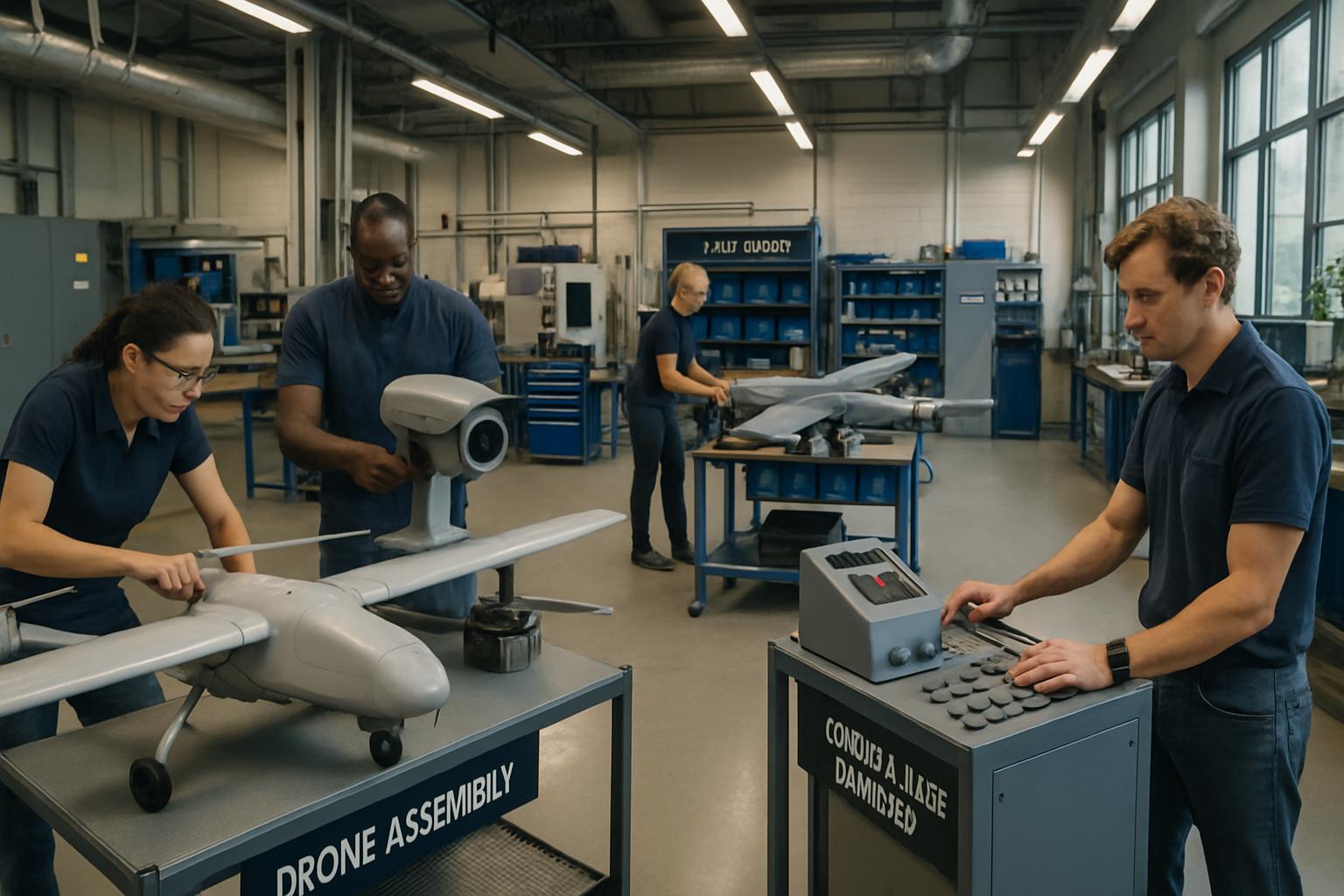
Arsenal-1 will fabricate airframes, circuit boards, and integrated payloads under one roof. Nevertheless, five million square feet create logistical complexity unfamiliar to software-native founders. Defense giants often struggle with similar green-field facilities for years.
In contrast, Anduril touts vertical integration to compress timelines. Scaling that promise demands flawless supplier coordination and workforce training programs. Delays could inflate the projected Operating Loss beyond current investor tolerances.
Consequently, analysts track unit deliveries on I-CsUAS and IVAS schedules as leading indicators. Missed milestones would ripple into cash burn and valuation.
Facility execution risk stands as the largest unknown in hitting Defense Tech Revenue goals. Next, we assess the pipeline feeding those goals.
Expanding Contract Pipeline Outlook
Anduril claims roughly $1.5 billion in total contract value across active awards. Furthermore, DoD’s Replicator initiative could order thousands of Autonomous Systems for distributed deterrence. Each additional tranche converts pipeline into recognized revenue once hardware ships.
Annual Contract Value metrics offer recurring visibility yet differ from GAAP revenue recognition. Therefore, investors watch both signatures and shipments. Timely conversions keep the Defense Tech Revenue curve aligned with doubling forecasts.
Contract momentum underpins bullish models. We now examine software’s role in margins supporting those models.
AI Software Margin Edge
Lattice OS fuses sensor data and directs swarms under human supervision. Moreover, the platform licenses across every deployed drone, tower, or underwater robot. That architecture layers high-margin software atop cost-efficient Autonomous Systems hardware.
Consequently, gross margins improve as installed base expands without proportional labor growth. Higher margins partially offset near-term Operating Loss from factory scale-up. Analysts liken the model to commercial SaaS, albeit with missiles attached.
Software economics strengthen investor resolve during spending spikes. Yet competition could dilute that advantage.
Software margins could ultimately widen Defense Tech Revenue quality, reducing dependence on hardware cycles.
Broader Competitive Market View
Palmer Luckey often frames Anduril against legacy primes such as Lockheed or RTX. However, new entrants like Shield AI and Skydio also chase program dollars. Many emphasize speed, autonomy, and integrated AI as differentiators.
Nevertheless, scale financing remains Anduril’s unique moat today. Few startups can secure multi-billion war chests while holding Pentagon mindshare. Sustaining that lead demands consistent Defense Tech Revenue delivery, not just press headlines.
Competitive pressure thus re-enforces operational discipline. Finally, we consolidate main insights and recommend next steps.
Ultimately, Anduril’s pursuit of $2 billion hinges on disciplined execution across factories and contracts. Defense Tech Revenue growth will stall if deliveries slip or appropriations shift. Nevertheless, abundant capital, AI software leverage, and policy momentum offer strong tailwinds. Forecasts also expect a sizable Operating Loss through 2026, reminding investors that scale is expensive. Consequently, management must report milestones quarterly to sustain market confidence. Hitting each milestone could convert pipeline into recognized revenue and improve Defense Tech Revenue reliability. Meanwhile, professionals can deepen strategic insight via the AI Executive™ certification. Such programs sharpen leadership judgment in fast-moving defense markets. Review your growth roadmap today and position your organization for the next procurement wave.
Disclaimer: Some content may be AI-generated or assisted and is provided ‘as is’ for informational purposes only, without warranties of accuracy or completeness, and does not imply endorsement or affiliation.


