

AI CERTS
4 hours ago
Trump’s Push For Global AI Dominance
Six months later, the White House released “Winning the Race: America’s AI Action Plan,” detailing 90 federal actions. Subsequently, the 28-page blueprint outlined three pillars: innovation acceleration, infrastructure expansion, and global diplomacy. Supporters praise the growth agenda. Critics warn of weakened protections and looming power grid strains. Nevertheless, the administration argues that swift deregulation remains essential for maintaining technological leadership against China.
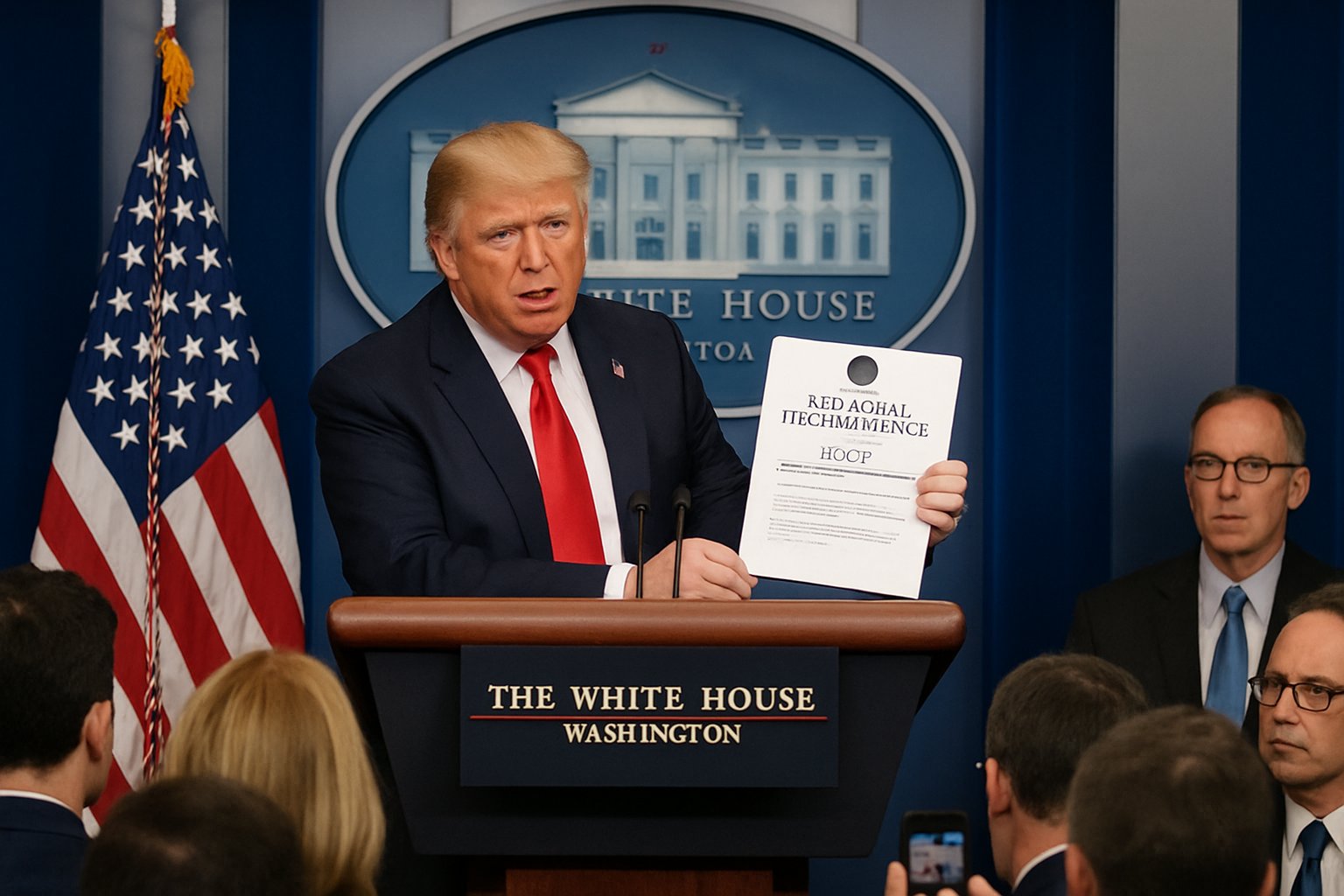
This article unpacks the order’s legal architecture, implementation milestones, and market consequences for enterprise strategists. Along the way, we examine policy friction inside the administration and evaluate opportunities for professional certification.
Securing Global AI Dominance
Trump’s Executive Order reframed AI as a critical competitive domain, equivalent to space or cyberspace. Consequently, every agency received marching orders to remove “barriers” and foster unimpeded innovation. The text explicitly tasks OSTP Director Michael Kratsios and Special Advisor David Sacks with drafting the Action Plan. Furthermore, the order mandates OMB to rewrite guidance within 60 days, aligning procurement with Global AI Dominance goals. That condensed timetable signaled urgency unmatched in prior tech directives.
White House language stresses that Global AI Dominance supports prosperity, security, and “human flourishing.” Moreover, McKinsey projects generative AI could add up to $4.4 trillion yearly, bolstering the administration’s economic narrative. Yet civil-rights groups fear deregulation erodes equity safeguards introduced earlier. Nevertheless, the White House remains steadfast, arguing benefits outweigh perceived risks.
This section shows the order’s sweeping scope and accelerated deadlines. Next, we track how agencies met those deliverables.
Action Plan Milestones
The AI Action Plan arrived on 23 July 2025, exactly 181 days after signature. Officials missed the mark by one day, yet they celebrated punctuality. Subsequently, the blueprint outlined the pillars noted above. Each pillar listed concrete tasks with assigned agencies and target quarters. For example, Commerce must propose quicker export licensing for advanced AI chips by Q3 2025.
The following highlights illustrate early progress.
- OMB released revised acquisition memo M-25-02 within 55 days.
- Over 10,000 public comments informed final plan wording.
- Seven agencies issued draft rules to synchronize procurement thresholds.
Meanwhile, Treasury coordinated a cross-border payment sandbox supporting AI-driven compliance tests. Agencies trumpet these wins as evidence of momentum toward Global AI Dominance.
Milestones show agencies moving faster than typical federal pace. However, speed has exposed internal fault lines, discussed next.
Policy Tensions Surface Now
March 2026 revealed striking conflict between the White House and Commerce Department. Commerce drafted tighter chip export rules mirroring previous administrations. In contrast, White House industrial strategists argued that restrictions would undercut Global AI Dominance and hamper allies. Consequently, public letters exchanged between agencies underscored diverging priorities.
Energy costs created another flashpoint. The March 2026 ratepayer pledge barred tech giants from shifting new electricity expenses onto households. Industry accepted the political optics, yet utilities remain unconvinced about grid upgrades funding.
Export Control Flashpoints Ahead
Legal analysts predict a compromise blending security thresholds with expedited licensing for trusted partners. Nevertheless, congressional hawks may legislate stricter ceilings if agency talks stall.
These tensions illustrate the brittle coalition sustaining current National Policy direction. Infrastructure debates provide the next stress test.
Infrastructure And Export Push
Data centers sit at the heart of Global AI Dominance because models crave colossal compute. Therefore, new executive directives ordered agencies to fast-track environmental reviews for server farms and semiconductor fabs. DHS and Energy officials now coordinate cyber and grid assessments in parallel, trimming months from approvals.
The recent ratepayer pledge aims to calm regulators wary of residential bill spikes. Amazon and Microsoft promised on-site generation and long-term renewable contracts for forthcoming campuses. Moreover, Meta is exploring small modular reactors to guarantee stable power.
Key infrastructure levers include:
- Expedited federal permits capped at 180 days.
- Tax credits for heat-reuse systems.
- Shared fiber corridors along interstate highways.
Parallel to domestic builds, export promotion teams package a U.S. “AI stack” for allies. Commerce markets secure chips, open-weight models, and compliance toolkits as an integrated offer. Advocates see a route to extend National Policy influence abroad.
Infrastructure momentum underpins the administration’s economic narrative. Still, benefits must outweigh ethical and social costs discussed next.
Benefits And Concerns Weighed
Proponents argue the program accelerates jobs, capital, and technical breakthroughs. White House materials predict Global AI Dominance will unlock foreign market share and high-wage employment. Consequently, venture funding reached $89.7 billion during 2024 according to Communications Today.
In contrast, civil-rights advocates highlight the rollback of bias audits inside federal procurement. They fear marginalized groups will shoulder algorithmic harms without redress. Moreover, state lawmakers bristle at preemption clauses that undercut local experimentation.
Legal observers also question advisor appointments that blur lines between investment interests and National Policy stewardship. Senators have opened ethics inquiries into David Sacks’ dual roles. Professionals can deepen governance expertise through the AI Executive Essentials™ certification. Such credentials help translate fast-moving National Policy shifts into compliant enterprise strategies.
Debate underscores that technology growth carries inherent tradeoffs. Therefore, monitoring upcoming decisions becomes vital.
What To Watch Next
Several dates will determine whether promised outcomes materialize. Key federal deadlines include:
- Final chip export rule expected Q3 2026.
- Grid modernization framework due Q4 2026.
- Preemption guidance to states slated early 2027.
Meanwhile, investors watch whether the ratepayer pledge converts into signed power purchase agreements. Internationally, allies evaluate the export stack before aligning procurement rules. Consequently, next year’s diplomatic summits may crystallize cross-border funding for shared data centers.
Tracking these markers will reveal the trajectory of Global AI Dominance claims. Stakeholders should prepare adaptable strategies.
Trump’s AI program marks the most sweeping technology overhaul since the 2017 cloud migration initiative. Executive Order 14179 and its cascading directives target rapid growth, unified governance, and overseas market penetration. However, unresolved tensions over exports, energy, and ethics could slow progress toward Global AI Dominance. Nevertheless, agencies continue issuing guidance at an unprecedented clip. Therefore, business leaders should monitor deadlines, engage in consultations, and invest in skilled talent. For executives steering AI portfolios, the AI Executive Essentials™ course offers timely policy literacy. Act now to align strategies with an evolving National Policy landscape and secure competitive advantage.


