

AI CERTs
4 weeks ago
ZTE iMoochi debuts as tactile AI species
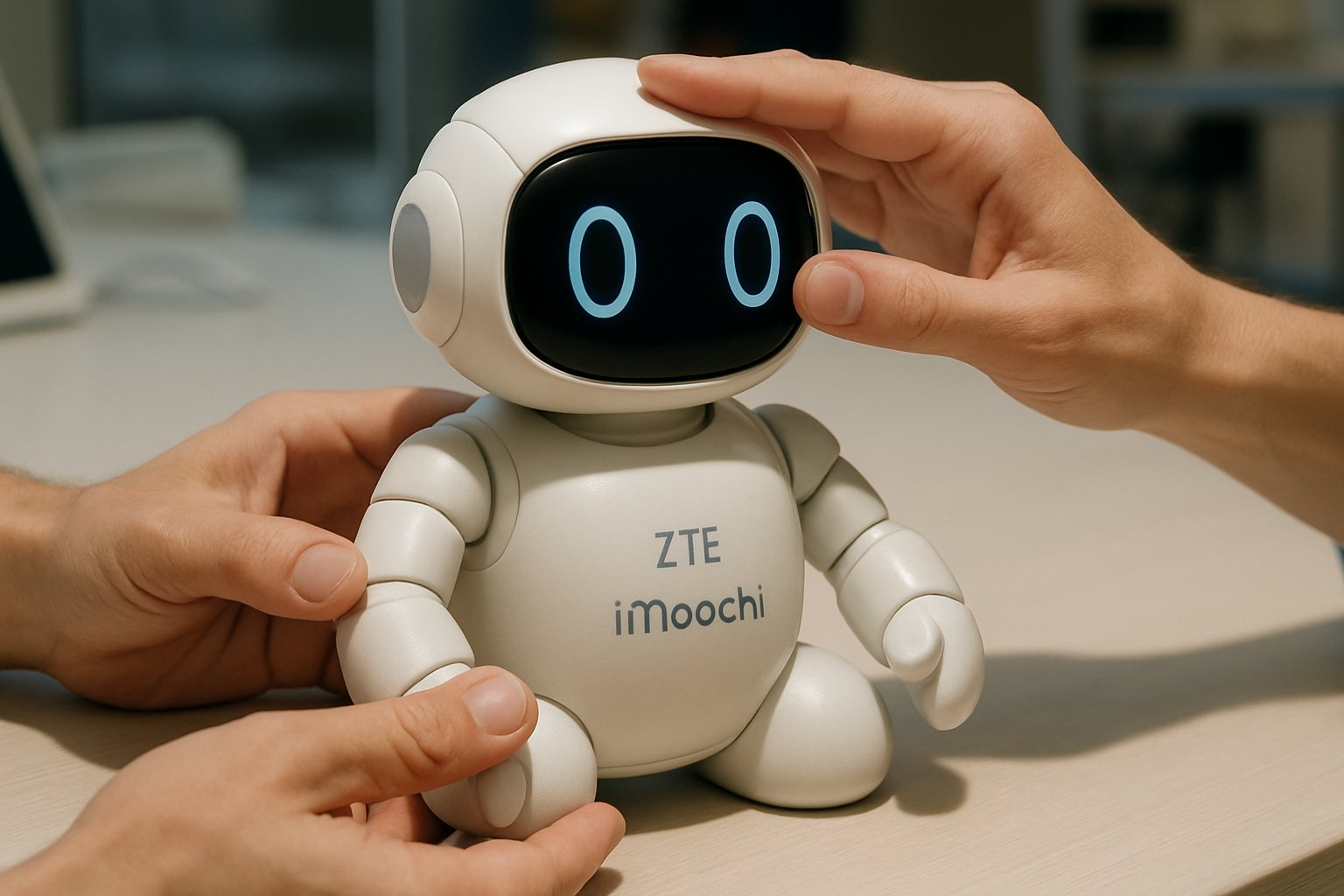
Barcelona’s cavernous Fira Gran Via still hummed long after major product demos ended. However, one booth remained crowded as executives, investors, and analysts queued to stroke a furry oval that cooed softly. That plush device was the first public prototype of ZTE iMoochi, a tactile AI companion promising lifelike affection for urban professionals and families. Moreover, ZTE framed the launch as evidence that emotional robotics now sits alongside mobile connectivity as a strategic pillar. The reveal capped a March 2, 2026 press event where the company declared an “AI for All” agenda and unveiled its wider “AI New Species” portfolio.
Interest ran high because companion robots are accelerating toward mass adoption. Consequently, venture funding and ecosystem partnerships have surged. Meanwhile, ethical questions linger about privacy, dependency, and accountability. This article unpacks the launch context, device design, ecosystem synergies, market forecasts, competitive pressures, and board-level implications.
MWC Launch Event Highlights
ZTE showcased ZTE iMoochi at MWC Barcelona alongside the nubia M153 phone. Furthermore, the firm positioned both products as complementary entries in a full-scenario AI ecosystem. The phone integrates ByteDance’s Doubao assistant at the OS layer, while iMoochi extends emotional engagement beyond screens.
Key launch facts emerged quickly. The nubia M153 engineering prototype sold out in China on December 1, 2025 at RMB 3,499. Resale prices reportedly climbed 210 percent, demonstrating pent-up demand for AI-native mobile hardware. In contrast, ZTE withheld iMoochi pricing and global availability, promising details “later this year.”
Analyst reaction ranged from cautious optimism to pointed security concerns. Nevertheless, the booth traffic suggested strong consumer curiosity. These early signals confirm ZTE’s calculated gamble. However, deeper product insights clarify why the company thinks the risk is worth taking.
Launch momentum validates consumer appetite. Consequently, understanding the underlying design approach becomes essential.
Inside iMoochi Pet Design
The core pitch positions ZTE iMoochi as an AI species engineered for emotional resonance. Moreover, the device employs multimodal interaction: tactile sensors detect stroking, internal gyros monitor orientation, and miniature actuators drive subtle tail wags. Audio designers layered “milky coos” over a lightweight neural vocoder to deliver nuanced vocalisations.
Owners can name the creature, track mood diaries, and receive “feed” reminders through a companion app. Additionally, five character variants—Hopami, Mimiu, Cynomi, Mogogo, and Morin—expand personalization. Academic studies on therapeutic seals like Paro informed the haptic feedback curve, according to ZTE engineers.
Designers also embedded simulated internal states such as hunger and fatigue, creating believable dependency loops. However, scholars warn that such mechanics can foster unhealthy attachment if governance lags.
Lifelike behaviour anchors user delight. Subsequently, ecosystem integration amplifies commercial potential.
Doubao Phone Ecosystem Play
ZTE pairs ZTE iMoochi with the nubia M153, creating a hardware-software flywheel. Doubao’s OS-level agent can schedule feeds, adjust lighting, and summarise daily interactions. Consequently, users experience seamless continuity between pocket and living-room devices.
However, Doubao’s deep permissions sparked backlash from major Chinese apps, which briefly blocked certain automated tasks. A senior security executive described the agent’s privileges as “excessively broad.” Moreover, ByteDance dialled back functionality pending revised guidelines.
Regulatory turbulence illustrates risks inherent in embedding AI this deeply in mobile stacks. Nevertheless, ZTE believes tight coupling will raise switching costs and stimulate recurring service revenue.
Ecosystem synergies offer defensible differentiation. Yet market scale ultimately determines any sustained advantage.
Market Size And Forecasts
Market trackers disagree on precise numbers, but all plot steep growth for companion robots. Mordor Intelligence projects expansion from roughly $7.9 billion in 2025 to north of $40 billion by 2031. Meanwhile, IMARC analysts cite multiple double-digit CAGRs through the coming decade. In contrast, bearish models still anticipate multi-billion valuations by 2030.
- Mordor baseline 2025 value: $7.9 billion
- High-range 2031 projection: $40 billion+
- Consensus CAGR range: 18-24 percent
Additionally, resale data for the nubia M153 suggests robust near-term price elasticity among tech enthusiasts. Consequently, investors monitor secondary-market premiums as leading indicators for subsequent mobile launches.
These numbers underscore a lucrative runway. However, benefits arrive with thorny ethical considerations.
Expansive forecasts tempt capital. Nevertheless, sustainable adoption requires addressing human-centric risks.
Benefits And Ethical Tradeoffs
Advocates argue that ZTE iMoochi can reduce loneliness, deliver stress relief, and entertain children who cannot keep real pets. Moreover, hospitals exploring Paro-style interventions may adopt iMoochi as a cost-effective alternative.
Yet researchers flag deeper issues. In contrast to short-term joy, long-term dependency may erode interpersonal skills. Privacy experts also question the data trail created when an AI species resides in bedrooms.
- Pros: emotional comfort, therapeutic promise, ecosystem stickiness
- Cons: privacy exposure, potential addiction, unclear accountability
Consequently, governance frameworks must evolve. Professionals can enhance oversight skills through the AI Customer Service Strategist™ certification.
Balanced evaluation clarifies risk-reward profiles. Subsequently, competitor moves add further context.
Competitive Landscape To Watch
Legacy players like Sony’s Aibo and Paro’s therapeutic seal remain strong references. However, startups across Asia produce lower-cost silicone pets that sing or breathe. Furthermore, MWC featured at least four new entrants promising cloud-linked plush robots.
ZTE leverages supply-chain advantages and established mobile channels, differentiating itself from venture-backed newcomers. Additionally, ByteDance brings a vast content ecosystem that could funnel music or storytelling into iMoochi updates.
Nevertheless, competitive intensity will rise as market forecasts attract capital. Therefore, early brand recognition around ZTE iMoochi may prove pivotal.
Competitive mapping informs strategic focus. However, executives still need actionable next steps.
Strategic Takeaways For Leaders
Chief strategy officers should treat ZTE iMoochi as a signal that embodied AI is leaving labs for living rooms. Moreover, cross-functional teams must evaluate supply-chain readiness, data governance, and after-sales service models. Consequently, firms planning adjacent products should prototype multimodal interaction quickly to avoid being leapfrogged.
Risk officers must also monitor OS-level agent regulation. Meanwhile, marketing leaders can pilot companion content subscriptions to create annuity revenue. Additionally, upskilling staff on AI service workflows remains urgent. Professionals may formalise knowledge via the earlier linked certification.
Clear priorities drive focused execution. Subsequently, a concise recap will cement the discussion.
Conclusion
The ZTE iMoochi announcement blends tactile design, cloud intelligence, and ecosystem ambition. Furthermore, companion-robot forecasts suggest significant upside, yet privacy and dependency risks persist. Consequently, leaders should scrutinise regulatory shifts, invest in multimodal R&D, and cultivate ethical literacy. Ultimately, those who act early can shape standards and capture value. Therefore, explore the referenced certification and stay ahead in the rapidly evolving AI species landscape.


