

AI CERTs
4 hours ago
Multimodal AI Spurs Intuitive Interaction Growth and Regulation
A bank executive answers a call and hears her own voice requesting a funds transfer. Meanwhile, a marketing team builds training videos from text in minutes, no cameras involved. Both scenes share a force accelerating digital content: multimodal AI capable of Intuitive Interaction. By blending text, Audio, Video, and Sensors, new models mimic human expression with striking realism. Consequently, investors, regulators, and enterprises are scrambling to grasp the opportunity and the threat.
Grand View Research valued the synthetic-media market at roughly $5.06 billion in 2024, forecasting double-digit annual growth. Furthermore, London-based Synthesia raised $200 million in January 2026, pushing its valuation near $4 billion. ElevenLabs followed with a $500 million infusion and now claims an $11 billion price tag. These numbers reveal a race to own the pipelines that will power tomorrow’s Intuitive Interaction.
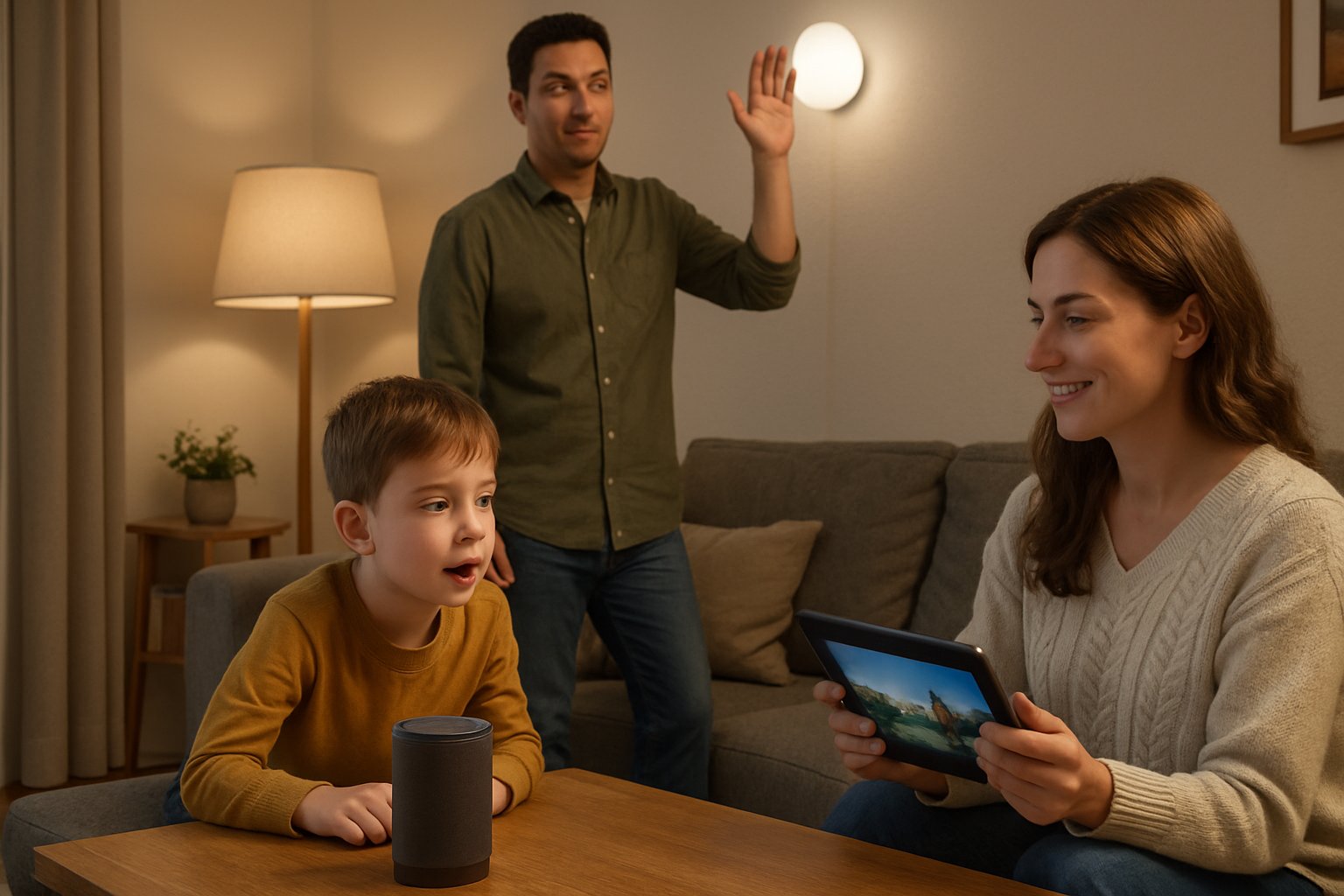
Market Momentum Accelerates Fast
Analysts diverge on precise market size, yet all agree on rapid acceleration. Moreover, multiple forecasts cite compound annual growth rates between 18% and 25% through 2033. Key financial milestones illustrate the speed.
- 2024: Synthesia revenue reached $58.3 million, up 50% year-over-year.
- 2025: ElevenLabs reported $330 million annual recurring revenue.
- 2026: Investors deployed over $1 billion into synthetic-media start-ups.
These indicators confirm commercial momentum. However, adoption still depends on usable experiences, which we examine next.
Driving Intuitive Interaction Adoption
User studies show people trust systems that respond across modalities without extra clicks. Therefore, companies focus on latency, expressiveness, and privacy to unlock seamless Intuitive Interaction.
OpenAI’s GPT-4o, for example, listens, sees, and speaks within a single neural architecture. Meanwhile, ElevenLabs streams expressive Audio while matching mouth shapes in generated Video for coherent avatars.
Sensors embedded in phones capture gaze and gestures, allowing avatars to mirror empathy cues. In contrast, Synthesia plans to integrate biometric feedback, pushing modality Convergence even further.
Collectively, these design choices shrink cognitive load for users. Subsequently, technology teams must refine the underlying generative mechanics, explored in the next section.
Technology Behind Human Likeness
Multimodal models rely on enormous paired datasets that map text, images, Audio, and Video into shared vector space. Consequently, the system learns to predict missing pieces, enabling cross-modal generation at inference.
Motion transfer aligns skeletal meshes, while diffusion renders photorealistic frames conditioned on previous outputs. Additionally, neural vocoders replicate timbre by fine-tuning on seconds of source speech.
However, fidelity increases the risk of deception, because forensic traces vanish as quality improves. Therefore, research now pairs generation with watermarking, cryptographic signatures, and provenance metadata to safeguard Intuitive Interaction.
Technical progress creates uncanny realism. Nevertheless, policy is racing to catch up, as the following section details.
Regulatory Landscape Tightens Quickly
Legislators on both sides of the Atlantic introduced disclosure and consent bills during 2025 and 2026. Moreover, the EU AI Act mandates watermarking and provenance labels for synthetic Video by August 2026.
In the United States, the Take It Down Act criminalizes non-consensual deepfakes, while S.1396 pushes content origin requirements. Consequently, platforms such as Google implement SynthID watermarks across Gemini outputs to preempt fines.
Standards bodies like C2PA promote interoperable metadata chains, aligning industry responses. Security leaders can validate skills through the AI Security Level 2 certification.
Regulators are raising the compliance bar. Therefore, provenance becomes a critical engineering priority for vendors.
Enterprise Use Cases Expand
Corporate communications departments now auto-generate multilingual training clips in hours instead of weeks. Furthermore, contact-center vendors deploy synthetic Audio voices that respect brand guidelines across channels.
Healthcare pilots pair Video avatars with on-device Sensors to deliver personalized discharge instructions. Meanwhile, automotive assistants leverage tactile inputs for richer Intuitive Interaction during driving.
- Cost: Production budgets drop by up to 90%.
- Speed: Campaign iterations shrink from weeks to minutes.
- Localization: AI translates speech while preserving lip sync.
These gains entice risk-averse industries. However, unmanaged scale magnifies ethical concerns, which we unpack next.
Risks And Ethical Friction
Digital forensics scholar Hany Farid warns that detection lags generation by months. Nevertheless, removal orders arrive too late once misinformation spreads.
Legal experts Danielle Citron and Robert Chesney describe the liar’s dividend, where bad actors deny authentic evidence. In contrast, civil groups demand mandatory provenance and stronger consent audits.
Attackers already use cloned Audio in fraud, and polymorphic avatars impersonate politicians for donation scams. Consequently, integration of watermarking with biometric Sensors is proposed to flag tampering in real time.
Risks continue to escalate quickly. Therefore, strategic preparation becomes essential, addressed in our final section.
Future Outlook And Preparedness
Market researchers anticipate sustained double-digit growth as modality Convergence deepens. Moreover, ongoing GPU shortages will incentivize further optimization of multimodal pipelines.
Experts predict that Intuitive Interaction will morph from novelty to default interface within three years. Subsequently, organizations must maintain robust provenance logs and continuous red-teaming.
Recommended playbooks include layered authentication, policy monitoring, and regular model evaluation. Additionally, cross-functional governance boards can align product speed with safety obligations.
For technologists seeking formal frameworks, the earlier mentioned AI Security Level 2 credential offers practical guidance.
These measures position enterprises for resilient growth. Consequently, leadership focus should now shift from experimentation to scale, which the conclusion underscores.
Multimodal AI is crossing the threshold from lab demo to operational backbone. Consequently, Intuitive Interaction will soon define everyday workflows, from marketing edits to boardroom analytics. However, Convergence across modalities also compounds privacy, security, and trust challenges. Nevertheless, standards like C2PA and safety credentials empower teams to respond decisively. Therefore, leaders should invest in provenance pipelines today while cultivating multidisciplinary talent. Professionals mastering Intuitive Interaction principles will shape responsible growth and capture competitive advantage. Act now by auditing models, aligning policy, and securing expertise before the next synthetic surge arrives. Ultimately, the firms that deliver transparent Intuitive Interaction will earn user trust.


