

AI CERTS
3 hours ago
Texas Pushes Ad Transparency for AI Political Ads
However, skeptics warn that criminal penalties could chill satire and grassroots speech. HB 366 now idles in the Senate, leaving campaigns uncertain about upcoming compliance demands. Meanwhile, national parties monitor the debate for clues on emerging state standards. Moreover, deepfake toolkits grow cheaper each month, pressuring regulators to react quickly. This article unpacks the bill’s journey, provisions, controversies, and enforcement challenges. Readers will also see how broader legislative currents shape the future of Ad Transparency.
Bill Progress Overview Timeline
HB 366 was filed on February 27, 2025. Subsequently, the measure cleared the House floor on April 30 with a 102–40 vote. Legislative records show the bill reached the Senate that same day and has stalled since. Therefore, the proposal remains unenacted as of March 4, 2026. If eventually passed, the text sets September 1, 2025 as the effective date. However, that clause activates only upon gubernatorial signature. Fiscal analysts foresee no significant cost to state coffers. Consequently, budget concerns have not impeded momentum. House Speaker Dade Phelan, the author, framed the vote as an ethical milestone. Meanwhile, Senate committees have yet to schedule hearings on the topic.
The timeline underscores urgency yet lingering uncertainty. Consequently, stakeholders must prepare for possible sudden movement toward Ad Transparency. Next, the article dissects what the draft actually requires.
Key Proposal Details Explained
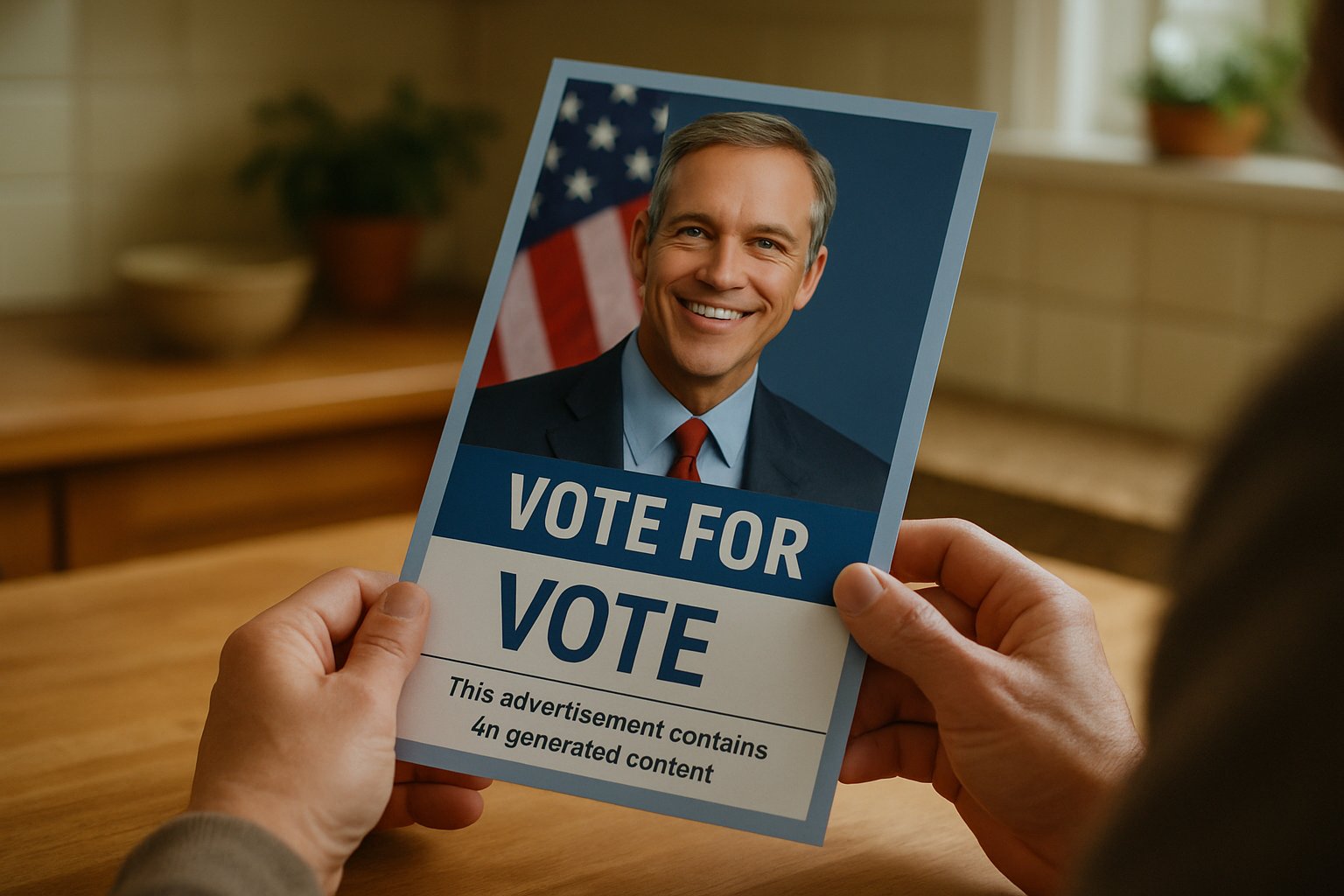
The bill targets any synthetic depiction of a candidate’s speech, likeness, or conduct. Consequently, generative Deepfakes fall squarely under its scope. Qualifying Political Ads must display a clear notice stating the scene never occurred in reality. Moreover, the Texas Ethics Commission will set font, size, and color rules for that Disclosure. Publishers such as ISPs or broadcasters gain explicit immunity when merely carrying paid messages.
Small visual tweaks like brightness adjustments remain exempt. Additionally, the statute applies only when spending exceeds one hundred dollars during a reporting period. Violators face a Class A misdemeanor, exposing them to up to one year in jail. Nevertheless, prosecutors must prove the actor knowingly intended to influence an election.
- Exemptions: brightness, contrast, saturation edits
- Immunity: ISPs, broadcasters, cloud providers
- Threshold: more than $100 political spend
- Penalty: Class A misdemeanor on violation
- Fiscal impact: projected negligible to state budget
The proposal blends familiar campaign rules with fresh provisions for synthetic media. Therefore, compliance teams should map each creative workflow against forthcoming Ad Transparency mandates. Understanding the legal text clarifies why supporters and critics remain so divided.
Supporters And Critics Views
Proponents, led by Phelan, claim Texans deserve certainty about what is genuine. Furthermore, they argue criminal penalties deter deep-pocketed operatives from last-minute Deepfakes. Voter deception, they say, erodes democratic trust more than regulatory risk. Opponents, including Representatives Hopper and Luther, counter that the bill chills parody. In contrast, First Amendment scholars warn vague terms invite constitutional challenges. Additionally, Snopes noted viral claims about meme bans exaggerated the scope. Nevertheless, critics fear grassroots Political Ads might accidentally trigger the misdemeanor threshold. Public debate, therefore, revolves around balancing freedom with Ad Transparency expectations.
Stakeholders agree synthetic manipulation poses dangers, yet they clash over enforcement severity. Consequently, the next section examines how regulators could implement and police the measure.
Enforcement And Risk Factors
Texas Ethics Commission will craft labeling specifications after rulemaking hearings. Consequently, digital strategists await clarity on font size for fifteen-second videos. Meanwhile, establishing intent will challenge investigators because many assets travel through anonymous networks. Moreover, county prosecutors might prioritize violent crime over advertising misdemeanors. Platform self-reporting could bridge gaps, yet platforms are not liable under HB 366. Therefore, campaigns may adopt voluntary watermarks to prove legitimate origin. Cyberforensic vendors already market tools that detect Deepfakes in compressed social clips. However, false positives can spur litigation if enforcement misfires. Insurers have begun modeling reputational losses linked to mislabeled Political Ads. Ad Transparency appears simple but operational costs could rise for every candidate.
Implementation depends on practical guidance, credible detection, and prosecutorial consistency. Subsequently, broader state experiments provide important lessons. The article now turns to the wider legislative landscape across America.
Nationwide Legislative Context Landscape
Texas is not alone in pursuing rules for synthetic campaign media. Moreover, bills in Michigan, California, and New York propose watermark or Disclosure requirements. Several Texas companions, including HB 740 and HB 95, would regulate consumer advertising alongside Political Ads. Consequently, lobbyists must navigate parallel texts with overlapping yet distinct triggers. In contrast, some states favor civil fines instead of criminal penalties for violations. Industry trackers count more than forty active Deepfakes bills nationwide. Additionally, the AI Policy Maker™ certification equips professionals to interpret evolving statutes. Graduates gain vocabulary crucial for drafting future Ad Transparency frameworks.
This patchwork shows momentum toward harmonized safeguards. Therefore, competitive advantage will favor teams mastering multi-state compliance. With context in place, we conclude with strategic recommendations.
Strategic Takeaways For Campaigns
First, audit all creative pipelines for synthetic components before production. Second, embed Disclosure language early to avoid last-minute revisions. Third, maintain logs demonstrating intent and review steps for every asset. Moreover, budget for detection subscriptions that flag suspect Deepfakes pre-launch. Additionally, train volunteers on rules governing Political Ads and parody content. Consequently, early preparation lowers both legal exposure and reputational harm. Professionals may also pursue the above certification to strengthen policy literacy and champion Ad Transparency. These tactics create resilience amid rapid regulatory change.
Campaigns that institutionalize these steps will adapt faster and spend fewer resources on crisis control. Subsequently, they position themselves as guardians of voter trust through authentic Ad Transparency.
Texas HB 366 represents a pivotal experiment at the intersection of technology and democracy. However, Senate inaction keeps final outcomes uncertain. Stakeholders already feel pressure to upgrade labeling workflows and monitor guidance from the Ethics Commission. Moreover, parallel state bills signal that strict Ad Transparency standards will likely spread. Consequently, proactive compliance offers competitive and ethical advantages.
Professionals should track legislative calendars, invest in detection tools, and secure policy education. Readers seeking deeper expertise can enroll in the linked certification and lead informed transformation. Ultimately, clear notices and responsible innovation ensure voters decide elections, not manipulated pixels.


