

AI CERTs
3 hours ago
Open Telco AI: GSMA’s Global Push for Telecom-Grade Models
Barcelona hosted a pivotal announcement on 2 March 2026.
During Mobile World Congress, the GSMA unveiled the Open Telco AI initiative.
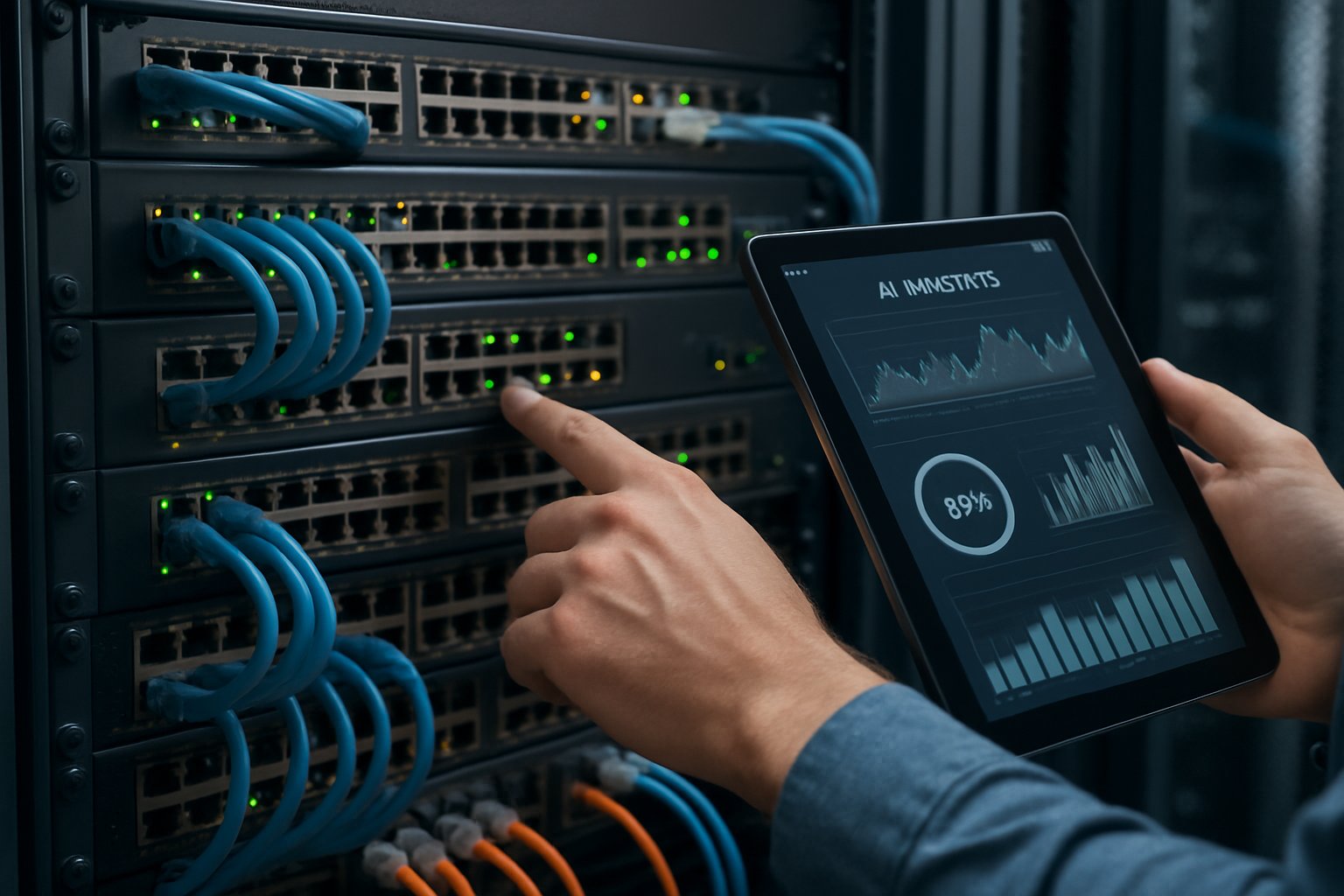
The program promises open models, curated datasets, accessible compute, and telecom-specific benchmarks.
Industry giants AT&T and AMD joined as founding supporters, alongside universities and vendors worldwide.
Consequently, operators see a structured path toward domain-trained artificial intelligence that genuinely understands networks.
Analysts argue that only 16 percent of generative deployments today touch core network operations.
Instead, most projects focus on customer chatbots and marketing.
Therefore, the new collaboration aims to redirect innovation toward operational value.
In contrast, that transformation will redefine Networking for the coming decade.
This article examines why Telco AI matters, how the launch works, and what comes next for infrastructure providers.
Industry Needs Telco AI
Telecom networks generate complex data from radio, transport, and core layers.
Moreover, general language models misinterpret acronyms, logs, and 3GPP documents, causing dangerous hallucinations.
GSMA research shows that operational deployments lag because accuracy, latency, and compliance demands remain unmet.
Open Telco AI proposes domain-fine-tuned models validated against seven public benchmarks.
Consequently, operators expect faster fault isolation, safer automation, and multilingual support across their footprints.
These factors create an urgent industry demand.
However, meeting that demand requires coordinated technology and governance steps.
With needs defined, the launch structure warrants close inspection.
Launch Details And Supporters
GSMA centralized project assets on the portal gsma.com/open-telco-ai.
Additionally, the site lists contributors, license terms, and a dynamic leaderboard called the Telco Capability Index.
AT&T donated a family of open telecom language models under permissive licenses.
Meanwhile, Khalifa University provided RFGPT, a radio-frequency model that interprets spectrum behavior.
AMD partnered with cloud specialist TensorWave to supply on-demand GPU clusters for training and inference.
The kickoff also launched community challenges, including a troubleshooting contest that attracted more than 1,000 registrations.
Furthermore, winners were announced live at MWC26, demonstrating early momentum.
This supporter network signals broad ecosystem commitment.
Consequently, technical building blocks are already moving into production labs.
Understanding those blocks clarifies how the promise will materialize.
Core Technology Building Blocks
Four pillars underpin the initiative: models, datasets, compute, and benchmarks.
Open Telco AI hosts each asset with transparent licensing and version control.
Key releases unveiled in Barcelona include:
- AT&T model suite spans 7-65 billion parameters.
- Khalifa University offers RFGPT for RF troubleshooting.
- Seven benchmarks test logs, standards, and agentic skills.
- Datasets appear on Hugging Face with multilingual labels.
- AMD GPUs arrive via TensorWave for training and inference.
Moreover, compute partnerships matter because McKinsey pegs the GPU-as-a-Service opportunity at up to $70 billion by 2030.
Professionals can validate related skills through the AI Network Security™ certification.
It explores secure model deployment on operator Infrastructure.
Such assets integrate smoothly with existing Networking toolchains used inside operator NOCs.
These building blocks transform abstract plans into tangible code, data, and silicon.
However, market value hinges on broader economic dynamics.
Therefore, the next section explores commercial implications.
Economic And Market Impact
Operators face rising traffic but stagnant revenue.
Consequently, they search for new monetization paths, especially within Infrastructure assets.
GPU resale and managed inference rank high among proposed services.
McKinsey estimates telcos could capture $35-70 billion from GPUaaS by 2030.
Furthermore, automation driven by Telco AI promises lower OPEX through predictive maintenance and closed-loop orchestration.
GSMA argues that transparent benchmarks encourage healthy competition and avoid hyperscaler lock-in.
In contrast, siloed proprietary models would erode operator bargaining power.
Monetizing edge Networking resources drives new service lines.
The model repository relies on open platform standards to stay portable.
The economic case therefore rests on open collaboration and standardized evaluation.
With finances covered, governance and risk require equal attention.
Subsequently, safety considerations come into focus.
Governance Risks And Safety
Telecom data includes subscriber metadata, location, and sensitive performance logs.
Therefore, strict privacy compliance under GDPR and regional laws remains mandatory.
Model hallucinations pose further danger because incorrect troubleshooting actions can disrupt live services.
GSMA mitigates risks through the Telco Capability Index and mandatory evaluation scripts.
Additionally, human-in-the-loop review and safeguards are built into challenge rules.
AT&T publicly documents provenance workflows to assure data lineage and bias checks.
Nevertheless, smaller operators may lack similar resources, spurring demand for managed governance services.
Robust oversight enhances trust and accelerates adoption timelines.
Consequently, strategic planning becomes the next logical step for carrier leadership.
The following section outlines actionable priorities.
Next Steps For Operators
Executives should map high-value network use cases to available open models.
Moreover, internal data pipelines require cleansing, annotation, and secure storage before integration.
Cross-functional squads must pair domain engineers with data scientists.
Meanwhile, participation in GSMA challenges gives staff hands-on exposure to evolving benchmarks.
Infrastructure alignment matters as well.
Edge sites need adequate power, cooling, and orchestration for AMD or alternative accelerators.
Consequently, partnership with specialized GPU providers can shorten deployment cycles.
Finally, teams must track Telco AI roadmap updates and contribute back to data or code repositories.
These steps create a virtuous loop of adoption and feedback.
However, sustained collaboration will determine long-term success.
The concluding section synthesizes key insights.
Conclusion And Future Outlook
Open collaboration around Telco AI marks a strategic inflection point for telecom engineering.
Moreover, the coalition has paired community energy with concrete evaluation tools, avoiding theoretical hype.
AT&T, AMD, and academic labs already supply models, compute, and data, while Networking partners integrate pipelines.
Consequently, operators that prepare Infrastructure and governance today will capture early efficiencies tomorrow.
Telco AI will not replace human expertise, yet it will amplify troubleshooting speed and service personalization.
Nevertheless, sustained investment in safety guardrails remains non-negotiable.
Leaders should join upcoming community challenges, contribute code, and pursue domain certifications.
For example, the linked program sharpens secure AI deployment skills.
Therefore, explore the certification today and strengthen your Telco AI readiness.


