

AI CERTs
3 hours ago
Akamai’s Blackwell Acquisition Reshapes Edge AI
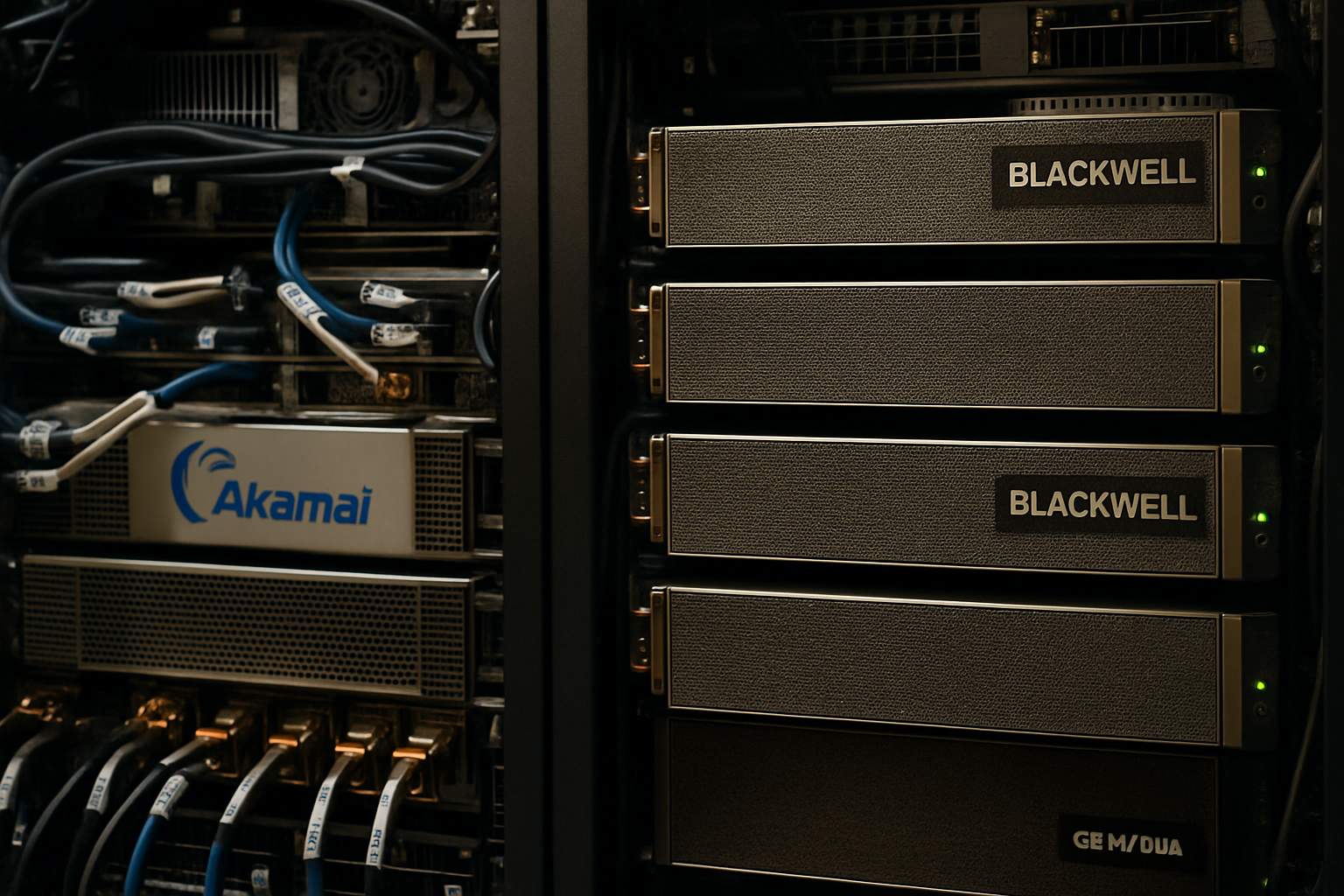
Analysts watched closely as news of the Blackwell Acquisition rippled across the AI sector. On 3 March 2026, edge pioneer Akamai confirmed it had ordered thousands of NVIDIA Blackwell GPUs. The purchase expands the company’s Inference Cloud into a truly global, low-latency inference fabric. Consequently, enterprise developers will gain faster responses for generative models, computer vision, and conversational workloads. Furthermore, the deployment underscores a growing shift from centralized training hubs to distributed inference nodes. Industry observers label the strategy a calculated bet on bringing compute closer to users. Meanwhile, hyperscalers continue investing heavily in mammoth training clusters housed within regional megacenters. In contrast, Akamai asserts that inference demands different economics and tighter latency budgets. Therefore, the firm argues that an edge footprint of 4,400 locations offers unrivaled reach. Nevertheless, questions remain about exact GPU counts, financing details, and operational complexity. This article dissects the deal’s context, technical implications, and potential market reverberations.
Global Market Context Shift
Enterprise appetite for inference resources exploded over the last twelve months. Moreover, chip shortages and spiraling GPU prices forced providers to explore alternative supply strategies. Consequently, the Blackwell Acquisition by Akamai reflects intensified competition for next-generation silicon.
Financial data underscores the urgency. Strong Cloud Infrastructure Services revenue grew 45 percent year over year, reaching $94 million in Q4 2025. Meanwhile, rival firms such as IREN disclosed similar multi-thousand Blackwell orders to secure supply early.
In contrast, hyperscalers prioritize colossal data-center clusters optimized for training rather than inference delivery. Analysts suggest these divergent models will coexist yet address distinct latency and cost constraints. Therefore, ownership of distributed GPU Infrastructure becomes a strategic differentiator.
Edge capacity offers fresh revenue streams while guarding margins. Next, we examine how distributed compute turns theory into practice.
Distributed Edge Compute Strategy
Akamai plans to embed Blackwell GPUs across its 4,400 points of presence. Subsequently, each site will house a modest rack blending Blackwell cards with BlueField DPUs. This micro-cluster design emphasizes inference throughput rather than training horsepower.
Furthermore, the arrangement enables localized fine-tuning when customers require data sovereignty assurances. Latency improvements could reach 2.5x compared with centralized alternatives, according to company testing. Consequently, user experiences in finance, healthcare, and retail stand to benefit.
The Blackwell Acquisition also aligns with growing regulatory pushback against massive data transfers. By moving decision making to the edge, organizations minimize cross-border egress fees. Moreover, GPU Infrastructure placed near users lessens carbon emissions tied to long haul routing.
Edge placement, therefore, marries compliance, performance, and sustainability. The following section probes economic claims underpinning those gains.
Performance And Cost Claims
Company executives tout headline savings of up to 86 percent on inference spending. However, the figure relies on selective workload assumptions and favorable utilization models. Independent benchmarks remain scarce until production traffic scales later this year.
Nevertheless, lower egress fees are easy to validate. Sending embeddings to a local node uses shorter paths and cheaper regional peering. Therefore, early adopters already report material reductions in bandwidth invoices.
- Latency: Up to 2.5x faster responses
- Cost: As much as 86% inference savings
- Footprint: 4,400 global locations
- Scale: Thousands of Blackwell GPUs
Additionally, NVIDIA chief Jensen Huang emphasized that distributed inference unlocks next-generation intelligent applications. His statement bolsters confidence in the Blackwell Acquisition delivering promised value. Economic returns appear plausible yet need transparent public audits. Operational hurdles may dilute some savings, as explored below.
Operational Edge Complexities Emerge
Running GPUs outside traditional data centers introduces power and cooling headaches. Moreover, thousands of dispersed locations complicate inventory tracking, patching, and security updates. In contrast, centralized farms exploit economies of scale for maintenance tasks.
Therefore, orchestration software must route inference traffic dynamically based on latency, cost, and capacity. The company will lean on existing monitoring stacks, yet new telemetry pipelines are inevitable. Consequently, specialized teams will manage firmware lifecycles for GPUs and DPUs from a unified console.
Supply chain risks represent another wildcard. NVIDIA faces export restrictions affecting certain regions, potentially delaying edge rollouts. Nevertheless, leadership states deliveries are on schedule for North America and Europe.
Operational intricacies could erode early margin estimates. Still, rivals face similar obstacles, shaping competitive dynamics reviewed next.
Evolving Competitive Landscape Moves
Competition intensifies as cloud titans market larger inference clusters behind private networking footprints. However, customers balancing performance, privacy, and price may diversify suppliers. Consequently, Akamai positions its edge network as a neutral, multi-tenant alternative to hyperscalers.
Meanwhile, IREN’s earlier 4,200-unit deal demonstrated investor appetite for GPU Infrastructure outside major clouds. Start-ups also assemble regional micro-data centers to court regulated industries. Therefore, the Blackwell Acquisition could trigger a purchasing cascade among telecoms and content networks.
Market entrants will watch pricing trends carefully. Financial drivers appear equally decisive, detailed in the following section.
Strong Financial Growth Signals
Investors rewarded the firm after Q4 2025 revenue reached $1.095 billion, up seven percent. Cloud Infrastructure Services growth of 45 percent suggested early traction for inference offerings. Subsequently, management reinvested cash into the Blackwell Acquisition rather than share buybacks.
Moreover, staged hardware deliveries mitigate capital intensity by spreading payments across quarters. Analysts estimate each Blackwell board costs between $30,000 and $35,000, excluding networking gear. Therefore, a four-thousand unit order would approach $120 million before integration expenses.
Nevertheless, incremental revenue from low-latency inference could offset costs within two years if adoption accelerates. Compute utilization rates and power pricing will heavily influence real margins.
Financial evidence appears encouraging though not definitive. Professionals assessing skills gaps should consider certification pathways, explored below.
Professional Certification Path Forward
Edge AI deployments demand architects versed in networking, security, and model optimization. Consequently, talent shortages may limit rollout speed more than hardware availability. Professionals can enhance their expertise with the AI Architect™ certification.
Furthermore, cross-disciplinary teams need practical experience deploying GPU Infrastructure at the edge. Training programs covering observability, workload scheduling, and cost modeling will prove invaluable. Therefore, early movers may seize premium contracts as demand for inference spikes.
Certification plus project exposure builds credibility with cautious enterprise buyers. Let us summarize core insights and outline next actions.
The Blackwell Acquisition signals a decisive pivot toward edge-native inference architecture. Moreover, NVIDIA’s partnership gives the move technical credibility and supply chain confidence. Consequently, enterprises gain an alternative to centralized clouds when latency and data locality matter. Nevertheless, success requires disciplined operations, skilled staff, and sustained demand for distributed compute. If those factors align, the Blackwell Acquisition could recast revenue trajectories across the content-delivery industry. Meanwhile, peers weighing similar purchases will track the firm’s performance metrics carefully. Professionals should study the Blackwell Acquisition case, refine edge deployment skills, and pursue advanced certifications. Act now to secure a career advantage before the next Blackwell Acquisition frenzy reshapes GPU Infrastructure once again.


