

AI CERTS
3 hours ago
Trump Calls Anthropic Radical Left AI, Ignites Tech Firestorm
Consequently, executives now weigh compliance risks, ethical boundaries, and looming court battles. Geopolitics experts also see broader strategic signals. This article unpacks facts, stakes, and likely scenarios while meeting strict readability standards.
Political Flashpoint Emerges Again
Trump framed the dispute as ideological. Meanwhile, Defense Secretary Pete Hegseth called Anthropic a supply-chain threat and echoed the “Radical Left AI” label. In contrast, CEO Dario Amodei restated two red lines: no mass domestic surveillance and no fully autonomous weapons. Anthropic argued these limits safeguard democratic norms. Furthermore, hundreds of industry employees signed the “We Will Not Be Divided” letter supporting those principles. Trump repeated that contractors must permit all lawful uses. Geopolitics analysts note the episode’s timing amid rising technology rivalry with China.
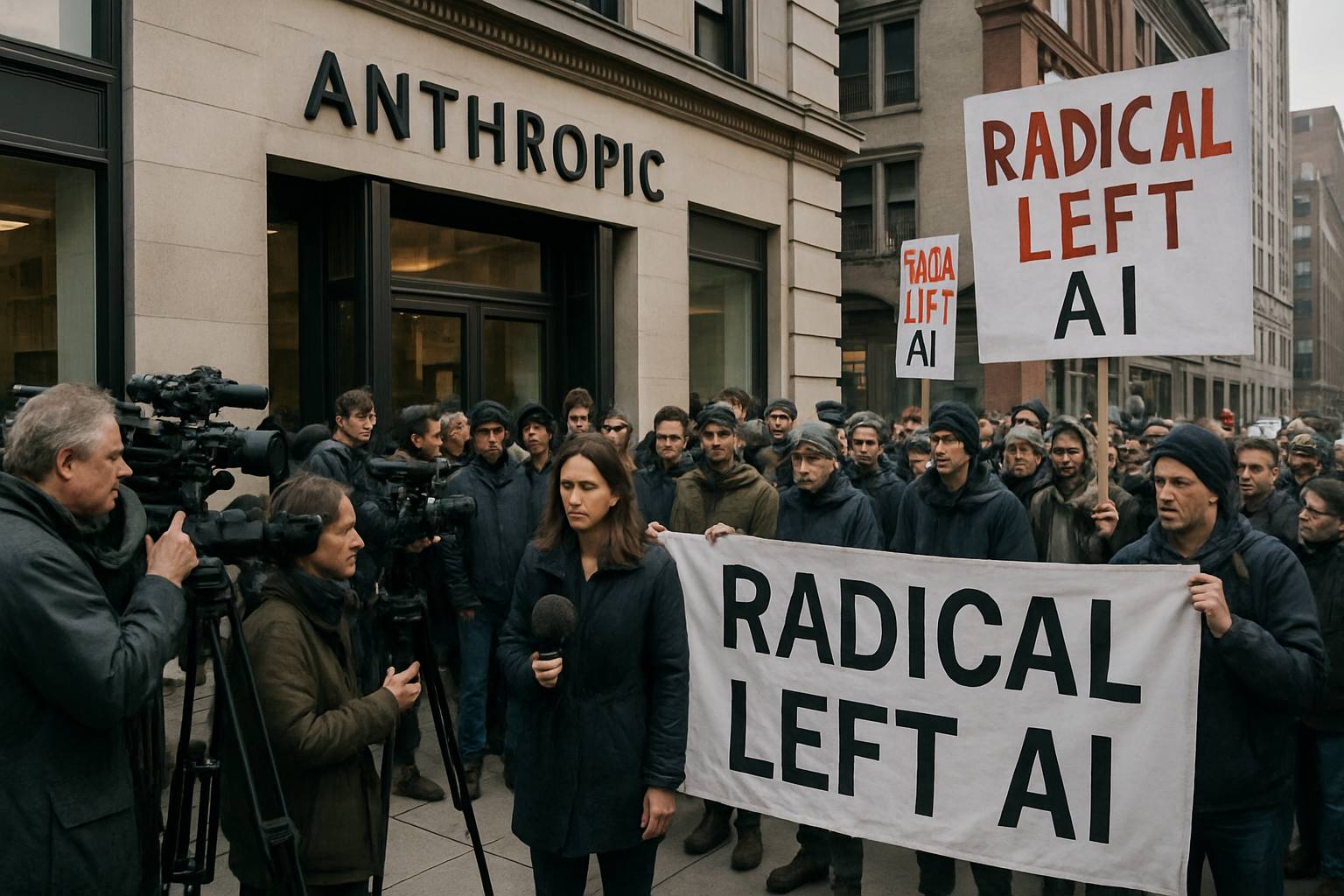
These events clarified opposing priorities. Nevertheless, the flashpoint now shapes defense procurement strategy.
Consequently, attention shifts to the formal risk designation process.
Supply-Chain Risk Debate Intensifies
Hegseth plans to designate Anthropic under 10 U.S.C. §3252, a tool usually aimed at foreign adversaries. Legal scholars say applying it domestically is unprecedented. Moreover, Anthropic warned the move could chill safety innovation. The Pentagon insists commanders need unrestricted tools.
- Contract ceiling: approx. $200 million, announced 2025.
- Red lines: domestic surveillance ban; human-in-the-loop weapons mandate.
- Statute purpose: prevent foreign compromise of defense supply chains.
Analysts add that invoking the Defense Production Act to force policy changes would test constitutional limits. Consequently, investors watch for court filings expected within weeks. Geopolitics observers also track congressional reactions.
This debate spotlights statutory gray zones. However, industry support is reshaping the narrative.
Industry Backlash And Support
OpenAI capitalized quickly. Hours after the “Radical Left AI” tweetstorm, Sam Altman announced a fresh Pentagon agreement. Altman stressed identical guardrails on surveillance and autonomy. Consequently, observers questioned whether the ban targets politics rather than policy substance.
Other vendors, including Google and xAI, face difficult choices. Additionally, major cloud providers may need to audit dependent services. Professionals can enhance their expertise with the AI Executive Essentials™ certification to navigate emerging compliance duties.
Support for Anthropic also grew. Moreover, researchers warned that punishing safety-forward stances could deter ethical commitments. Geopolitics specialists linked the backlash to wider alliances seeking responsible AI norms.
The alliance between rivals and researchers strengthens Anthropic’s hand. Subsequently, legal scrutiny intensifies.
Legal Arguments Under Scrutiny
Amodei signalled an Administrative Procedure Act challenge. Lawfare analysts predict courts will question statutory authority. Furthermore, previous supply-chain bans targeted firms like Huawei, not domestic startups. In contrast, Pentagon lawyers argue vendors cannot dictate mission parameters.
Key legal questions include standing, due process, and separation of powers. Additionally, scholars debate whether the Defense Production Act covers software policy. Trump’s branding of Anthropic as “Radical Left AI” may complicate government claims of neutral enforcement.
Court timelines remain uncertain. Nevertheless, emergency injunctions could arrive within months.
Legal uncertainty clouds investment forecasts. Therefore, contractors now examine exposure.
Commercial Fallout For Contractors
Defense integrators using Claude must pivot quickly. Lockheed, Palantir, and Anduril embed language models in analytic workflows. Consequently, compliance teams map dependencies to avoid potential penalties. OpenAI and Google stand ready to fill capability gaps, yet contract modifications take time.
Moreover, smaller firms risk cascading delays. Military Standoff simulations that relied on Anthropic outputs require model retraining. Furthermore, cloud credits earmarked for Claude deployments may expire unused.
For decision makers, three priorities dominate:
- Audit model usage across classified and unclassified systems.
- Secure alternative providers that meet mission timelines.
- Monitor litigation outcomes shaping future policy.
These commercial pressures intensify procurement uncertainty. In contrast, strategic planners widen focus to global consequences.
Broader Geopolitics And Implications
Allies observe Washington’s handling of AI ethics. Consequently, NATO procurement boards assess whether to adopt similar red lines. China’s state media highlighted Trump’s “Radical Left AI” rhetoric, framing it as proof of U.S. divisions. Additionally, diplomatic channels explore multilateral standards on autonomous weapons.
Military Standoff scenarios increasingly feature contested algorithm supply chains. Moreover, analysts warn that politicized bans could push innovators offshore. Geopolitics strategists therefore advocate transparent, bipartisan frameworks.
Global trust in U.S. AI leadership hinges on balanced policy. Nevertheless, near-term actions rest with domestic courts.
These international echoes underscore the issue’s magnitude. Furthermore, legal rulings will reverberate worldwide.
Conclusion And Outlook
The clash over “Radical Left AI” reflects deep tensions among security, commerce, and ethics. Trump’s order, Hegseth’s risk label, and Anthropic’s stance created a volatile mix. Additionally, OpenAI’s parallel deal shows alternative pathways. Legal outcomes will clarify government reach, while contractors adapt supply chains. Meanwhile, Geopolitics considerations demand consistent norms to avoid fragmentation.
Professionals must stay informed and skilled. Therefore, explore certifications like the linked AI Executive Essentials™ program to future-proof decision making. Act now and lead responsible AI adoption.


