

AI CERTs
3 hours ago
SHERPA AI Drives Tumor Study Consortia Momentum
Consortium based tumor research has entered a new phase. Across Europe and North America, multi-site studies now dominate early oncology exploration. At the center of this shift, SHERPA AI analytics guide partners toward faster insights. Consequently, clinicians, regulators, and investors are revising expectations for trial speed and scale. However, the promise arrives alongside real continuity risks. This article examines the latest consortium launches, the enabling technology stack, and the funding pressures. Throughout, we show where robotics and adaptive protocols converge. Moreover, we outline strategic steps executives should consider next. All facts derive from public sources dated within the last year. Meanwhile, expert quotes illustrate both optimism and caution.
Consortia Model Gains Traction
Traditional single-center trials struggle with scale and cost. In contrast, consortia share infrastructure, data, and governance to streamline enrollment. Consequently, multi-arm designs answer more questions with fewer patients.
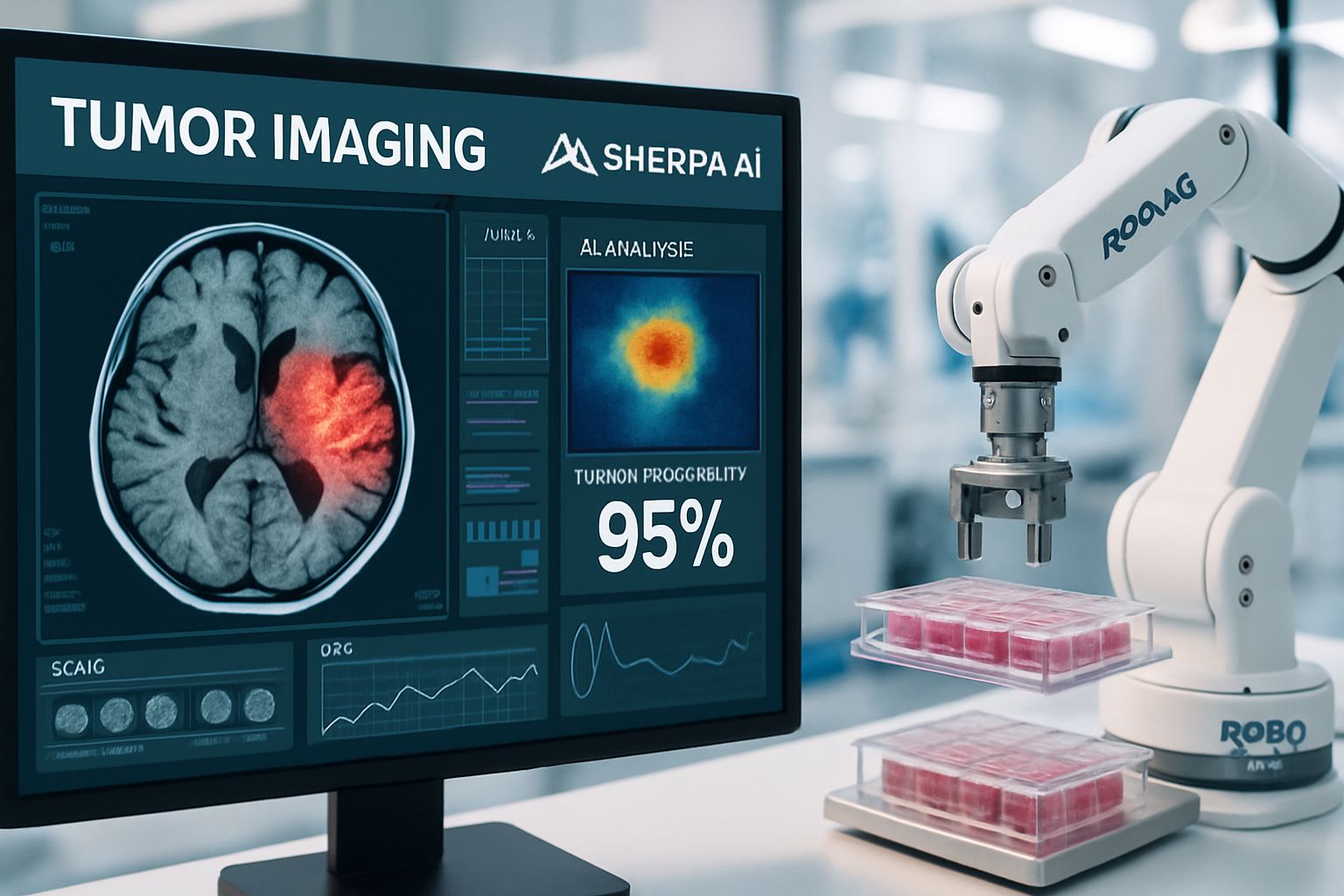
GBM AGILE, CONNECT, and the new PreciseOnco initiative typify this momentum. Furthermore, the model attracts multidisciplinary talent from medical physics to regulatory law. SHERPA AI supports these groups by unifying heterogeneous data across sites.
Shared infrastructure accelerates insight generation. Next, we detail the largest European effort to date.
PreciseOnco Funding And Scope
PreciseOnco launched officially in February 2026 with a EUR 14.9 million IHI grant. Its total five-year budget reaches roughly EUR 23.9 million. Royal Philips coordinates twenty partners spanning hospitals, universities, and medical device makers.
Spectral imaging sits at the heart of the program. Meanwhile, Quantum Surgical and IGEA contribute robotics for needle placement in liver and lung lesions. SHERPA AI pipelines fuse the imaging streams with peri-operative data for real-time guidance.
Five labelled studies—VISTA, SPOT ON, HORA EST HCC 2, SPECTRA-L, and LASER—will test the workflow. Additionally, each protocol will measure procedure time, margin accuracy, and safety outcomes.
PreciseOnco blends funding and data under a single governance charter. Yet, neuro-oncology groups pursue a complementary strategy across the Atlantic.
CONNECT Trial Umbrella Update
The CONNECT consortium extends an existing pediatric network into adolescent and young adult neuro-oncology. Moreover, its TarGeT umbrella uses a master protocol to evaluate drug combinations for high-grade glioma.
Rigel Pharmaceuticals added the olutasidenib maintenance arm, TarGeT-D, in late 2025. First patient enrollment occurred in October 2025, triggering a milestone payment. Rigel committed up to three million dollars in cash and materials for this arm.
SHERPA AI dashboards harmonize molecular sequencing, imaging, and clinical endpoints across participating hospitals. Consequently, site investigators monitor accrual and safety without manual spreadsheet merges.
CONNECT demonstrates how umbrella designs accelerate neuro-oncology hypothesis testing. Adaptive methods also improve operational efficiency in other tumor types.
Adaptive Trials Driving Efficiency
Adaptive platform trials adjust arms based on interim analyses. Therefore, promising therapies graduate sooner, and ineffective ones close early. GBM AGILE remains the reference implementation, with more than forty global sites.
SHERPA AI algorithms feed continuous data to Bayesian decision engines that guide arm transitions. Moreover, robotics enabled workflows cut procedural variance, improving statistical power.
Key efficiency metrics emerge across platforms.
- Shared control cohorts reduce required enrollment by up to 30%
- Real-time modality verification lowers repeat procedure rates
- Centralized clinical data leads to faster regulatory submissions
Collectively, these numbers attract both biotech and public grant funding. Adaptive frameworks therefore increase speed and capital efficiency. However, funding sources can still disappear unexpectedly.
Funding Volatility Raises Concerns
In August 2025, the Pediatric Brain Tumor Consortium lost critical NCI support. Subsequently, several pediatric trials halted enrollment, worrying medical clinicians and families.
Consortium leaders warned that data continuity could suffer if transfers dragged on. Nevertheless, temporary bridges were arranged through the Pediatric Early Phase Clinical Trials Network.
SHERPA AI risk dashboards now flag single-source funding dependencies for new proposals. Furthermore, financial scenario modeling helps boards diversify grants and commercial partnerships.
Funding fragility threatens even the best protocols. Technical innovation may mitigate some risks by automating expensive workflows.
Technology Stack Behind Innovation
Spectral imaging distinguishes iodine, calcium, and soft tissue during ablation. Consequently, surgeons confirm margin completeness without waiting for pathology. Robotics deliver sub-millimeter accuracy, especially in moving organs like the liver.
SHERPA AI integrates these modalities through federated learning and privacy-preserving analytics. In contrast, legacy systems forced manual DICOM exports and local spreadsheets.
Professionals can upskill through the AI+ Legal™ certification. Moreover, legal literacy accelerates contract negotiation across multi-jurisdictional studies.
Technology convergence relies on data standards, robotic precision, and explainable algorithms. Executives now need clear action steps.
Strategic Takeaways For Leaders
First, map funding sources and build redundancy before first patient in. Secondly, insist on SHERPA AI interoperability across sites to avoid vendor lock-in. Thirdly, recruit imaging physicists and robotics engineers early to refine protocols.
Additionally, adopt adaptive designs where endpoints allow responsive statistics. In contrast, fixed designs hinder iteration and waste scarce patient data.
The following checklist synthesizes expert advice.
- Secure multi-year grant matching
- Implement federated audit trails
- Plan early for regulatory harmonization
Consequently, adherence improves speed, cost, and patient access. Strategic discipline converts technology promise into clinical impact. We close with a concise summary and next actions.
Consortia like PreciseOnco and CONNECT illustrate rapid progress in tumor research. SHERPA AI, robotics, and spectral imaging form the technical backbone of this shift. However, funding volatility and governance complexity still threaten program continuity. Therefore, leaders must diversify revenue, embrace adaptive statistics, and train cross-functional teams. Moreover, certifications such as the AI+ Legal™ program expand essential compliance skills. Consequently, SHERPA AI adoption signals credibility to partners and regulators. Take decisive action now and position your organization at the forefront of precision oncology.


