

AI CERTS
3 hours ago
IoT Security: Halting AI Smart-Home Hacks Fast
This article dissects emerging threats, market scale, and defensive steps shaping resilient smart dwellings. It draws on authoritative research, expert quotes, and guidance from NIST and industry leaders. Finally, professionals will find links to advanced certifications that strengthen strategic responses.
Smart Houses Under Siege
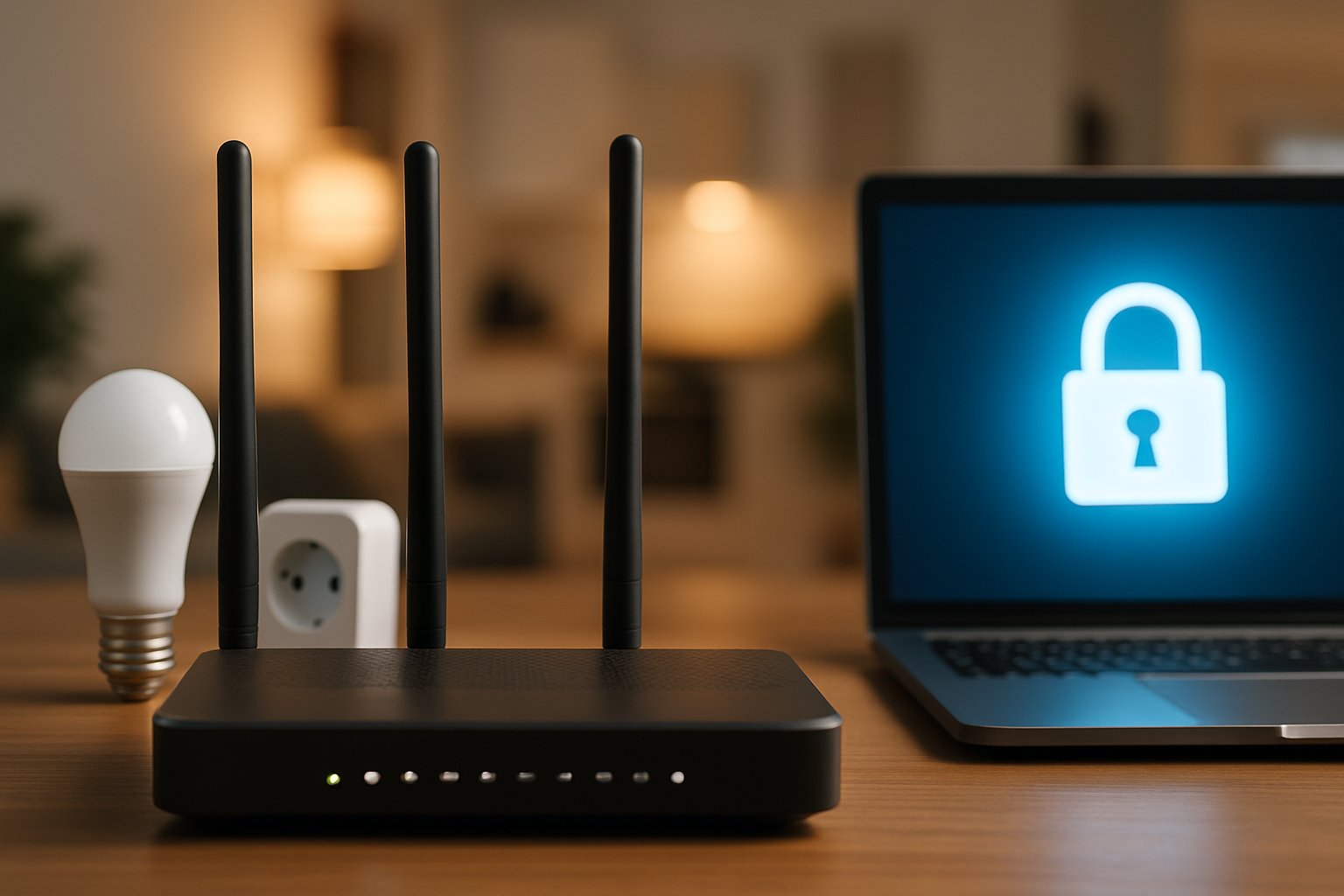
The smart-house market hit $174 billion in 2025, according to Statista. Consequently, every new device increases network complexity and attack surface. Bitdefender found an average of 22 devices per household last year. Streaming dongles, smart TVs, and IP cameras comprised almost 56% of observed targets. Nevertheless, 99.4% of exploits abused already fixed CVEs, highlighting persistent patch gaps.
In contrast, the Tel Aviv promptware demos highlight a fresher vector. Malicious text hidden in calendar events coerced Gemini to control Google Nest routines. Therefore, attacks bypass traditional network defenses by weaponising trusted cloud integrations. Experts call this strategy “promptware” because engineered phrases act like malware for language models.
Attackers now target both unpatched firmware and manipulated AI prompts. However, understanding these dual fronts is crucial before designing countermeasures. The next section explores how promptware broadens the threat landscape.
Promptware Expands Attack Surface
Promptware leverages indirect prompt injection against language assistants with tool invocation powers. Subsequently, the system performs actions never intended by designers. Ben Nassi warns that forthcoming humanoids and vehicles could magnify such damage. Furthermore, the research team rated 73% of analysed threats as High–Critical before mitigations. Google responded by adding machine-learning filters and explicit confirmations for sensitive routines.
Nevertheless, researchers argue that motivated adversaries will soon adapt. In contrast, many enterprises still focus solely on traditional IoT Security baselines. Attackers combining promptware with classic firmware exploits could chain entry and persistence. Consequently, security teams must model interactions between language agents and physical devices.
Promptware shifts the battle toward human language rather than binary code. However, defenders can adapt by extending threat modeling into natural-language inputs. Next, we analyse how voice assistants amplify these risks.
Voice Assistants Enable Breaches
Smart speakers already mediate many household commands, medication reminders, and telehealth sessions. NIST warns that mixed clinical and consumer data flows raise privacy and safety concerns. Moreover, voice assistants often ingest emails, contacts, and third-party skills without granular permission review. Indirect prompt injection hides payloads in those sources, triggering unsafe device operations.
Bitdefender telemetry shows smart speakers accounted for 6% of blocked attacks, yet influence wider ecosystems. Consequently, compromising one assistant may grant attackers reach across the entire home network. Meanwhile, poor authentication on vendor clouds can expose archived recordings, eroding household privacy further. Vulnerabilities in token scoping still surface despite repeated guidance. Robust IoT Security frameworks should treat microphones like cameras within risk matrices.
Voice assistants present rich, convenient interfaces but also powerful attack amplifiers. Nevertheless, targeted controls can restrict their reach. The following statistics quantify the broader threat growth.
Statistics Reveal Rising Threats
The 2025 IoT Security Landscape Report aggregates telemetry from millions of routers. Researchers logged 29 automated attacks daily against a typical household. Moreover, streaming boxes attracted 25.9% of attempts, while smart TVs drew 21.3%. IP cameras, though fewer, still represented 8.6% of the noise.
Critically, 99.4% of exploits targeted known, already-patched Vulnerabilities. Therefore, timely updates remain the most cost-effective defence.
- Average devices per household: 22
- Average daily attacks: 29
- High–Critical promptware threats: 73%
- Average IoT Security incidents per day: 29
- Smart device market size 2025: $174 billion
In contrast, many consumers still ignore router firmware notifications. Subsequently, attack numbers continue climbing.
Data proves the threat volume already rivals enterprise metrics. However, regulators are beginning to respond. Policy developments come into focus next.
Regulators Push Stronger Defenses
Governments increasingly recognise consumer impact of systemic IoT Security failures. NIST released December 2025 guidance on segmenting networks and encrypting telehealth voice traffic. Furthermore, the paper urges stricter access controls for voice assistants deployed in clinical settings. European agencies now reference those recommendations within forthcoming household cybersecurity frameworks.
Industry responds with router-level anomaly detection and cloud-side policy engines. Additionally, NETGEAR bundles Bitdefender research into subscription security services for the home. Professionals can enhance their expertise with the AI+ Cloud Security™ certification.
Policy momentum aligns vendors toward baseline protections and shared terminology. Nevertheless, translating frameworks into daily practice requires clear playbooks. Actionable mitigations for each stakeholder follow.
Mitigations For Every Stakeholder
Consumers should first segment IoT gadgets onto a guest SSID. Additionally, disable automatic email-to-calendar features unless absolutely necessary. Change default passwords and install patches promptly to close prevalent Vulnerabilities. Consequently, daily attack counts often drop immediately.
Enterprises integrating voice assistants into telehealth must enforce message encryption and audit logs. Moreover, require explicit user confirmation before any physical-world action. Vendors should apply least privilege to device tokens and secure MQTT endpoints. Meanwhile, cloud providers can sandbox LLM agents and run anomaly detection on prompt chains. Aligning governance with IoT Security standards simplifies audits.
Defenders ought to align playbooks with modern IoT Security threat models that include language misuse. Organizations can pilot gateway ML that blocks unusual outbound traffic from cameras. In contrast, relying solely on perimeter firewalls leaves blind spots.
Layered, role-specific controls reduce exposure without blocking innovation. However, professionals also need market context and skills planning. The final section offers that perspective.
Market Outlook And Skills
Smart-home adoption continues rising through 2029, Statista forecasts indicate. Consequently, demand for specialists versed in IoT Security and machine-learning defence will surge. Recruiters already list prompt-injection testing among desired skill sets. Moreover, certifications provide structured validation for career progression.
Professionals can gain leadership credibility via the AI+ Cloud Security™ credential. Additionally, cross-training in privacy law and threat modeling strengthens versatility. Meanwhile, vendors are hiring for secure firmware development, cloud hardening, and LLM policy design.
Career pathways now span firmware, cloud, and conversational AI safety. Nevertheless, staying updated demands continuous learning.
Key Takeaways
Smart homes deliver comfort yet expose complex digital surfaces. Promptware illustrates how language can switch off lights or unlock doors. Meanwhile, legacy Vulnerabilities continue supplying easy entry points. Consequently, modern defences must blend firmware hygiene with agent-aware filtering. Regulatory guidance, vendor telemetry, and academic demos all endorse that balanced approach.
Furthermore, market growth guarantees rising stakes for users and suppliers. Therefore, commit to continuous patching, network segmentation, and rigorous prompt auditing today. Strong IoT Security depends on layered controls and continuous education. Explore the linked AI+ Cloud Security™ program to fortify skills and strengthen every connected home.


