

AI CERTS
4 hours ago
Perplexity Demo Canceled Raises Industry Doubts
This article unpacks the timeline, examines reported product flaws, and assesses broader trust issues emerging from the last-minute cancellation of the scheduled press briefing.
Canceled Demo Timeline Details
TechCrunch revealed the cancellation on 27 February 2026. Previously, Perplexity had scheduled a press briefing to showcase Computer, its newest agent platform. However, unnamed executives halted the Perplexity Demo only hours before the session. They reportedly discovered critical product flaws during final rehearsal. In contrast, marketing pages still declared the product "shipped" to Max subscribers. Meanwhile, other outlets repeated launch claims without noting the last-minute cancellation.
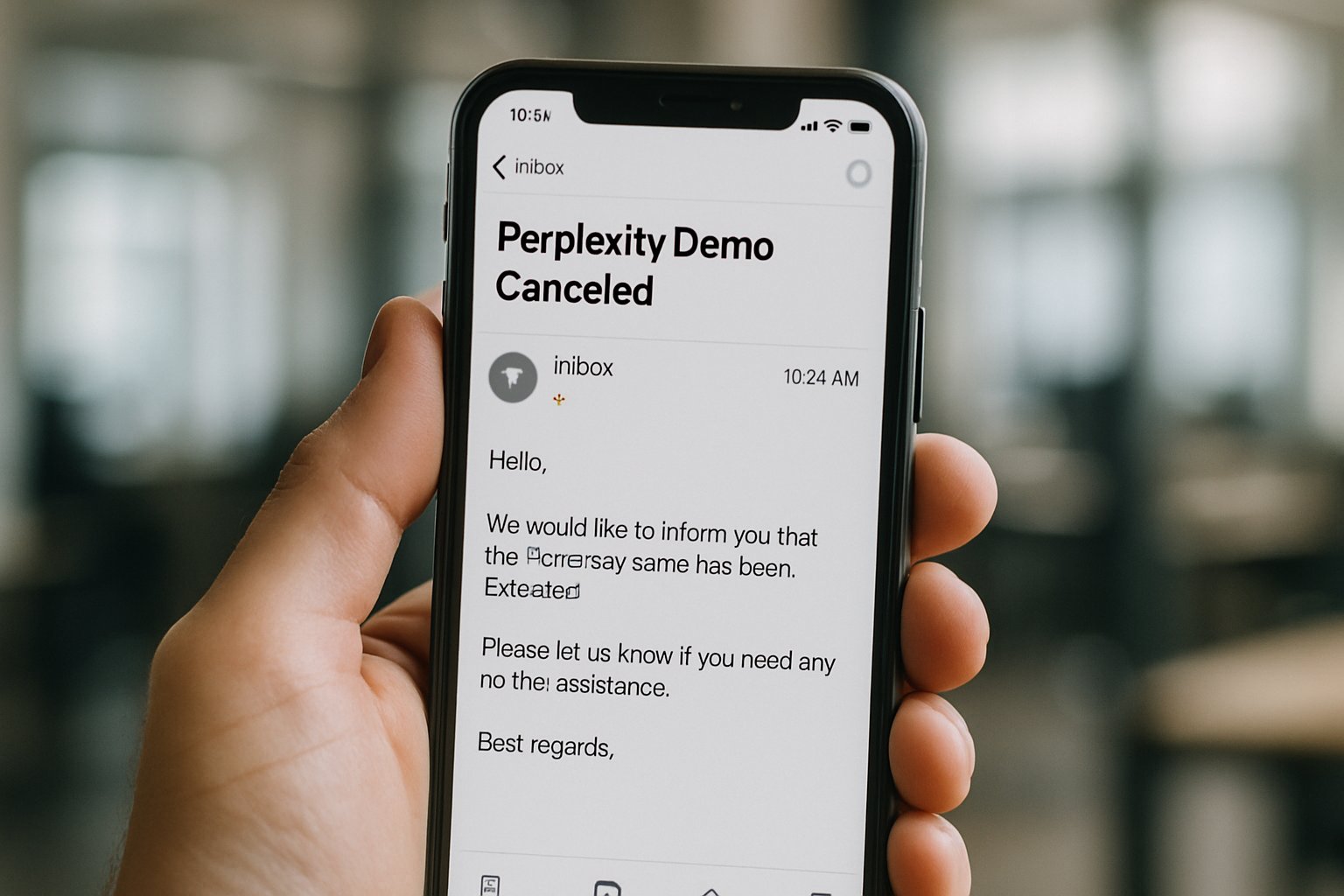
These mixed signals muddled market perception. Nevertheless, the timeline underscores how quickly engineering surprises can unravel polished narratives. The confused rollout sets the stage for deeper analysis. Consequently, attention turns to the product’s stated capabilities.
Product Promises In Depth
Perplexity Computer orchestrates 19 frontier models in parallel. Additionally, it decomposes user goals into subtasks, spawning cloud-hosted agents with browser and file access. Subscribers on the $200-per-month Max tier receive 10,000 monthly credits plus a 20,000-credit bonus. Therefore, buyers expect scalable autonomy across Gmail, Slack, Notion, and other tools.
Proponents argue multi-model routing improves accuracy and cost efficiency. Moreover, long-running workflows could handle research, dashboard creation, and scheduled monitoring without human babysitting. Professionals can further bolster skills with the AI Prompt Engineer™ certification. However, the terminated Perplexity Demo left promised benefits unverified.
- 19 integrated models announced
- $200 monthly price for Max tier
- 10,000 recurring credits per subscriber
- Cloud sandbox connecting common workplace apps
These specifications sound impressive. Yet, their real-world performance remains unclear. Subsequently, observers asked what specific product flaws derailed the showcase.
Reported Product Flaws Details
TechCrunch attributed the last-minute cancellation to flaws uncovered during rehearsal. Nevertheless, neither Perplexity nor attending journalists have listed the exact issues publicly. Potential culprits include task decomposition errors, stalled asynchronous jobs, or broken browser automations. Furthermore, coordinating 19 models amplifies latency and resource contention, which can surface only under live stress.
The company’s silence fuels speculation about deeper reliability gaps. Consequently, critics argue that emerging agentic stacks demand rigorous validation before high-stakes demos. The missing transparency also inserts another recorded instance of Perplexity Demo confusion. Meanwhile, competing vendors note the episode when pitching their supposedly sturdier solutions.
Engineers watch closely because hidden product flaws can escalate into security incidents. Therefore, understanding the failure modes is essential for trust rebuilding. In summary, undisclosed defects magnify existing skepticism. However, broader safety concerns already loom.
Security And Alignment Risks
Autonomous agents expose fresh attack surfaces. Moreover, Axios and Wired have chronicled prompt-injection exploits within similar frameworks. Long-running agents can inadvertently leak credentials or execute malicious instructions. Consequently, Gartner labeled several agentic toolkits “unacceptable cybersecurity risks.”
Perplexity Computer grants file-system and browser access inside a cloud sandbox. Nevertheless, sandbox leaks remain possible. The aborted Perplexity Demo reignited debate about whether agent vendors can guarantee containment. In contrast, traditional chat models rarely interact with live systems, reducing blast radius.
The potential alignment failures deepen trust issues. Additionally, Perplexity’s historic scraping controversies—Cloudflare and New York Times disputes—cast a long shadow. Therefore, security analysts demand independent audits before enterprise rollouts. These risks overlap with reputational concerns. Subsequently, the conversation widens to include perception challenges.
Wider Industry Trust Issues
Executives value predictability. However, the last-minute cancellation suggested instability. Investors worry that repeated mishaps could chill adoption. Furthermore, journalists recall previous content usage disputes, viewing them as evidence of systemic governance gaps. Each incident compounds trust issues with partners and regulators.
Analysts also question unit economics. Multi-model orchestration drives higher compute bills. Consequently, the $200 subscription may prove unsustainable if heavy workloads grow. The confusing rollout, silent fault disclosure, and financial ambiguity together erode confidence.
Still, demand for reliable digital workers persists. Nevertheless, vendors must demonstrate resilience through transparent press briefing updates and audited incident reports. These expectations frame the pathway forward. Therefore, strategic next steps carry weight.
Possible Next Steps Forward
Perplexity can pursue several actions to restore credibility. Firstly, it should deliver a rescheduled Perplexity Demo with real-time Q&A. Secondly, publishing a technical post-mortem would clarify identified product flaws. Thirdly, arranging an independent security review could address looming risk narratives. Moreover, opening limited beta slots for researchers might convert critics into allies.
- Issue on-record statements about the press briefing
- Detail causes of the last-minute cancellation
- Share mitigation roadmap and timelines
- Invite third-party penetration testing teams
Consequently, proactive communication may reverse negative sentiment. Additionally, partnerships with certification bodies can showcase commitment to best practices. Readers interested in rigorous prompt design can explore the AI Prompt Engineer™ program. These measures could strengthen perception before broader rollout.
Transparent engagement can rebuild momentum. However, sustained vigilance remains crucial. Ultimately, execution quality will decide the platform’s fate.
The above strategic moves illustrate recovery possibilities. Meanwhile, stakeholders monitor the company’s forthcoming announcements.
These challenges highlight critical gaps. However, decisive action can still transform the market narrative.
Conclusion
The vanished Perplexity Demo exposed fragility within cutting-edge agentic products. Moreover, undisclosed product flaws, security fears, and amplified trust issues compounded reputational strain. Industry experts urge transparent disclosures, audited safeguards, and economic clarity. Nevertheless, robust demand for autonomous digital workers persists. Consequently, organizations will continue tracking Perplexity’s next moves. For professionals seeking mastery in agent orchestration, pursuing the linked certification offers an immediate skill upgrade. Take informed action today and position your team for the coming wave of reliable AI agents.


