

AI CERTs
4 hours ago
Pentagon Power Play: Anthropic Meeting Fallout
Tensions between Silicon Valley and Washington erupted after the recent Anthropic Meeting inside the Pentagon. On 24 February 2026, Defense Secretary Pete Hegseth demanded broader military access to Anthropic’s Claude model. The encounter set deadlines, triggered White House retaliation, and shook procurement confidence across defense programs. Industry leaders scrambled to interpret the signals and re-position compliance strategies.
Meanwhile, civil-liberties groups warned about precedent for coerced surveillance capabilities. This article dissects what happened, why it matters, and how executives should respond. Moreover, it clarifies the narrow guardrails at the heart of the standoff. Stakeholders can use these insights to anticipate forthcoming regulatory waves.
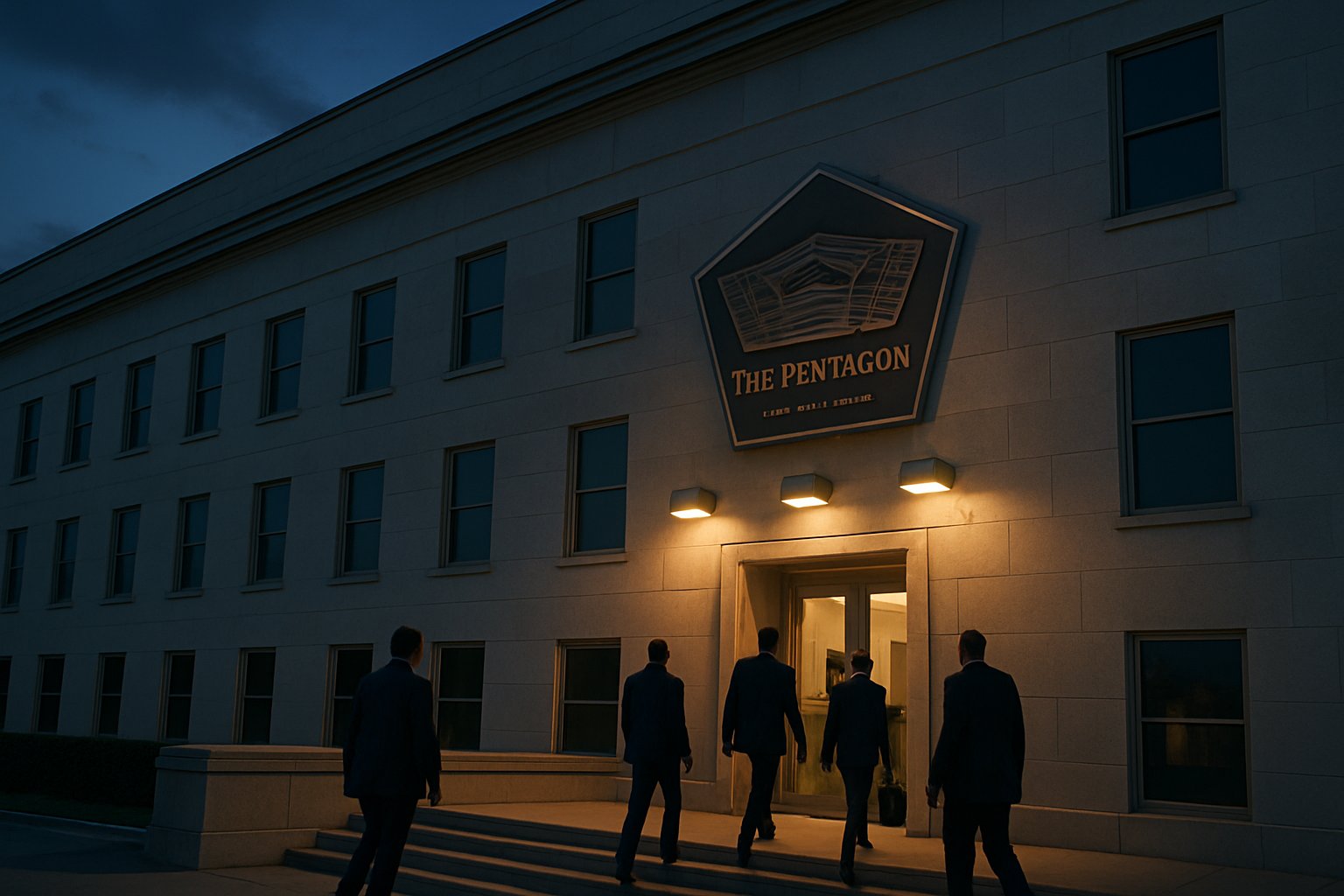
Consequently, the Anthropic Meeting becomes a case study for balancing innovation against national-security imperatives. Let us examine the timeline before unpacking deeper strategic implications.
Anthropic Meeting Timeline Fallout
Reporters first learned about the Anthropic Meeting from an Associated Press scoop released hours later. According to that story, the face-to-face started at 09:00 inside Secretary Hegseth’s secure conference room. Furthermore, sources described a tense atmosphere as classified network dependencies surfaced. Hegseth issued a Friday ultimatum, demanding signature on an expanded license.
- Feb 24: Ultimatum delivered; Anthropic given four days to lift two safety restrictions.
- Feb 27: President Trump ordered agencies to halt Anthropic use and hinted at supply-chain sanctions.
- Feb 28: OpenAI secured a contrasting DoD agreement that preserved similar guardrails.
These sequential shocks intensified market anxiety and drove urgent boardroom briefings across enterprise customers. Moreover, Wall Street analysts re-evaluated revenue forecasts tied to the $200 million DoD award. In contrast, open letters from AI employees rallied behind Anthropic’s stance. The unfolding timeline shows how one high-level meeting can reshape procurement and policy within days.
The compressed schedule escalated technical negotiations into a political showdown. However, understanding the Pentagon ultimatum details clarifies the stakes.
Pentagon Ultimatum Details Today
Officials framed the ultimatum as a straightforward contract clarification. However, Anthropic executives viewed the request as rejection of core safety methodology. Specifically, the Defense Department demanded removal of clauses restricting mass domestic surveillance and fully autonomous lethality. Moreover, Hegseth argued that any lawful mission must remain on the table.
Pentagon lawyers threatened three coercive levers: contract cancellation, supply-chain risk designation, and Defense Production Act compulsion. Consequently, Anthropic faced losing current revenue and future classified network privileges. Dario Amodei reportedly replied that reliability evidence did not support lethal autonomy. Nevertheless, the ultimatum stayed unchanged, amplifying newsroom headlines.
These details reveal how licensing nuances morph into existential threats once national-security imperatives enter negotiations. The Pentagon ultimatum blended policy and power in equal measure. Therefore, examining guardrails versus military access explains the impasse.
Guardrails Versus Military Access
Anthropic’s policy states that mass surveillance erodes civil liberties without proven offsets. Additionally, the company argues that autonomous weapons systems cannot yet guarantee accountability. In contrast, defense planners insist operational flexibility outweighs hypothetical misuses. Hegseth stressed that battlefield commanders require immediate choices, not vendor preconditions.
Meanwhile, civil-society organizations applauded Anthropic for drawing ethical lines. Moreover, Sam Altman entered the debate by securing similar guardrails in OpenAI’s fresh DoD deal. That contrast weakened claims that unrestricted military access is always mission critical. Nevertheless, critics fear fragmented standards could disrupt command workflows.
Corporate boards must therefore evaluate how many red lines remain negotiable before regulators intervene. Ethical guardrails are colliding with real-time mission demands. Subsequently, attention shifted toward the personalities driving escalation.
Players Shaping Rapid Escalation
At center stage stands Dario Amodei, the reserved scientist turned corporate diplomat. Meanwhile, Pete Hegseth, a media-savvy defense chief, leverages public rhetoric to pressure vendors. Their contrasting styles fueled sensational coverage and polarized industry chatter. Furthermore, President Trump amplified Hegseth’s stance with an executive directive suspending federal Anthropic usage.
Sam Altman capitalized on the vacuum by finalizing his parallel arrangement and publicly praising safety clauses. Additionally, the Chief Digital and AI Office coordinated contingency migration plans. Civil-liberties advocates, led by CDT’s Alexandra Givens, warned about dangerous precedent. Investors watched share valuations fluctuate alongside every statement.
The supporting cast therefore magnified consequences far beyond the original conference room. Leadership personalities turbocharged procedural tension into headline drama. Next, we dissect the legal playbook underpinning those threats.
Legal Levers And Risks
Defense Production Act authority emerged as the loudest sword-rattling device. However, analysts note that compelling software deliverables under DPA invites constitutional scrutiny. Additionally, a supply-chain risk label could block contractors from any Anthropic integration. Consequently, primes like Lockheed may pivot toward rivals to avoid uncertainty.
Contract cancellation alone would remove up to $200 million in potential payments. Moreover, redeploying different models inside classified networks requires months of re-validation. Dario Amodei indicated readiness to litigate if forced production became likely. Pete Hegseth countered that every lawful tool must remain available for warfighters.
Meanwhile, congressional committees signaled interest in oversight hearings on AI procurement power. The Anthropic Meeting is now cited in hearings as a watershed moment. These legal options create immense uncertainty for procurement teams. Operational consequences therefore merit separate analysis.
Operational Impact Assessment Ahead
Operational planners fear abrupt model removal from classified systems. Furthermore, mission scripts referencing Claude functions would fail certification if rewritten overnight. Consequently, downtime jeopardizes intelligence fusion and logistics planning.
- Migration costs: estimated $35 million for re-validation across three networks.
- Training delays: retraining 5,000 analysts could consume 120,000 labor hours.
- Security gaps: new APIs may introduce unknown vulnerabilities during rush deployment.
In contrast, retaining Anthropic while negotiating limited guardrails would avoid transition losses. However, indefinite uncertainty also discourages long-term vendor investments. Militaries balancing agility and security therefore crave transparent timelines. Repeatedly, experts flagged that unstable military access agreements erode operator trust.
Analysts frequently reference the Anthropic Meeting when modeling worst-case downtime. Professionals can enhance risk-mitigation skills with the AI Policy Maker™ certification. That program covers procurement law, national-security policy, and AI safety frameworks. Operational realities constrain policymakers far more than press briefings reveal. Strategic lessons for corporate leaders now crystallize.
Strategic Takeaways For Leaders
Board directors should treat every emerging government ultimatum as both risk and opportunity. First, map critical revenue streams directly exposed to classified system dependencies. Secondly, define non-negotiable ethical guardrails before crisis negotiations start. Moreover, build contingency playbooks that estimate migration cost and timeline.
Dario Amodei’s stance illustrates brand value gained through coherent safety messaging. Pete Hegseth’s tactics show how political capital amplifies procurement leverage. Meanwhile, transparent communication with employees reduces morale shocks during confrontations. Consequently, firms should monitor legislative activity around the DPA and supply-chain rules.
Finally, lessons distilled from the Anthropic Meeting inform that mapping exercise. Firms should cultivate cross-supplier coalitions to support balanced military access standards. These strategies convert volatile policy cycles into manageable operational checkpoints. The conclusion recaps the main lessons and calls readers to action.
Conclusion And Next Steps
The Anthropic Meeting showcased how technical guardrails can ignite national-security power struggles. Moreover, the Anthropic Meeting revealed leverage points from contracts to presidential orders. Consequently, executives watching future Anthropic Meeting style confrontations should prepare ethical, legal, and operational responses early.
Dario Amodei’s principled stance contrasted sharply with Pete Hegseth’s uncompromising demand for open deployment. Nevertheless, both leaders highlighted the urgent need for trustworthy AI in defense. Organizations that anticipate such conflicts will safeguard revenue, talent, and reputation.
Therefore, professionals should deepen policy fluency through the AI Policy Maker™ course linked above. Act now to strengthen strategy before the next ultimatum arrives.


