

AI CERTs
4 months ago
SpaceX xAI Merger Aims for Orbital Data Centers and $1.25T IPO
On 2 February 2026, SpaceX stunned markets by announcing the purchase of Musk’s AI venture xAI. The all-stock deal immediately positioned the combined group among history’s most valuable private firms. Analysts quickly dubbed the entity "SpaceX xAI," reflecting its towering ambitions across rockets and algorithms. Consequently, headlines centered on the staggering $1.25 trillion valuation disclosed through regulatory filings. Moreover, the companies outlined plans for "orbital data centers" powering next-generation space AI workloads. Investors, policymakers, and competitors raced to decode the implications for terrestrial cloud economics. Meanwhile, sceptics questioned engineering feasibility, debris risk, and energy economics beyond Earth’s atmosphere. This article unpacks the record merger, valuation mechanics, satellite architecture, challenges, and the anticipated IPO path. Additionally, industry reactions and strategic forecasts provide context for technology leaders evaluating partnership or competition strategies. Every section concludes with concise takeaways, ensuring busy executives capture actionable insights rapidly.
Record Merger Deal Overview
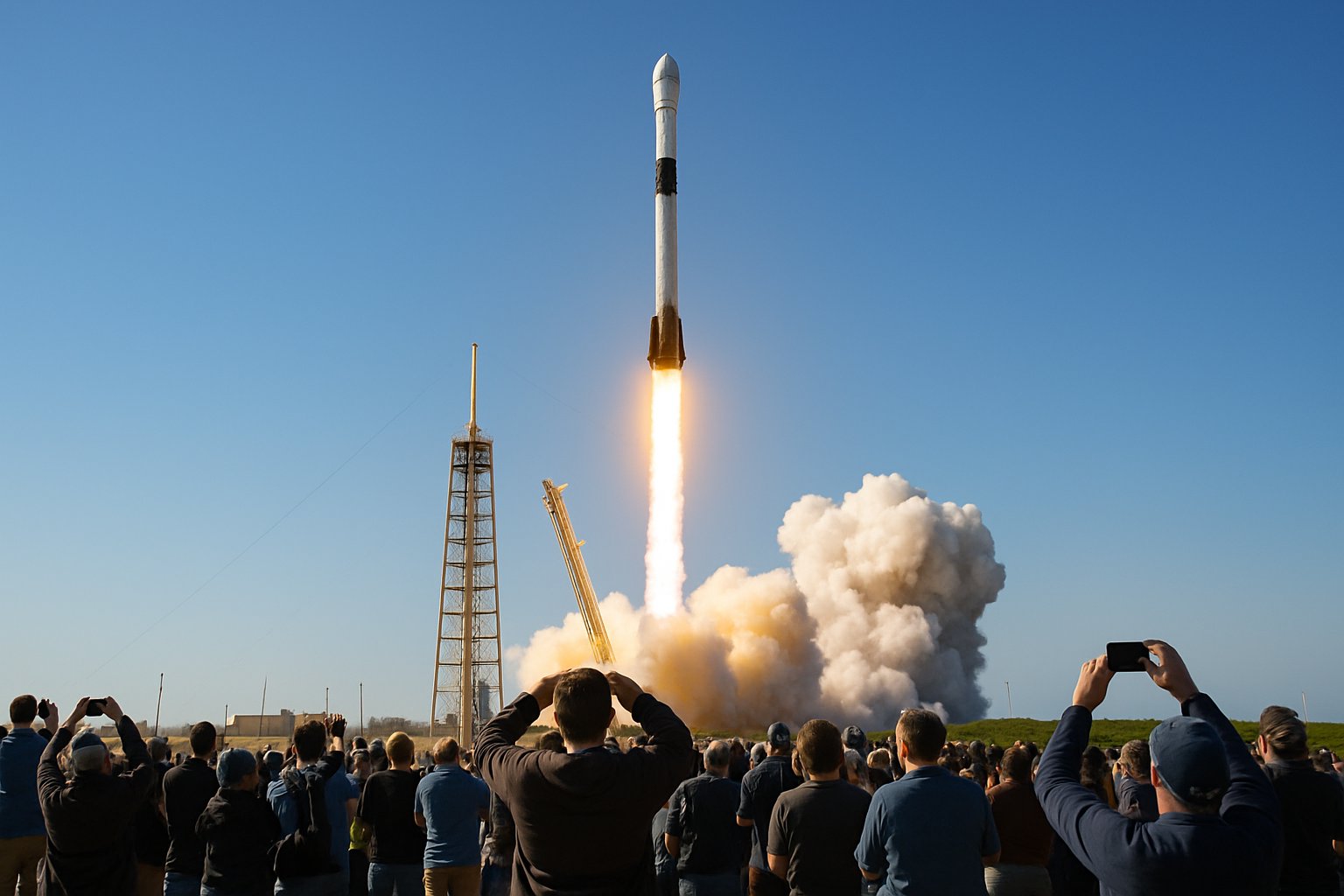
Bloomberg first reported the merger at dawn on announcement day. Shortly after, Elon Musk emailed staff calling the tie-up "the most ambitious, vertically integrated innovation engine." The SpaceX xAI board approved the transaction through a unanimous vote, according to filings reviewed by reporters. Therefore, ownership remains consolidated under Musk, yet minority shareholders retain defined conversion ratios. Regulatory filings published in Nevada and Delaware confirmed the effective date as February second. In contrast, previous rumors suggested separate IPO timelines; those paths now converge.
Combined governance streamlines decision speed and capital allocation. However, huge integration tasks await, as the next section explains.
Key Valuation Drivers Explained
Valuation headlines highlighted the $1.25 trillion SpaceX xAI figure, splitting $1.0 trillion for SpaceX and $250 billion for xAI. Financial analysts attribute the figure to Starlink revenue velocity and expected Starship launch margins. Additionally, Elon Musk’s expansive space AI roadmap convinced insiders that orbital compute could unlock fresh addressable markets. Meanwhile, xAI’s monthly burn near $1 billion required a cash-rich parent, tempering some enthusiasm. Nevertheless, convertible preference structures limit immediate dilution, protecting existing SpaceX investors.
- Starlink recurring broadband revenue accelerating quarterly
- Starship projected cost per kilogram below $100
- xAI intellectual property, including the Grok LLM
Analysts caution that each component carries unique execution risks that could compress the lofty valuation multiples. Consequently, post-merger valuation debates now hinge on orbital project execution, as the following plan details.
Orbital Data Centers Plan
SpaceX xAI filed an FCC request to deploy up to one million solar-powered data centers satellites. Elon Musk argues abundant orbital sunlight and cryogenic vacuum will cut cooling costs for intensive space AI workloads. Moreover, Starship’s heavy-lift capacity enables batch launches of compute clusters, streamlining constellation growth. Ground segment upgrades must also backhaul models to terrestrial clients without saturating limited gateway capacity. However, latency remains a thorny issue for training loops that require rapid parameter exchange. In contrast, inference workloads tolerant of milliseconds delay might migrate earlier. The plan also imagines orbital data replication leveraging existing Starlink laser crosslinks.
These aspirations set bold technical targets. Subsequently, engineering challenges surface, as the next section outlines.
Major Technical Hurdles Ahead
Radiation threatens GPU reliability inside orbital data centers despite proposed shielding and redundancy techniques. Furthermore, servicing failed nodes requires costly retrieval missions or intentional over-provisioning. Debris experts warn that adding a million satellites amplifies collision probabilities exponentially. Astronomers fear increased sky brightness could compromise deep-field observations vital for cosmology. Consequently, regulators may impose stricter disposal rules or cap constellation size. Additionally, launch cadence must align with component refresh cycles, currently measured in months, not years. Power stability also fluctuates during eclipses, complicating continuous training regimes.
These challenges highlight critical gaps. Nevertheless, SpaceX xAI engineers claim iterative Starship flights will mitigate many constraints, leading to the industry reaction analysis.
Broader Industry Response Spectrum
Cloud incumbents publicly questioned the timeline for meaningful orbital capacity. For example, some executives labeled the concept "ridiculous" regarding current space AI economics. In contrast, several satellite manufacturers welcomed potential bulk orders, despite debris concerns. Academic astronomers meanwhile lobbied for optical mitigation commitments before spectrum approvals. Moreover, venture investors hailed the publicity boost but stressed transparent governance for such a scale. The SpaceX xAI communications team reiterated confidence, citing rapid Starlink rollout as precedent. Consequently, sentiment remains split regarding SpaceX xAI ambitions, prompting closer examination of capital plans.
The next section addresses that financial roadmap.
Financial And IPO Path
Reports indicate SpaceX xAI bankers target a dual-class listing to crystallize valuation within eighteen months. Furthermore, consolidated cash flow from Starlink may subsidize early orbital deployments, easing investor fears. Derivative markets already price warrants based on prospective listing dates, signalling robust speculative interest. Elon Musk has signaled preference for retaining super-voting control, mirroring previous governance structures. Meanwhile, auditors still review xAI losses to determine listing disclosures. Valuation sensitivities therefore depend on orbit rollout milestones, GPU supply, and regulator feedback. Professionals can deepen expertise through the Chief AI Officer™ certification. Consequently, skilled executives may navigate the shifting capital landscape more effectively.
These financial factors inform the concluding outlook next.
Conclusion And Next Steps
SpaceX xAI now commands unmatched vertical integration across launch, connectivity, and compute. However, engineering realities could erode value if milestones slip. Investors therefore must track regulatory rulings, debris mitigation progress, and Starship cadence closely. Meanwhile, cloud rivals will lobby against preferential spectrum or orbital traffic allocations. Nevertheless, successful orbital data centers could unlock new energy-balanced space AI architectures. Moreover, the promised IPO offers liquidity to long-standing private shareholders and fresh funding for deep-tech research. Executives aiming to participate should build robust AI governance skills now. Consider pursuing the earlier linked certification to position your organization for orbital compute disruption. The coming months will reveal whether hype converts into sustainable revenue beyond Earth. Stay attentive; strategic adjustments may soon become mission critical.
Disclaimer: Some content may be AI-generated or assisted and is provided ‘as is’ for informational purposes only, without warranties of accuracy or completeness, and does not imply endorsement or affiliation.


