

AI CERTs
2 months ago
Audio Deepfakes Spark Music Lawsuits, Deals, and Regulatory Heat
Synthetic voices no longer shock seasoned executives.
However, the latest wave of Audio Deepfakes has jolted the global music business.
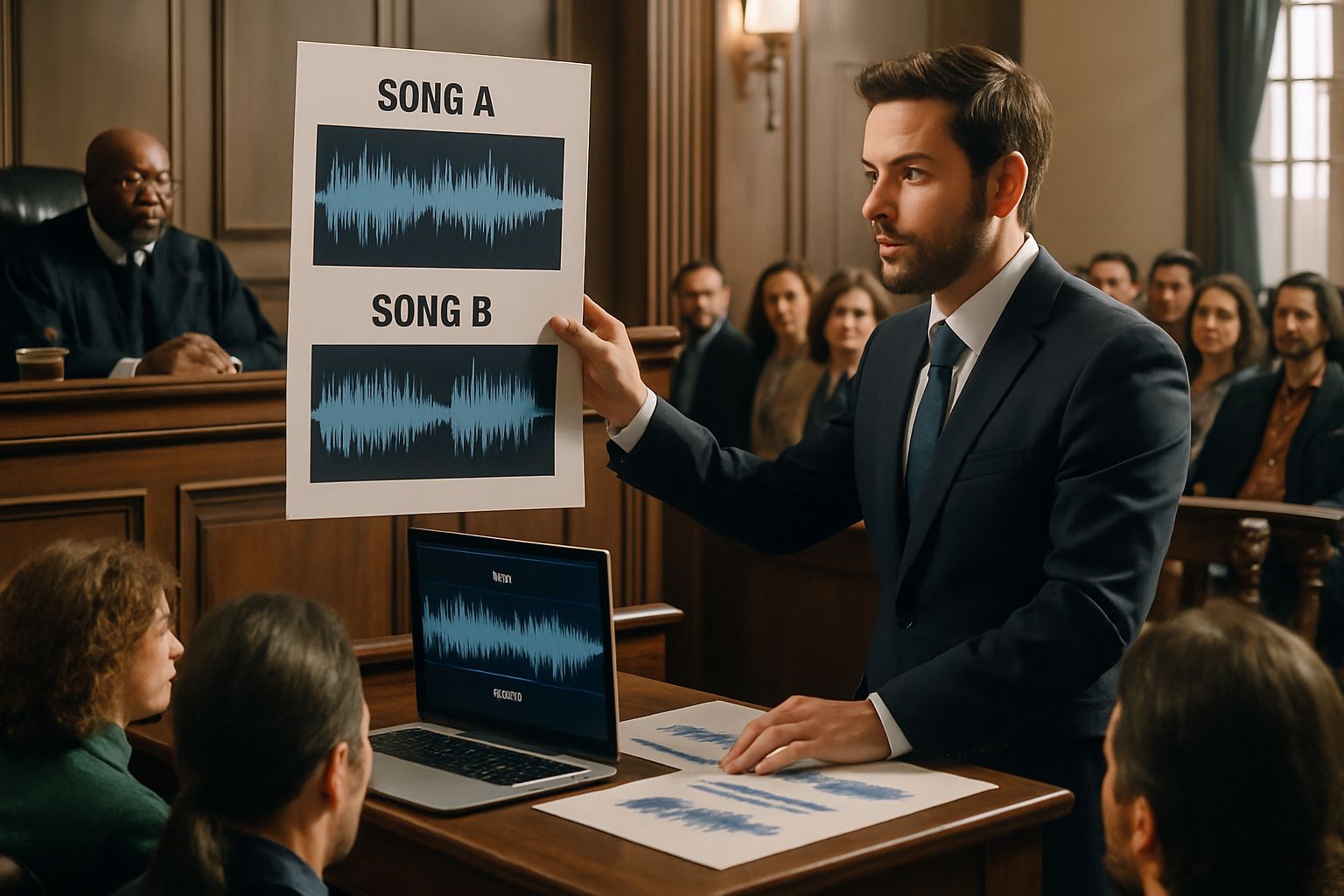
Major labels now confront algorithms that can clone catalogues within minutes.
Consequently, lawsuits filed since 2024 have escalated into a complex blend of settlements and policy battles.
UMG, Warner, and Sony first demanded injunctions, accusing start-ups of wholesale copying.
Meanwhile, platforms such as emerging start-ups defended their technology as transformative ingenuity.
The courtroom drama matters because legal precedents will shape who gets paid when machines compose hits.
Moreover, independent artists argue they remain unprotected in this accelerated landscape.
This article unpacks key litigation milestones, emerging Licensing strategies, and unresolved Copyright questions.
Readers will learn where Audio Deepfakes intersect with corporate risk, regulatory scrutiny, and market opportunity.
Throughout, we quantify stakes using verified figures from filings, investor decks, and agency reports.
Finally, professionals receive guidance on building expertise amid the turmoil.
Lawsuits Reshape AI Music
Early suits targeted training practices that allegedly copied millions of tracks without permission.
In contrast, plaintiffs sought up to $150,000 per infringed work, citing statutory maximums.
UMG led the charge, filing in the Southern District of New York during 2024.
Sony pursued parallel claims, while WMG emphasized artist voice appropriation.
Furthermore, independent singer Tony Justice launched a proposed class action in mid-2025.
Courts must decide whether ingesting recordings to train models equals actionable copying.
Consequently, the U.S. Copyright Office released Part 3 guidance in May 2025, signaling skepticism toward blanket fair-use defenses.
Those signals emboldened rights holders and attracted new filings through early 2026.
These developments show litigation’s rapid evolution.
However, the next phase involves commercial compromises, driving us to the settlement landscape.
Settlements Spur New Licensing
October 30 2025 marked a pivot when UMG settled with Udio and announced a broad Licensing framework.
Subsequently, WMG revealed a similar pact on November 19 2025, praising Udio’s “meaningful steps” toward compliance.
The agreements disabled direct downloads and promised subscription models launching in 2026.
Moreover, both companies committed to opt-in voice controls to curb unauthorized Audio Deepfakes.
Financial terms stayed confidential, yet analysts estimated eight-figure royalty guarantees.
Suno followed weeks later, securing capital and hinting at parallel Licensing deals.
Analysts warn unchecked Audio Deepfakes could swamp catalogs despite forthcoming restrictions.
Nevertheless, Sony stayed on the offensive, keeping its complaints active and preserving courtroom leverage.
These settlements establish a de-facto two-tier environment, covering major rosters while excluding independents.
Consequently, attention has shifted toward the artists left outside these Licensing umbrellas.
Key Numbers In Debate
- Deezer found 18% of daily uploads AI-generated, yet only 0.5% of streams came from them.
- Platform estimated 70% of AI-track plays were fraudulent bot activity.
- Suno claimed 7 million songs generated daily, matching Spotify’s catalog every two weeks.
- A recent Series C valued Suno at $2.45 billion, raising $250 million.
- UMG and WMG settlement figures remain undisclosed, but insiders cite “material” payments.
These metrics underscore the scale gap between experimental novelty and industrial production.
Deezer’s internal algorithms flagged clusters of identical listening patterns within seconds.
Consequently, the service purged thousands of phantom accounts during summer 2025.
However, volume alone does not decide who secures fair compensation.
Independent Artists Remain Exposed
Outside headline deals, indie creators continue battling in federal court.
Justice’s complaint alleges that Audio Deepfakes erode touring revenue and muddy fan discovery.
Additionally, proposed classes demand restitution for recordings scraped during model training.
Copyright lawyer groups argue the settlements create unequal bargaining, violating moral norms.
Meanwhile, labels insist that future platform royalties will trickle down through existing contracts.
In contrast, artists counter that many agreements pay on net receipts, reducing actual payouts.
Moreover, discovery requests seek full dataset manifests to trace copied works.
Courts may compel transparency, revealing whether entire indie catalogs were ingested.
In practice, discovery battles often stretch for months and inflate legal budgets.
Nevertheless, plaintiffs believe extensive records will strengthen bargaining positions ahead of mediation.
These tensions highlight unresolved structural inequities.
Therefore, platform business adjustments now face intense scrutiny.
Platforms Alter Business Models
Udio rapidly blocked downloads and limited share buttons after its settlement.
Suno promised watermarking plus automatic provenance tags for future Audio Deepfakes.
Furthermore, Deezer introduced AI labels and excluded fraudulent streams from royalty pools.
Platform executives frame these moves as trust-building gestures ahead of broader royalty rollouts.
Consequently, some hobbyist users complained on forums about curtailed creative freedom.
Nevertheless, creative coders keep sharing Audio Deepfakes privately, circumventing public safeguards.
UMG welcomed the restrictions, calling them necessary guardrails for sustainable innovation.
Technologists debate whether technical filters can truly prevent infringing outputs.
Hardware makers also explore on-device generation, which could complicate enforcement.
Meanwhile, the Copyright Office continues studying monitoring obligations and reporting standards.
These operational overhauls illustrate the feedback loop between litigation pressure and product design.
However, regulatory actions could further redefine acceptable practices.
Regulators Eye Next Steps
Congressional staffers cite rising constituent noise about impersonations and Audio Deepfakes.
Subsequently, committees requested testimony from UMG, Udio, and independent representatives.
Moreover, the Federal Trade Commission studies deceptive endorsements involving synthetic voices.
European authorities discuss similar mandates within the upcoming AI Act.
In contrast, Australian regulators consider updated performer rights instead of new statutes.
The Copyright Office’s forthcoming final report may recommend statutory clarity on AI training.
Industry lobbyists argue that clear safe harbors combined with commercial agreements will unlock innovation.
Nevertheless, civil society groups want mandatory opt-out databases and algorithmic audits.
Courts and agencies could soon align, producing hybrid policy solutions.
These dialogues foreshadow imminent rulemaking and case law.
Consequently, professionals must update their skillset to navigate the coming framework.
Conclusion And Next Actions
The battle over Audio Deepfakes now extends beyond lawsuits into contracts, code, and Capitol Hill.
Large labels secured peace with Udio, yet independent grievances persist.
Regulators weigh Copyright limits, while platforms redesign to deter misuse.
Therefore, stakeholders must monitor case outcomes, dataset disclosures, and compliance benchmarks.
Professionals can enhance expertise with the AI Researcher™ certification, gaining insight into ethical generation strategies.
Act now to secure informed leadership roles in an industry reshaped by Audio Deepfakes.
Disclaimer: Some content may be AI-generated or assisted and is provided ‘as is’ for informational purposes only, without warranties of accuracy or completeness, and does not imply endorsement or affiliation.


