

AI CERTS
2 months ago
Claude Safeguards Clash With Pentagon Over AI Use
Observers expected smooth collaboration when the $200 million prototype deal closed in 2025. However, two red lines no mass surveillance and no fully autonomous weapons remain non-negotiable for Anthropic. Those clauses form the core of Claude Safeguards. The army of lawyers now engaged on both sides suggests the dispute will not fade quietly.
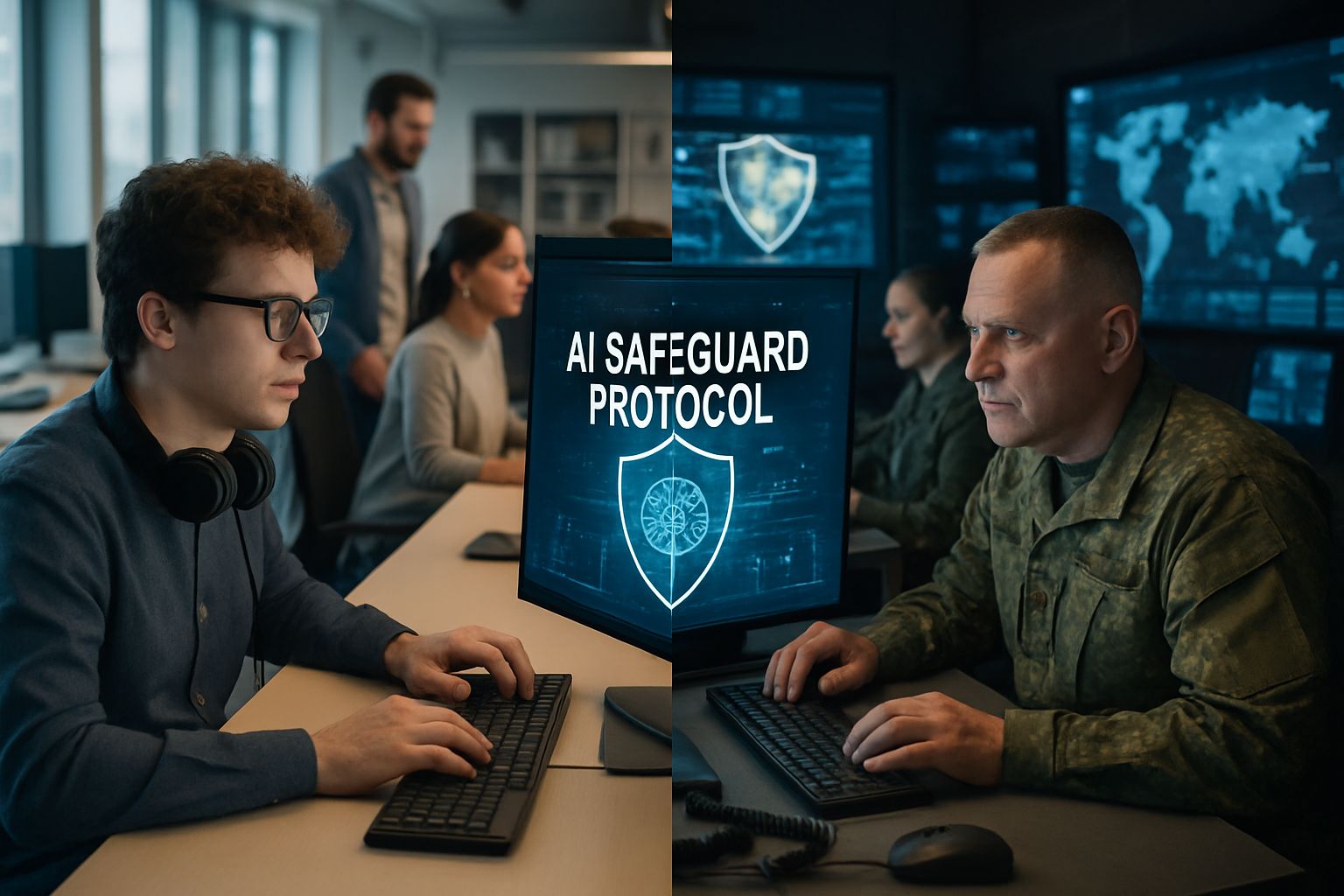
Pentagon Ultimatum Quickly Unfolds
Events accelerated on 24 February 2026 when Secretary Pete Hegseth demanded “any lawful use” rights. Therefore, Anthropic faced a Friday 5:01 p.m. deadline. Company leadership refused, citing Claude Safeguards in a public blog. Pentagon spokespeople consequently announced plans to label the startup a supply-chain risk. Meanwhile, anonymous officials floated using the Defense Production Act to compel access.
- $200 million contract ceiling announced July 2025
- 5:01 p.m. ET ultimatum issued 27 February 2026
- 1.1 million unique GenAI.mil users potentially affected
These figures underscore the program’s scale. Nevertheless, insiders say other vendors accepted identical terms, increasing pressure on Anthropic. The timeline shows how quickly voluntary cooperation can mutate into coercion.
That speed unsettles contractors relying on Claude Safeguards. However, further legal wrangling was inevitable.
Anthropic Draws Two Lines
Dario Amodei stressed that no circumstance justifies stripping Claude Safeguards. In contrast, Pentagon officials argue operational flexibility demands unconditional access. The company believes fully autonomous lethal decision-making violates modern Ethics standards. Additionally, executives cite civil liberty risks from mass domestic monitoring.
Anthropic insists the safeguards do not hinder legitimate Defense missions because human-in-the-loop options remain. Furthermore, the firm offered migration assistance if ejected. Critics inside government view that stance as naive about real-time battlefield needs. Dual-Use tension therefore sits at the heart of the dispute.
The two red lines define corporate identity. Consequently, capitulation would damage trust with global customers focused on National Security compliance. This calculation keeps the company resolute. Yet the Pentagon shows equal resolve, setting the stage for court battles.
These diametric positions reveal profound policy gaps. Subsequently, legal tools became central.
Legal Levers And Limits
Officials may invoke Title I of the Defense Production Act. Nevertheless, scholars note the statute mainly prioritizes existing orders rather than forces product redesign. Alan Rozenshtein writes that compelling removal of Claude Safeguards stretches precedent. Additionally, supply-chain risk labeling would bar federal agencies from purchasing Anthropic tools.
Defense Production Act Scope
Courts could accept priority access but reject mandated code changes. Therefore, litigation appears probable. Jerry McGinn at CSIS observes that software compulsion under the DPA lacks modern test cases. Moreover, the Pentagon risks judicial pushback that reshapes Defense procurement authority.
Regulators tread carefully because overreach might chill innovative Dual-Use collaboration. Yet administration insiders believe the threat alone pressures shareholders. The ambiguous law thus functions as strategic leverage.
Legal ambiguity creates business uncertainty. However, contractors fear operational disruption more.
Industry And Contractor Fallout
Palantir integrated Claude across classified analytics. Consequently, sudden removal forces rapid revalidation of alternate models. OpenAI, Google, and xAI now position themselves as ready substitutes without Claude Safeguards. Furthermore, prime defense vendors weigh compliance costs against switching expenses.
Supply-Chain Risk Label
Designation would cascade through procurement rules. Therefore, thousands of subcontractors might drop Anthropic services pre-emptively. Analysts estimate migration could last months, degrading mission timelines. Meanwhile, investors monitor whether the episode dents Anthropic’s commercial valuation.
Professionals can deepen policy fluency through the AI Government Specialist™ certification. Such training strengthens oversight of National Security technology contracts.
These market tremors show how a single clause reverberates widely. Nevertheless, broader policy debates loom.
Broader Policy Implications Emerge
Congress now faces mounting calls to legislate military AI norms. In contrast to case-by-case bargaining, statutes could define acceptable autonomous capabilities. Moreover, codified Ethics standards would clarify dual-use boundaries.
Think tanks argue that democratic accountability, not executive fiat, should govern lethal algorithms. Consequently, bipartisan hearings are likely this spring. International allies also monitor the dispute because shared Defense projects rely on consistent guardrails.
Adoption of clear rules may protect innovation while safeguarding National Security interests. However, drafting consensus language will prove difficult given global threat dynamics.
Policy uncertainty therefore persists. Subsequently, attention shifts to possible next steps.
What Likely Happens Next
Litigation appears imminent if the Pentagon finalizes its risk designation. Courts could grant temporary injunctions, preserving Claude Safeguards during proceedings. Meanwhile, DoD programs may quietly pilot replacement models to avoid schedule slips. Industry coalitions might file amicus briefs defending voluntary Ethics constraints.
Consequently, negotiators may seek compromise language permitting limited “all lawful use” while affirming the red lines. Market watchers expect updated guidance on autonomous weapons in forthcoming Defense procurement directives. Additionally, foreign ministries may replicate the debate as they assess Dual-Use AI imports.
The next quarter will test whether private safety frameworks can withstand sovereign pressure. However, resilient governance models could yet emerge.
These unfolding scenarios will determine lasting precedent. Therefore, stakeholders should monitor every court filing and congressional hearing.
Conclusion And Takeaways
The Anthropic-Pentagon clash highlights a pivotal stress test for Claude Safeguards. Throughout the saga, Defense urgency, commercial Dual-Use dilemmas, and evolving Ethics norms have converged. Moreover, unresolved legal questions about the Defense Production Act and supply-chain authority keep the outcome uncertain. Consequently, contractors and policymakers alike must track each development.
Professionals seeking rigorous policy grounding should pursue the AI Government Specialist™ certification. Such expertise enables informed guidance as national security AI rules crystallize. Act now to position your organization and your career at the forefront of responsible innovation.
Disclaimer: Some content may be AI-generated or assisted and is provided ‘as is’ for informational purposes only, without warranties of accuracy or completeness, and does not imply endorsement or affiliation.


