

AI CERTS
4 hours ago
Galgotias Controversy: Robot Dog Fraud Exposes Summit Integrity
Meanwhile, summit organisers faced embarrassment during an event designed to highlight India AI leadership. The incident soon evolved into a cautionary tale about innovation, Ethics, and public trust. This article unpacks the timeline, reactions, and lessons hidden within the Galgotias Controversy. Moreover, we examine how transparent sourcing could have avoided reputational damage. In contrast, we highlight constructive ways universities leverage commercial platforms responsibly. Readers will gain actionable insights for future showcases and governance frameworks. Consequently, stakeholders can reinforce confidence before the next global summit spotlight.
Summit Exhibition Unravels Fast
On 17 February, Professor Neha Singh greeted journalists beside the orange-white robot. She stated, “This has been developed by the centres of excellence at Galgotias University.” However, attendees familiar with robotics instantly spotted the signature design of the Unitree Go2. Screenshots comparing both models flooded X within an hour. Consequently, the hashtag #RobotDogGate began trending alongside the Galgotias Controversy.
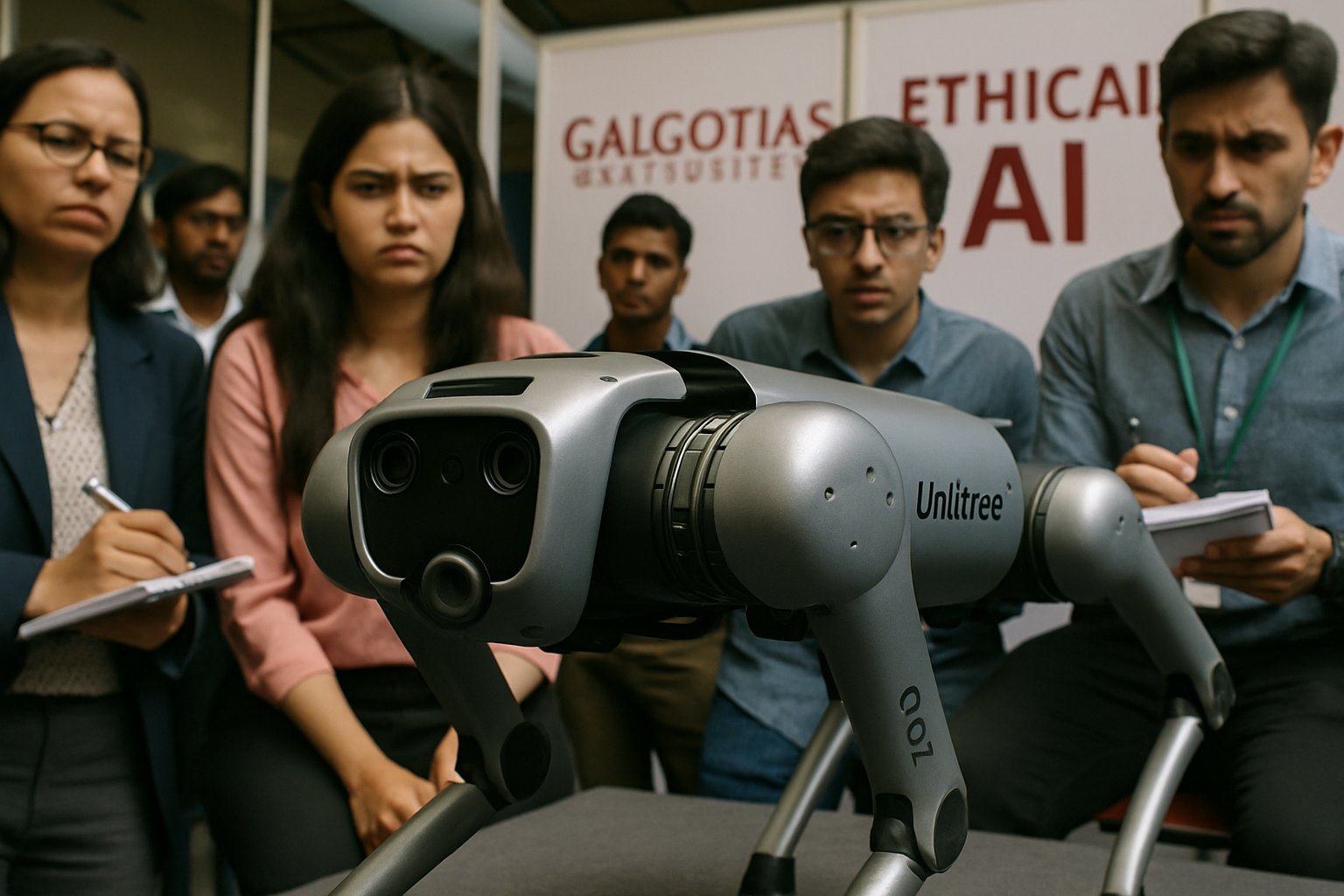
Organisers reacted swiftly. Moreover, Ministry officials reminded exhibitors about stringent disclosure clauses. Subsequently, they asked Galgotias representatives to power down Orion and vacate their booth. The order underscored a zero-tolerance approach to Misrepresentation at national platforms. These early moves set the tone for reputational fallout that followed. Meanwhile, viral amplification pushed the episode into mainstream news, as the next section shows.
Viral Identification Sparks Backlash
Digital forensics groups compared product manuals and verified identical sensor placements. Additionally, robotics students posted side-by-side teardown images of the Unitree Go2. Consequently, media houses like AP and Indian Express published confirmations within the afternoon. Galgotias initially dismissed allegations as propaganda, deepening perceptions of Misrepresentation.
Opposition politicians seized the moment to critique broader India AI branding efforts. Moreover, commentators framed the saga as proof that flashy announcements overpowered substance. Memes portraying Orion with counterfeit labels garnered millions of views. Nevertheless, some academics cautioned against equating one error with systemic rot. The Galgotias Controversy dominated prime-time debate shows that evening. Public opinion had crystallised before official statements arrived. Therefore, institutional responses became crucial, as the following account details.
Official Response And Ejection
Under mounting pressure, the university issued a late-night clarification on 18 February. It acknowledged that Orion was purchased hardware, not proprietary invention. However, the note blamed an “ill-informed” representative for the Galgotias Controversy. Summit organisers accepted the apology yet insisted on immediate removal. In contrast, government spokesperson S. Krishnan declared future blacklisting for repeat Misrepresentation.
Security staff disconnected power, and volunteers escorted the robot and banners outside. Consequently, spectators recorded the ejection, adding fresh footage to trending threads. Meanwhile, Galgotias academics faced hostile questions from peers who felt blindsided. The incident became a textbook crisis-communication case within 24 hours. Swift procedural action limited summit disruption. Yet reputational damage endured, prompting deeper reflection explored next.
Academic Responsibility And Ethics
Universities often buy commercial robots to accelerate student projects. Moreover, open SDKs and ROS support make acquisition pragmatic. Therefore, owning a Unitree Go2 alone never invites censure. Problems arise when marketing language crosses into clear Misrepresentation of origin.
Academic culture prizes accurate attribution and transparent sourcing. Consequently, the Galgotias Controversy raises renewed focus on research governance. Institutions may now strengthen internal review boards that vet exhibition content. Furthermore, many analysts argue that solid Ethics training should accompany technical curricula.
Professionals can enhance their governance skills with the AI Ethics Leader™ certification. Such credentials underline accountability principles before public demonstrations. Robust ethical literacy could have prevented the headline crisis. Subsequently, we consider national implications.
Implications For India AI
India’s flagship summit aimed to project self-reliant innovation to visiting CEOs and ministers. However, the episode armed critics who allege marketing exceeds measurable progress within India AI. Some fear foreign investors will question vetting mechanisms at future expos. Nevertheless, decisive expulsion also signals maturing oversight.
Government officials emphasised transparent supply chains and authentic prototypes for subsequent editions. Consequently, organisers plan stricter documentation requirements, including procurement invoices and code repositories. Moreover, public databases may list showcased projects alongside verification notes. These steps align with global standards for fair disclosure. Observers warned that another Galgotias Controversy would erode foreign trust faster than policy speeches. National credibility hinges on consistent enforcement. The evolution of safeguards informs lessons discussed ahead.
Lessons For Future Showcases
Several practical guardrails emerge from this saga. Firstly, cross-functional review teams should vet every demo script. Secondly, exhibitors must cite commercial components explicitly on placards. Thirdly, crisis-response templates need rehearsal before arrival day. The following checklist distills these recommendations.
- Document hardware origin and purchase details.
- Publish open-source code links where possible.
- Assign a spokesperson trained in Ethics and compliance.
Moreover, independent auditors could roam aisles and verify claims in real time. In contrast, passive policing relies on social media uproar, as witnessed. Adopting these measures should reduce Misrepresentation incidents dramatically. Consequently, future editions may restore stakeholder confidence even after the Galgotias Controversy memory fades. Yet continuous education remains essential, particularly regarding Ethics. Subsequently, we summarise overarching insights and propose next steps.
Conclusion And Next Steps
The Galgotias Controversy underscores how small exaggerations can escalate into national headlines. Moreover, transparent procurement records and disciplined messaging can avert similar crises. Consequently, event organisers should demand verifiable documentation before granting floor space. Academic leaders must pair innovation showcases with rigorous Ethics oversight. Another Galgotias Controversy would jeopardise both institutional and national credibility. Nevertheless, swift corrective action and stronger guidelines now offer a path forward. Therefore, industry professionals should embrace continuous learning and certification to strengthen governance. Consider enrolling in specialised programs and return to upcoming expos armed with proven integrity.


